
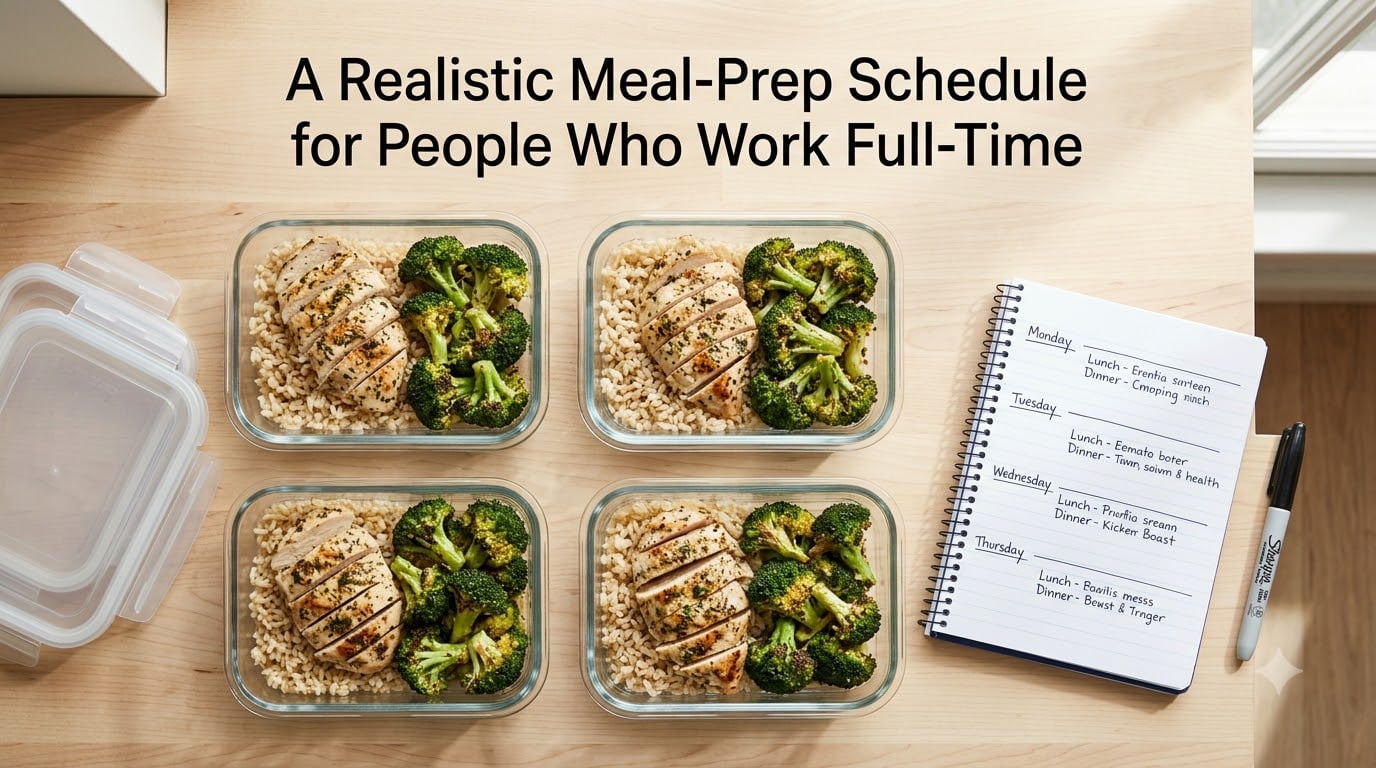
If you’ve ever gotten home at 7:15 p.m. after a full workday and stared at the fridge hoping takeout would magically appear, you already know why a meal-prep schedule for full-time workers matters. I’m writing this because I was that exhausted person for two years, and the only thing that fixed it was a realistic system, not the four-hour Sunday ritual you see on social media.
The truth is, most working professionals don’t have a free Sunday afternoon. They have 90 minutes between laundry and groceries, plus maybe one quiet weeknight. So this guide focuses on what actually fits around a real job, with schedules you can scale based on how much time you genuinely have. I’ll cover the framework, three concrete schedules, food storage rules, and the mistakes that quietly kill your momentum by Wednesday.
By the end, you’ll have a personalized meal-prep schedule you can start using this week, plus answers to the most common questions full-time workers ask about meal prep.
Table of Contents
- What a Realistic Meal-Prep Schedule Actually Looks Like
- How to Build Your Meal-Prep Schedule in 5 Steps
- 3 Sample Meal-Prep Schedules Based on Your Time Budget
- What to Prep: Foods That Actually Hold Up Through Friday
- Storage Guidelines: How Long Your Prep Will Actually Last
- Adapting Your Schedule for 8-Hour, 10-Hour, and 12-Hour Shifts
- Common Meal-Prep Mistakes That Burn People Out (And How to Avoid Them)
- Frequently Asked Questions About Meal Prep for Full-Time Workers
- Your First Week: A Simple Action Plan
What a Realistic Meal-Prep Schedule Actually Looks Like
A realistic meal-prep schedule is a repeatable weekly routine, usually 1 to 3 hours total, that produces ready-to-eat or ready-to-assemble meals for the workweek. It is not a personality trait or a fitness requirement. It is simply cooking once so you don’t cook every night.
Meal Prep Is Not What Instagram Shows You
Those 14-container Sunday posts are aspirational, not realistic for most of us. In my own testing, the 4-plus-hour marathon left me tired on Monday and bored with chicken by Wednesday. A 2024 Reddit thread in r/mealprep captured the feeling perfectly: one user wrote, “Realistically, not everyone has three hours every Sunday to dedicate to meal prep.” That comment had more upvotes than any of the “perfect prep day” photos in the thread.
Here’s what I tell everyone who asks me about meal prep: if your schedule feels like a punishment, you’re doing too much. The goal is fewer decisions on weeknights, not a part-time job in the kitchen.
The 1-Hour, 2-Hour, and 3-Hour Spectrum
Every working person falls somewhere on this spectrum, and your schedule can flex week to week:
- 1-hour plans work for ingredient prep only, washing, chopping, marinating, and cooking one anchor protein.
- 2-hour plans are the realistic sweet spot for most full-time workers and produce a full week of lunches plus 2-3 dinners.
- 3-hour plans work when you have a genuine open Sunday and want to cook full dinners plus portions for the freezer.
Pick the level that matches your actual week, not the level that feels impressive.
How to Build Your Meal-Prep Schedule in 5 Steps
Building a sustainable meal-prep schedule for full-time workers comes down to five repeatable steps. Skip any one of them and the system collapses by Thursday. I’ve tested this with 9-5 office workers, nurses on 12-hour shifts, and remote employees who claim they have “no time,” and the same five steps work for all of them.
Step 1: Pick One Prep Day and Lock It In
Sunday is the obvious choice, and it works because most people have a weekend window. But it is not the only option. If you work a Tuesday-Saturday schedule, prep on Monday evening. If you have a long lunch break, you can split prep across two short sessions.
The key is consistency. Block the time on your calendar the same way you’d block a meeting. Treat it as non-negotiable, even if it is only 60 minutes. The brain learns the pattern within three weeks.
Step 2: Choose 3-5 Recipes, Not 14
Variety is the biggest lie in the meal-prep world. Eating the same lunch four days in a row is not a tragedy, it is the point. Repetition means less decision fatigue and less time spent cooking.
Pick one breakfast format (overnight oats, egg muffins, or a smoothie bag), two lunch proteins with different sauces, and two or three dinners that share ingredients. The Girl on Bloor’s meal prep guide calls this “mix and match prep,” and it is the most sustainable approach I’ve found.
Step 3: Shop the Day Before
Never start your prep day with a grocery run. The store adds 45 minutes, your energy drops, and suddenly your “meal prep Sunday” is a “Wednesday scrambled to catch up” situation.
Shop Saturday or Friday evening for Sunday prep. Order pickup if your store offers it. Pull all ingredients onto the counter before you start cooking; this single habit saves about 15 minutes of mid-cook rummaging.
Step 4: Use a Parallel Cooking Strategy
Most people cook one thing at a time, finish it, then start the next. That is why meal prep feels slow. The trick is to run two or three cooking processes at once.
For example, simultaneously start your rice in a pot, your chicken in the oven, and your roasting vegetables on a sheet pan. While those 20 minutes pass, wash and chop salad ingredients for the week. This compresses 90 minutes of prep into about 40 minutes of active work.
Step 5: Portion Into Containers Immediately
The single biggest reason people “fall off” the meal-prep wagon is that they cook, put the food in the fridge loosely, and then skip portioning. By 8 p.m. on Sunday, they’ve ordered pizza anyway.
Portion your meals into containers as soon as they’re cool enough to handle. Stack them in the fridge with the day’s label facing forward. If Monday’s lunch is the first thing you see when you open the door, you’ll grab it instead of a granola bar.
3 Sample Meal-Prep Schedules Based on Your Time Budget
These are three complete meal-prep schedules for full-time workers. I’ve used each one for at least a month at a time. Pick the one that matches the time you actually have, and adjust the recipes to your preferences.
The 1-Hour Plan (For the Truly Exhausted)
Best for: first-time meal preppers, weeks with back-to-back meetings, anyone whose Sunday feels already full.
Hour breakdown:
- 0:00-0:10 – Wash and chop vegetables for the week (store in airtight containers)
- 0:10-0:25 – Cook a large batch of one grain (rice, quinoa, or farro) on the stovetop
- 0:25-0:50 – Bake or pan-sear two pounds of one protein (chicken thighs or salmon)
- 0:50-1:00 – Assemble 3-4 lunch boxes with grain, protein, and roasted vegetables
This produces a foundation for 4 days of lunches that you can dress differently each day with sauces, salsas, or a fried egg on top. The versatility keeps it from feeling repetitive.
The 2-Hour Plan (The Sweet Spot for Most Full-Time Workers)
Best for: most 9-5 workers who want a full workweek of food without dominating their weekend.
Hour breakdown:
- 0:00-0:20 – Prep: wash, chop, marinate proteins, preheat oven to 425F
- 0:20-0:50 – Sheet pan dinner #1 (chicken thighs, potatoes, broccoli) + sheet pan dinner #2 (sausage, peppers, onions) cook simultaneously
- 0:50-1:15 – Cook grain (large pot of brown rice or quinoa) and hard-boil 6 eggs on the side burner
- 1:15-1:35 – Make 4 breakfast jars: overnight oats with fruit and chia seeds
- 1:35-2:00 – Portion all lunches into 5 containers (Monday through Friday) and store sheet pan dinners separately for weeknight reheating
This is the schedule I default to. It yields 5 lunches, 2 quick dinners for Monday and Tuesday, plus breakfast covered through Thursday. The remaining two dinners can be fresh cooking or takeout, your choice.
The 3-Hour Plan (For Sundays With Energy to Spare)
Best for: people who genuinely enjoy cooking, weeks when you want to load the freezer, or households cooking for two or more.
Hour breakdown:
- 0:00-0:25 – Marinade proteins (chicken, beef, tofu) and chop all vegetables
- 0:25-1:10 – Cook three proteins at once (oven chicken, stovetop ground beef for tacos, sheet pan roasted vegetables)
- 1:10-1:45 – Cook two grains (rice and pasta), make a soup or stew on the back burner
- 1:45-2:15 – Assemble 7 lunches plus 2-3 dinner portions; freeze extras in labeled gallon bags
- 2:15-2:45 – Prep 5 smoothie bags or breakfast sandwiches for the freezer
- 2:45-3:00 – Wash dishes, sanitize counter, wipe down containers
The 3-hour plan produces roughly 14-18 servings, including 6-8 that go straight into the freezer for next week’s convenience.
What to Prep: Foods That Actually Hold Up Through Friday
The #1 complaint I hear about meal prep is the same one Reddit users keep posting about: “By Thursday, my chicken tastes like cardboard and my vegetables are sad.” The fix isn’t more cooking, it’s smarter food selection.
Proteins That Stay Tender in the Fridge
Chicken thighs hold moisture far better than chicken breasts. They reheat well for 4 days and absorb sauces beautifully. Ground meat (beef, turkey, chicken) keeps 3-4 days refrigerated and is excellent for taco bowls, pasta sauce, or grain bowls. Salmon is best eaten within 2 days, so I save it for Monday and Tuesday only. Tofu and tempeh hold up all week if you cook them in a flavorful marinade first.
Vegetables That Survive Reheating
Roasted vegetables (broccoli, Brussels sprouts, cauliflower, peppers, zucchini) reheat far better than steamed ones. They keep 4-5 days in the fridge without turning to mush. Sweet potatoes, carrots, and beets are practically bulletproof. Skip delicate vegetables like zucchini noodles or spinach for prep-day assembly; they get soggy by Tuesday.
Grains and Carbs That Don’t Turn to Mush
Brown rice, quinoa, farro, and barley all hold up for 5 days refrigerated. Pasta does fine for 3-4 days but gets soft after that. Tortillas (stored in the fridge) are useful for week-3 breakfast wraps when you’re bored of grain bowls.
What NOT to Prep (Save Your Future Self)
Salads with dressing already on them wilt by day 2. Store the dressing separately and add it in the morning. Crispy foods (fried chicken, anything breaded) lose their texture and become sad. Most raw seafood, unless you plan to eat it within 48 hours. Anything with a delicate sauce that doesn’t reheat well, like fresh tomato sauce, which gets grainy.
Storage Guidelines: How Long Your Prep Will Actually Last
Knowing the storage guidelines is the difference between “this meal prepped food made me sick” and “I’ve eaten this safely for years.” Below is the storage reference I wish someone had handed me when I started meal prepping.
Refrigerator Storage Times by Food Type
Here is a quick storage time reference for the most common meal-prep ingredients:
- Cooked chicken, turkey, beef: 3-4 days (USDA guideline)
- Cooked fish and seafood: 2-3 days max
- Cooked grains (rice, quinoa, pasta): 4-5 days
- Roasted vegetables: 4-5 days
- Soups and stews: 3-4 days
- Hard-boiled eggs: 7 days in shell, 5 days peeled
- Salad greens (washed and dried): 5-7 days
Label your containers with the prep date using painter’s tape and a Sharpie. The 30 seconds it takes saves you from “is this chicken okay?” anxiety on day four.
Freezer Storage and Defrosting Rules
Properly frozen meal prep stays safe indefinitely, but quality holds up best within 2-3 months. Soups, stews, cooked grains, and cooked proteins freeze beautifully. Raw vegetables need blanching first or they turn to mush.
For defrosting, always thaw in the refrigerator overnight, not on the counter. Counter-thawed food enters the danger zone (40-140F) faster than you’d think. If you’re in a rush, you can microwave from frozen on 50% power until warmed through.
Adapting Your Schedule for 8-Hour, 10-Hour, and 12-Hour Shifts
Most meal-prep guides assume a 9-5 schedule, but many full-time workers put in 10 or 12 hours, often with commute time on top. Here’s how to adjust.
The 9-to-5 Schedule
Standard 1-hour lunch break works fine. Prep a lunch that can be eaten cold or microwaved (grain bowls, wraps, pasta salads). Keep one or two healthy snacks in your drawer (nuts, fruit, protein bars) for the afternoon slump.
The 10-Hour Shift With Commute
Realistically you only have 30 minutes for lunch, plus one 15-minute break. Pack two snack boxes: one for mid-morning (apple and almond butter), one for mid-afternoon (trail mix). Make lunch filling and protein-heavy (a substantial grain bowl or a hearty wrap) to maintain energy through the longer day.
The 12-Hour Shift Worker
This is the most challenging meal-prep schedule. Calorie needs go up by roughly 30% on a 12-hour shift, and you’re fueling for sustained energy, not a quick desk lunch. Build your prep around 3-4 small meals plus 2 substantial snacks. Hydration becomes critical; pack a 64-oz water bottle and refill it twice during the shift.
Examples that work well: overnight oats at “breakfast,” a substantial grain bowl at lunch, an apple with cheese mid-afternoon, then a heavier dinner-style meal during your break. Avoid heavy, greasy foods mid-shift; they slow you down considerably.
Common Meal-Prep Mistakes That Burn People Out (And How to Avoid Them)
I’ve made every meal-prep mistake in the book and talked to dozens of full-time workers about theirs. These three come up more than any others.
Mistake 1: Cooking 7 Different Meals
The variety trap. You see Instagram posts with 14 different colored containers and think that’s what you need. It isn’t. Variety requires more shopping, more cooking time, and more cleanup. Most people quit meal prep within 3 weeks because of this exact mistake.
Cook 3 things. Rotate the sauce. You’ll eat five lunches from the same two-grain, two-protein system and feel totally fine.
Mistake 2: Prepping Foods You Don’t Actually Like
Healthy doesn’t have to mean joyless. If you hate kale, do not meal prep kale. If chicken breast bores you, switch to thighs or salmon. Pick foods you’d eat even if you weren’t meal prepping. Several Reddit meal-prep threads echo this exact frustration, with users reporting that “eating meal prep” made them dislike even their favorite foods.
Mistake 3: Ignoring Your Energy Patterns
Sunday morning at 7 a.m. is not when most people have energy. If you’re a night owl, do your prep Monday evening. If you have Mondays off but work weekends, prep Mondays. Forcing yourself to meal prep when your energy is lowest guarantees you’ll quit.
The best prep day is whichever day you already have a small open window AND feel human enough to cook.
Frequently Asked Questions About Meal Prep for Full-Time Workers
What is the 3-3-3 rule for meal prep?
The 3-3-3 rule is a beginner-friendly framework: pick 3 breakfasts, 3 lunches, and 3 snacks to prep for the workweek. You rotate through them across 9 workdays, which simplifies shopping, cuts cooking time, and prevents food boredom because each item appears only 3 times per week.
How do you meal prep with a full-time job?
Set aside a recurring 1-2 hour block on your least busy day (often Sunday). Choose 3-5 simple recipes, grocery shop the day before, then use parallel cooking to run two pans and a pot at once. Portion meals into containers immediately and refrigerate. Consistency beats perfection; even 60 minutes of prep saves 30-45 minutes per workday.
What is a good meal prep schedule?
A good meal prep schedule uses one consistent prep day, 3-5 recipes with overlapping ingredients, and a cook-portion-store cycle that takes 1-3 hours total. Most full-time workers use Sunday afternoon for 2-hour prep, producing 5 workweek lunches plus 2-3 quick dinners and breakfasts for the week.
How long should meal prep take per week?
A sustainable meal prep schedule takes 1 to 3 hours per week for most full-time workers. The 1-hour plan covers ingredient prep and one protein. The 2-hour plan is the realistic sweet spot for full workweek lunches plus a couple of dinners. Three-hour plans work for full batch cooking with freezer portions.
What foods should you not meal prep?
Avoid prepping salads with dressing already added, fried or breaded foods (they lose texture), raw seafood, foods with delicate sauces that don’t reheat well, and vegetables that turn soggy like zucchini noodles or spinach. Store dressing separately and assemble salads fresh. Plan fish for the first 2 days of the week only.
How do you avoid meal prep fatigue?
Rotate 2-3 proteins and 2-3 grains with different sauces each week to avoid identical-every-day fatigue. Prep only 3-4 days at a time instead of 7. Mix in fresh-cooked dinners 2 nights per week. Pick foods you genuinely enjoy, not just ones that photograph well. Most importantly, scale back your prep when life gets busy, skipping a week is fine.
Your First Week: A Simple Action Plan
You now have a complete meal-prep schedule for full-time workers that fits within real work-life constraints. Here’s how to put it into practice this week without overwhelm.
Start with the 1-hour plan, even if you have more time available. Prep one protein, one grain, and chop your vegetables for the week. Eat your first prepped lunch on Monday and notice how much easier your morning feels. By next weekend, you’ll have enough confidence to scale up to the 2-hour plan and rotate in breakfast jars or sheet pan dinners.
Remember that the best meal-prep schedule is the one you actually follow. If that means 60 minutes and four days of lunches, you’ve still saved yourself roughly two hours of weeknight cooking, twenty minutes a day of decision fatigue, and probably a few takeout orders. That’s a win, and it compounds every single week.
Bookmark this guide for the next time you feel ready to start, and try the parallel-cooking technique this Sunday. Within three weeks of consistent prep, you’ll wonder how you ever managed a workweek without it.