
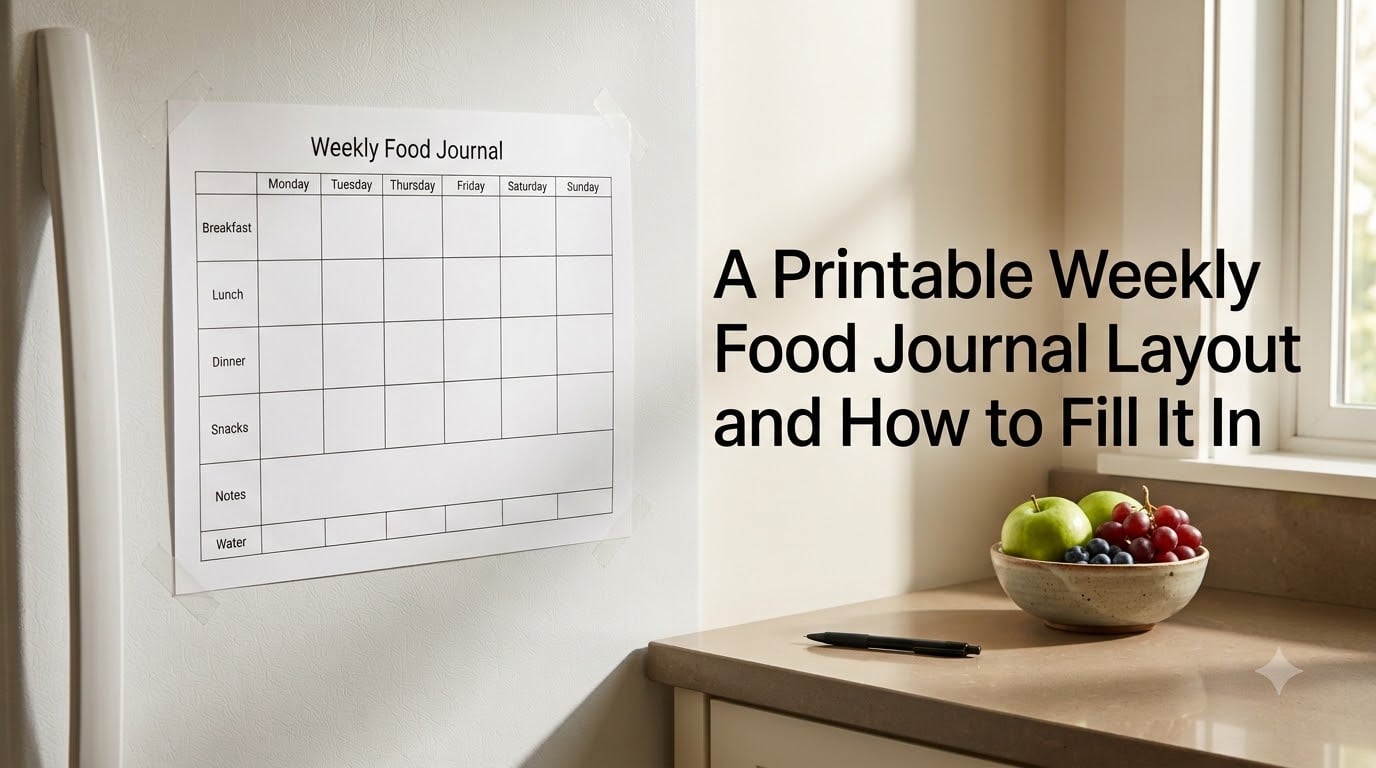
If you have ever tried to keep track of what you eat from memory, you already know how quickly small snacks, extra portions, and late-night nibbles slip through the cracks. That is exactly where a printable weekly food journal layout comes in. A simple printed page, kept where you can see it, turns foggy food choices into a clear picture you can actually work with.
Our team has helped hundreds of people set up food journals, and we keep seeing the same pattern: the people who write things down succeed, and the people who rely on memory tend to stall within two weeks. A good template removes the guesswork. It tells you what to write, when to write it, and what to look for at the end of the week.
This guide walks you through the whole process. You will learn what goes into a strong weekly food journal layout, how to fill in a weekly food journal step by step, what to track, and how to review your entries so the habit actually moves you toward your goals. We also cover the most common mistakes we see beginners make, so you can sidestep them from day one.
Whether your aim is weight loss, mindful eating, identifying a food sensitivity, or just getting honest with yourself about your habits, the right printable template makes the job faster and more accurate. Let’s break down exactly how to set one up and fill it in the right way.
Table of Contents
- What Is a Weekly Food Journal Layout?
- Benefits of Using a Printable Weekly Food Journal
- Anatomy of a Printable Weekly Food Journal Template
- How to Fill In Your Weekly Food Journal: Step-by-Step
- What to Track Each Day in Your Food Journal
- Daily vs Weekly Food Journal: Which Is Right for You?
- How to Review Your Weekly Food Journal Entries
- Paper vs Digital: Choosing Your Tracking Method
- Common Mistakes to Avoid When Filling in Your Journal
- Tips for Sticking With Your Weekly Food Journal
- Frequently Asked Questions
- Conclusion
What Is a Weekly Food Journal Layout?
A weekly food journal layout is a printable page or template designed to record everything you eat and drink over a seven-day period in one organized view. Instead of flipping through daily entries on separate pages, you see your entire week spread out in front of you at a glance.
A well-designed layout usually includes rows or columns for each day of the week, dedicated spaces for meals (breakfast, lunch, dinner, and snacks), and prompts for things like portion size, water intake, hunger levels, and mood. Some templates add space for a weekly summary, a grocery list, or a notes section for observations.
The key difference between a weekly layout and a daily one is scope. A daily tracker captures fine detail, while a weekly layout reveals patterns. Seeing Monday through Sunday side by side makes it easy to spot trends like skipped breakfasts, heavy weekend snacking, or afternoon energy slumps that follow a big lunch.
Think of it as a conversation between you and your eating habits. The layout is the structure that keeps that conversation honest, organized, and short enough that you will actually stick with it.
Benefits of Using a Printable Weekly Food Journal
The benefits of food journaling are backed by more than anecdote. A study published in the American Journal of Preventive Medicine found that people who kept a food journal six days a week lost roughly twice as much weight as those who kept one only one day a week or not at all. Simply having the record made participants more aware and more intentional about their choices.
Here is what a printable weekly food journal does particularly well:
It reveals patterns. Single days can look random, but a week’s worth of entries exposes habits. You might notice you always snack more on Wednesdays or that your portions creep up on weekends.
It catches forgotten calories. A handful of nuts here, a sip of juice there. Research from Cornell University estimated that the average person forgets roughly 200 to 400 calories a day. Writing it down, in real time, closes that gap.
It supports mindful eating. Slowing down to note what you ate, how hungry you were, and how full you felt afterward trains you to pay closer attention during meals. That awareness alone often leads to eating less without any calorie counting.
It links food to feelings. Tracking mood alongside meals can surface emotional eating triggers, like reaching for sweets when stressed or skipping meals when anxious. Those connections are hard to see without a written record.
It pairs perfectly with meal planning. When your week is visible, planning next week’s meals becomes easier. You can repeat what worked and adjust what didn’t.
Printable templates have one more edge over apps: they stay visible. A page taped to your fridge or tucked into your bag is a constant reminder. Apps get buried under notifications, but a physical layout keeps the habit front and center all week.
Anatomy of a Printable Weekly Food Journal Template
Not every printable food journal template looks the same, but the strongest ones share a recognizable set of components. Understanding each piece helps you pick a layout that fits your goals, or customize one to suit you.
Day and date headers. Seven clearly labeled rows or columns (one per day). These anchor your entries and make it obvious if a day is blank.
Meal sections. Most layouts break each day into breakfast, lunch, dinner, and snacks. A few add a separate space for beverages. This is where you record what you actually ate.
Portion or quantity column. A spot to note how much you consumed. This could be in cups, ounces, handfuls, or a simple small-medium-large scale if you prefer not to weigh food.
Time of meal. Logging when you ate helps reveal patterns like late-night snacking, long gaps between meals, or grazing all afternoon.
Hunger and fullness scale. A 1-to-10 scale (1 = starving, 10 = uncomfortably full) helps you connect portions and food choices to satisfaction. Many people discover they eat past comfortable fullness simply because they never paid attention.
Water intake tracker. A row of circles to check off for each glass or bottle of water. Hydration affects appetite, energy, and cravings, so it deserves its own space.
Mood or notes. A small area to jot down how you felt, stress levels, energy, or anything that might have influenced your eating. This is where emotional triggers often surface.
Weekly summary. Some templates dedicate a section at the bottom for end-of-week reflection: what went well, what to change, and a goal for the coming week. This is what turns raw notes into a useful tool.
A printable template with these components gives you everything you need without overwhelming you. You can always skip a column on busy days, but having the structure available means you will capture more on the days you do have time.
How to Fill In Your Weekly Food Journal: Step-by-Step
Filling in a weekly food journal is simple once you build the habit. Follow these six steps and you will have a clear, useful record by the end of each week.
Step 1: Print your layout and place it somewhere visible. Print one page per week and put it on the fridge, inside a kitchen cabinet, or tucked into a notebook you carry. If it is not in sight, it will not get filled in. This single step is the difference between people who stick with journaling and people who quit by day four.
Step 2: Log within five minutes of eating. Write down what you ate, how much, and the time, either right before or right after your meal. Logging in real time is what makes a food journal accurate. Trying to reconstruct the day at 9 p.m. almost always leads to forgotten snacks and estimated portions.
Step 3: Be specific about portions. “Some pasta” is hard to learn from. “1.5 cups of penne with half a cup of marinara” is a record you can act on. You do not need a food scale, but use measurements you can repeat, like cups, handfuls, or “fist-sized.”
Step 4: Rate your hunger before and fullness after. Use a simple 1-to-10 scale. Over a week, this column becomes one of the most valuable in your journal because it shows whether you are eating because you are hungry or out of habit, stress, or boredom.
Step 5: Note mood, energy, and triggers. Even a single word like “stressed,” “tired,” or “celebratory” next to a meal can surface patterns. You might find that your worst eating days line up with your worst mood days, which is a powerful clue.
Step 6: Do a weekly review before starting a new page. At the end of the week, sit down for five minutes and look at the whole sheet. Ask yourself: What patterns do I see? What is one thing I want to change next week? Write that answer at the bottom, then print a fresh page and start again.
That review is what separates journaling from simply keeping records. The act of writing is awareness; the act of reviewing is where change happens.
What to Track Each Day in Your Food Journal
One of the biggest questions beginners ask is what, exactly, to write down. The answer depends on your goals, but here is a practical checklist that covers the essentials without overcomplicating things.
Everything you eat and drink. Yes, everything. That includes cooking oil, the cream in your coffee, the two bites of your kid’s sandwich, and the handful of trail mix you grabbed on the way out the door. Small items add up fast, and this is where most people underestimate.
Portion sizes. Use whatever measurement system works for you: cups, ounces, pieces, or visual references. The goal is consistency, not perfection.
Time of day. Note when each meal or snack happened. This reveals gaps, grazing, and late-night patterns.
Hunger and fullness ratings. A quick number before and after each meal. This trains mindful eating faster than almost anything else.
Water intake. Check off each glass or bottle. Aim for whatever target feels right for your body and activity level.
Mood or situation. A word or two about how you felt or what was happening. “Bored at desk” or “dinner with friends” is enough.
If you have heard of the 3-3-3 rule for food, it is a simple framework worth knowing: aim for three meals, spaced roughly three to five hours apart, with no more than three planned snacks. It is not a rigid rule, but it is a useful structure for people who tend to graze all day or skip meals and then overeat later. You can use it as a quick mental check when filling in your journal.
You do not need to track calories or macros unless your specific goal calls for it. Many people get better results tracking hunger, mood, and patterns than counting every gram. Start simple and add detail only if you need it.
Daily vs Weekly Food Journal: Which Is Right for You?
Both daily and weekly food journals work. The best choice depends on your personality, your goals, and how much detail you want to capture.
A daily food journal gives you the most detail. Each day gets its own page, which means more room for specific portions, macros, recipes, and notes. This format is ideal if you are tracking calories closely, working with a dietitian, or identifying food sensitivities where detail matters. The downside is that it takes more time, and the higher effort can lead to burnout.
A weekly food journal layout trades some detail for the big picture. You see all seven days at once, which makes patterns jump out. This format is ideal for people whose main goal is mindful eating, habit-building, portion awareness, or general weight loss without obsessive tracking. It is faster to maintain and less mentally taxing.
Here is a simple way to decide: if you want depth and precision, go daily. If you want consistency and pattern-spotting, go weekly. If you are not sure, start weekly. It is the format people stick with longest, and consistency always beats detail.
Some people use a hybrid approach: a weekly layout for everyday tracking, plus a separate detailed page for occasional deep-dive days. That gives you the best of both worlds without doubling your workload every single day.
How to Review Your Weekly Food Journal Entries
Filling in your journal is only half the job. The real value comes from the weekly review. Without it, you are collecting data without ever using it.
Set aside five to ten minutes at the end of your week, ideally on the same day each week, to look back over the full page. Many people do this on Sunday evening while planning the week ahead. This makes the review part of a routine rather than something you have to remember.
Look for patterns first. Scan down each column. Do you always skip breakfast on Tuesdays? Do your portions double on Fridays? Are your afternoon snacks tied to a specific mood? Patterns are more useful than any single day’s entries.
Check your hunger and fullness numbers. If you are regularly hitting 8 or 9 on the fullness scale, you may be eating past comfortable satisfaction. If you are often at 1 or 2 before meals, you may be waiting too long to eat.
Connect food to mood and energy. Look for meals that left you energized and meals that left you sluggish. Over time, this helps you build a personal list of foods that work for your body and ones that don’t.
Identify one change. Pick a single adjustment for the coming week, not five. Maybe it is drinking a glass of water before each meal, or adding a vegetable to dinner, or stopping at a 7 on the fullness scale. One focused change is far more likely to stick.
Write it down. Use the summary section at the bottom of your template to record your observation and your one goal. That single sentence turns a page of notes into an actionable plan.
Paper vs Digital: Choosing Your Tracking Method
Both paper and digital food journals can work, but they suit different people. Here is how to choose.
Printable paper templates have several real advantages. They stay visible, they require no battery or app, and handwriting engages your brain more deeply than tapping a screen. People who struggle with phone-based habits often find that a physical page is the only format that lasts. Paper is also faster for simple tracking, since there is nothing to open or log into.
Digital tracking apps shine when you want detailed nutritional data. Apps can calculate calories, macros, and micronutrients automatically, and they often have barcode scanners and large food databases. For people who want precision, apps are hard to beat.
The trade-off is that apps can become tedious, notifications get ignored, and screen fatigue is real. Many people start strong with an app and abandon it within a few weeks. Paper journals tend to have better long-term adherence, even though they capture less detail.
Our recommendation: if you want to build a sustainable habit and spot patterns, start with a printable weekly template. If you need precise macro or calorie data for a specific goal, use an app, but consider pairing it with a simple weekly paper summary for the big-picture review.
Common Mistakes to Avoid When Filling in Your Journal
Most people who abandon food journaling do so for the same handful of reasons. Here are the mistakes we see most often, and how to avoid them.
Trying to reconstruct the day at night. This is the number-one mistake. Memory is unreliable, and by evening you will forget half of what you ate. Log in real time, within five minutes of each meal, even if you just jot a quick note.
Being too vague. “Chicken and rice” tells you nothing a week later. “4 oz grilled chicken, 1 cup white rice, half cup steamed broccoli” is a record you can actually learn from. Aim for enough detail that you could recreate the meal.
Skipping the “bad” days. People tend to skip logging on days they overeat or indulge, because they feel guilty. But those days hold the most useful information. The journal is a tool, not a judge, so record everything honestly.
Tracking too many things at once. If your template has columns for calories, macros, fiber, water, sleep, steps, and mood, you will burn out. Start with food, portions, hunger, and mood. Add columns only when you have a specific reason to.
Never reviewing. A filled-in journal that you never look at is wasted effort. The weekly review is where insight happens, so protect those five minutes.
Judging yourself. Your journal is data, not a report card. Approach it with curiosity instead of criticism, and you will learn far more.
Tips for Sticking With Your Weekly Food Journal
Consistency is the single biggest predictor of success with food journaling. Here are the strategies we have seen work best for building the habit and keeping it.
Keep the template visible. Tape it to the fridge, prop it on the counter, or clip it inside a planner you open daily. Out of sight means out of mind, and missed entries pile up fast.
Attach journaling to an existing habit. Log breakfast right after you pour your coffee. Log dinner right after you clear your plate. Linking the new habit to one you already do makes it nearly automatic.
Use a pen, not a pencil. This sounds small, but a pen signals commitment. You are recording, not drafting. It also removes the temptation to erase entries on days you wish you had eaten differently.
Keep it simple on busy days. A rough entry is better than no entry. On chaotic days, jot the food name and a portion guess and move on. You can always add detail later.
Plan for weekends. Weekends are where most journals break down. Decide in advance how you will log on Saturday and Sunday, even if it means a simpler format those two days.
Celebrate the streak. Mark each completed day with a checkmark or sticker. Seeing a chain of completed days is surprisingly motivating, and it gives you a visual reason to keep going.
Review with someone. If you have a partner, friend, or coach, share your weekly summary. Accountability makes the review feel more real and keeps you honest about what you write down.
Frequently Asked Questions
How to do a food journal template?
To use a food journal template, print one copy per week, place it somewhere visible like your fridge, and fill in each meal right after you eat it. Record what you ate, the portion size, the time, your hunger level before and fullness after, and a quick mood note. At the end of the week, review the full page for patterns and write down one change for the coming week.
What is the 3-3-3 rule for food?
The 3-3-3 rule is a simple eating framework that suggests aiming for three meals per day, spaced roughly three to five hours apart, with no more than three planned snacks. It is not a rigid diet rule, but a useful structure for people who tend to graze all day or skip meals and then overeat later.
Where can I find a printable meal planner template?
You can find printable meal planner templates on sites like OnPlanners, Vertex42, and TemplateLab, many of which offer free PDF downloads. Look for templates that include space for seven days, meal sections, portion notes, and a weekly summary area for the most useful format.
Where can I find a free printable menu planner template?
Free printable menu planner templates are available from OnPlanners, Vertex42, TemplateLab, Printsbery, and Maple Planners. These sites offer downloadable PDFs you can print at home, with options ranging from simple weekly grids to detailed planners that include grocery lists and prep notes.
How often should I fill in my food journal?
You should fill in your food journal within five minutes of each meal or snack, ideally every day for the full week. Logging in real time is what makes the record accurate, because trying to reconstruct the day from memory at night leads to forgotten items and estimated portions.
What should I track in a food journal for weight loss?
For weight loss, track everything you eat and drink, portion sizes, time of day, hunger and fullness ratings, water intake, and mood. You do not need to count calories unless your plan specifically calls for it. Patterns, portions, and hunger awareness often drive better results than calorie counting alone.
Conclusion
A printable weekly food journal layout is one of the simplest, most effective tools you can use to understand your eating habits and make real changes. The layout gives you structure, the act of filling it in builds awareness, and the weekly review turns that awareness into action.
The steps are straightforward: print your template, place it where you will see it, log each meal in real time, note your portions and hunger levels, and review the full week before starting a new page. The people who succeed are not the ones who track perfectly. They are the ones who show up consistently, stay curious, and use each week’s entries to make one small improvement.
Now that you know how to fill in a weekly food journal, the only thing left is to start. Print your first page this week, keep it visible, and give yourself seven days of honest entries. By the time you sit down for your first weekly review, you will already see patterns you never noticed before, and that is exactly where better habits begin.