
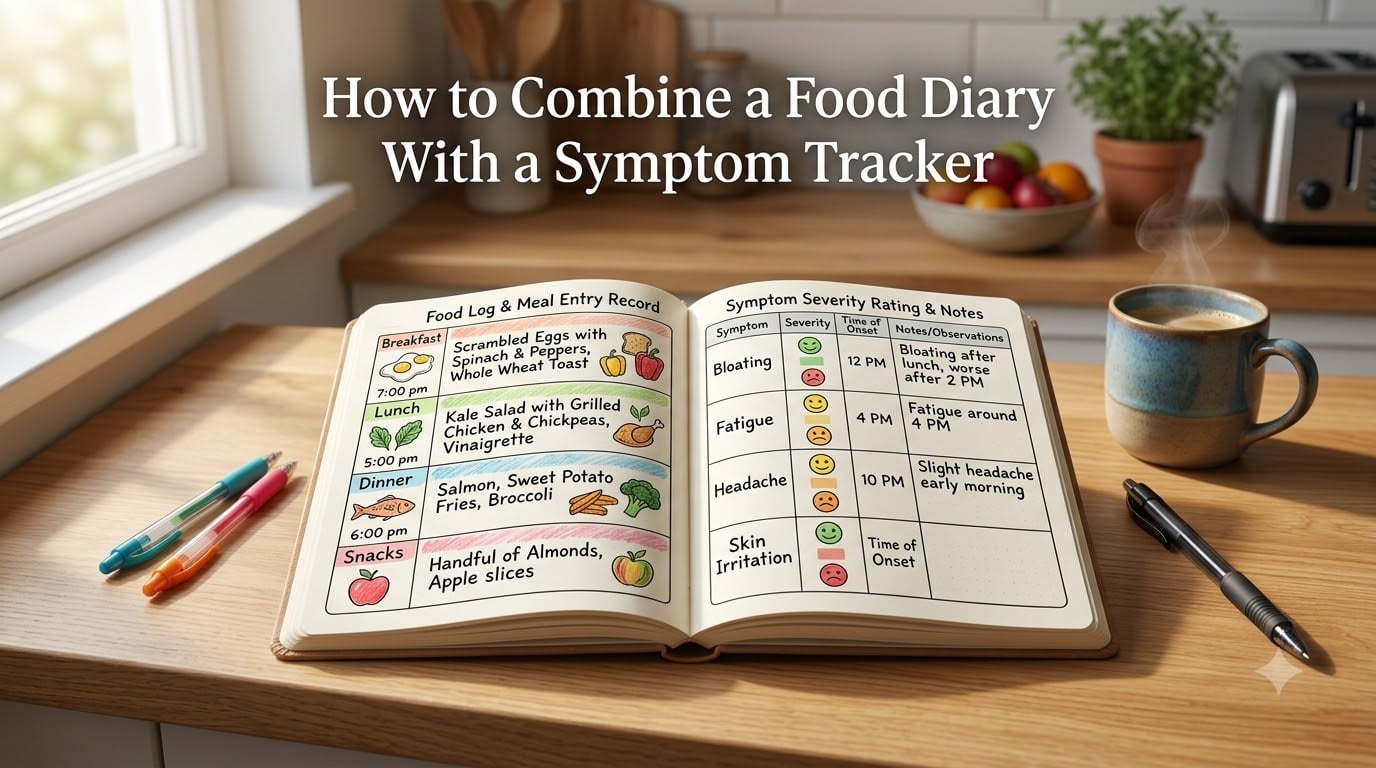
If you have ever finished a meal and felt bloated, foggy, or uncomfortable without a clue why, you already know how frustrating it can be to connect your diet with how you feel. Food sensitivities hide in plain sight. Bloating, fatigue, headaches, skin flare-ups, and irregular digestion can all trace back to meals you barely remember eating.
The fastest way to identify those connections is to combine a food diary with a symptom tracker. Instead of guessing, you record what you eat and how you feel in one place, then watch patterns emerge from your own data. I have used this method personally and recommended it to friends dealing with IBS, food intolerances, and unexplained digestive issues.
This guide walks through every step of setting up a combined tracking system that actually works. You will learn what to track, how to analyze your entries, common mistakes to avoid, and when it is time to bring your log to a doctor. Whether you prefer paper or an app, you can start today.
Table of Contents
- What Is a Combined Food and Symptom Diary?
- Why Combine Food and Symptom Tracking in One System?
- How to Set Up Your Combined Food and Symptom Diary
- What to Track in Your Combined Diary
- Digital vs Paper Diaries: Which Works Better?
- How to Identify Patterns Between Food and Symptoms
- Common Mistakes to Avoid
- When to See a Doctor About Your Symptoms
- Frequently Asked Questions
- Final Thoughts
What Is a Combined Food and Symptom Diary?
A combined food and symptom diary is a single daily log that records everything you eat and drink alongside any physical or emotional symptoms you experience. Think of it as two tools merged into one document or app screen.
A standard food diary captures meals, snacks, beverages, ingredients, and portion sizes. A symptom tracker records digestive issues, headaches, skin problems, fatigue, mood changes, and other reactions your body produces. When you combine them, you can see the timing, severity, and frequency of symptoms next to the foods that preceded them.
The combined approach is more accurate than relying on memory. Research consistently shows people underestimate what they eat and forget details about symptoms within a day or two. Writing things down as they happen gives you a concrete record to work from.
This method works for identifying food triggers in conditions like IBS, food intolerances, histamine reactions, and general digestive discomfort. It also supports elimination diets, low-FODMAP protocols, and clinical appointments where doctors need to see real data.
Why Combine Food and Symptom Tracking in One System?
Tracking food and symptoms separately is like trying to solve a puzzle with pieces scattered across two boxes. You might have great food logs and great symptom notes, but seeing the connection between them requires flipping back and forth constantly.
Combining both into one unified system gives you several concrete advantages.
First, timing becomes visible. When a symptom appears, you can trace back two, four, or eight hours to see exactly what you ate. This timing window is what makes trigger food identification possible.
Second, a combined log creates patterns. After two to three weeks, you start to see repeat offenders. Maybe every time you have dairy, bloating follows within hours. Maybe wheat triggers brain fog the next morning. These patterns only surface when food and symptoms share the same timeline.
Third, your doctor gets useful data. A vague complaint like “I get stomach pain” becomes “abdominal cramping occurs 3 hours after meals containing onion or garlic, rated 6 out of 10 in severity.” That specificity helps your healthcare provider make faster, more accurate decisions about testing and treatment.
Fourth, combined tracking supports elimination diets. If you remove a food group and reintroduce it later, your diary shows whether symptoms improved during elimination and returned during reintroduction. That is the gold standard for confirming a food intolerance.
Finally, a combined system takes less effort than maintaining two separate logs. You open one page or app, enter everything at once, and move on with your day.
How to Set Up Your Combined Food and Symptom Diary
Setting up your combined diary takes about 30 minutes. Here is how to do it in three straightforward steps.
Step 1: Choose Your Format
Decide whether you will track on paper or digitally. Paper works well if you prefer a physical notebook, enjoy writing things down, or want a printable template you can carry anywhere. Digital tracking suits people who always have their phone, want automated reminders, and prefer searchability.
If you choose paper, grab a notebook or print a template with columns for time, food, symptoms, severity, and notes. If you go digital, pick an app designed specifically for combined food and symptom tracking rather than a calorie counter with a symptom field bolted on.
The best format is the one you will actually use consistently. A simple notebook entry beats a sophisticated app you never open.
Step 2: Build Your Daily Template
Create a daily entry structure with these fields: date, time, foods and drinks consumed, portion sizes, symptoms experienced, symptom severity on a 1-10 scale, bowel movements if relevant, and lifestyle factors like stress, sleep, and exercise.
A monthly grid format works well for visual pattern spotting. Each row is one day, and preset columns capture breakfast, lunch, dinner, snacks, symptoms, and severity. This layout lets you scan weeks at a glance instead of reading through paragraphs of notes.
Leave a notes column for anything unusual. Maybe you ate at a restaurant and cannot verify ingredients. Maybe you were traveling, under extra stress, or took a new medication. Context matters when you review your data later.
Step 3: Set Reminders and Build a Routine
The biggest reason food and symptom diaries fail is inconsistent logging. People forget to write things down during the day, then try to reconstruct meals from memory that evening. That reconstruction is unreliable.
Set phone reminders for meal times and a wind-down reminder before bed. Log immediately after eating rather than waiting until the end of the day. If you are using paper, keep your notebook somewhere visible like the kitchen counter or dining table.
Consistency matters more than perfection. A brief entry right after a meal is more valuable than a detailed entry you write from memory six hours later.
What to Track in Your Combined Diary
The quality of your diary depends on what you choose to record. Too little detail and patterns stay hidden. Too much detail and you will quit from exhaustion. Here is exactly what to include.
Foods and Drinks
Write down everything you consume, including water, coffee, alcohol, supplements, and condiments. Many people discover that coffee, not food, triggers their symptoms. Others find that a specific sauce or seasoning is the hidden culprit.
Record portion sizes in approximate terms. A handful of almonds, a cup of pasta, or a large restaurant portion. You do not need to weigh food, but relative size helps when comparing similar meals with different outcomes.
Note preparation methods. Raw onions affect people differently than cooked ones. Fried foods cause different reactions than baked ones. If you ate at a restaurant, write the dish name and any ingredients you can identify.
Symptoms and Severity
Log every symptom, not just digestive ones. Bloating, gas, cramping, diarrhea, and constipation are obvious, but also track headaches, fatigue, brain fog, joint pain, skin breakouts, anxiety, and mood shifts. Food affects your whole body, not just your gut.
Rate severity on a scale of 1 to 10. A 3 is mild and barely noticeable. A 7 is uncomfortable and disruptive. A 10 is severe enough to stop you from functioning. Severity numbers help you distinguish a minor reaction from a significant one when you review patterns.
Record the time each symptom appears and how long it lasts. This timing data is what connects symptoms back to specific foods.
Bowel Movements and Bristol Stool Scale
If you are tracking digestive health, record bowel movements using the Bristol Stool Scale. This scale ranges from Type 1 (hard, separate lumps) to Type 7 (watery). It gives you and your doctor an objective way to describe stool consistency without ambiguity.
Note frequency, urgency, and any pain. These details matter enormously for diagnosing IBS, inflammatory bowel conditions, and food intolerances.
Lifestyle Factors
Food is not the only thing that affects how you feel. Stress, sleep quality, exercise, medications, and hormonal changes all influence symptoms. Tracking these alongside food and symptoms helps you avoid blaming a meal for what was really a stress response or a poor night of sleep.
Rate stress on a 1-5 scale. Note sleep hours and quality. Record any workouts and their intensity. Log medications and supplements with timing. Include notes about your menstrual cycle if relevant, since hormonal shifts can amplify digestive symptoms.
This is where a combined diary truly outperforms a simple food log. You capture the full picture of what your body is experiencing.
Digital vs Paper Diaries: Which Works Better?
Neither format is universally better. The right choice depends on your habits and preferences.
Paper diaries offer simplicity and zero screen time. You can customize any layout, draw quick sketches of meals, and flip through pages to spot visual patterns. Printable templates are cheap or free, and you never deal with app updates or subscription fees. The downside is no search function, no automatic data analysis, and a risk of losing your notebook.
Digital diaries provide convenience and features. Apps offer food databases so you can log meals quickly, send reminders to keep you consistent, and generate charts that highlight correlations automatically. Many let you export reports for doctor visits. The trade-off is cost for premium features, potential privacy concerns with health data, and the temptation to switch apps constantly instead of committing to one system.
Forum users I came across in research communities shared a consistent insight. Simple, structured formats beat complex apps every time. People who succeeded with tracking picked a format, stuck with it for at least three weeks, and focused on consistency over sophistication.
How to Identify Patterns Between Food and Symptoms
Recording data is only half the process. The other half is learning to read what your diary tells you. Here is how to analyze your entries effectively.
Look for Repeat Offenders
After two to three weeks of consistent logging, review your diary for foods that appear before symptoms every time. If bloating follows every dairy-containing meal, dairy is a strong candidate. If headaches appear the morning after wheat-heavy dinners, wheat deserves closer attention.
Look for foods that show up in symptom entries at least three times. One reaction could be coincidence. Three reactions in the same pattern suggest a real connection.
Track Symptom Timing
Timing reveals everything. Food intolerance reactions typically occur within 2 to 4 hours of eating. Some delayed reactions appear 6 to 24 hours later. Immediate reactions within minutes usually indicate a food allergy rather than an intolerance.
Use the 2-to-4 hour window as your primary detection zone. When a symptom hits, look back at what you ate in that timeframe. Write that food-symptom pair in a separate list and watch for it to repeat.
Use a Simple Analysis Method
You do not need statistical software to find patterns. Try color coding foods that precede symptoms. Highlight dairy entries in yellow, wheat in blue, and onion and garlic in green. When you scan a week of entries, clusters of the same color before symptoms jump out immediately.
Alternatively, keep a running list of suspected triggers. Each time a symptom occurs, add the likely food with the date. After a month, foods that appear repeatedly on that list are your top suspects for an elimination challenge.
If you are tracking for a specific protocol like low-FODMAP, use your diary to monitor symptom changes during elimination and reintroduction phases. Symptoms should improve when you remove the trigger and return when you reintroduce it. That confirms the connection.
Common Mistakes to Avoid
Even the best diary setup can fail if you fall into common traps. Here are the mistakes I see most often.
Logging inconsistently is the number one reason people give up. You skip two days, try to reconstruct them from memory, feel overwhelmed, and quit entirely. If you miss a day, just start fresh the next morning. Partial data is better than no data.
Being too vague with food descriptions also undermines your diary. Writing “lunch” or “sandwich” tells you nothing later. Write “turkey sandwich on wheat bread with lettuce, tomato, and mayo, side of chips.” Ingredients matter, especially hidden ones like sauces and seasonings.
Ignoring lifestyle factors leads to false conclusions. If you blame a meal for bloating but ignore that you slept four hours and were under intense work stress, you might eliminate a food that was not the problem. Always consider the full context.
Stopping too early is another common mistake. Two or three days of tracking rarely reveal anything. Patterns need at least two weeks of consistent data to surface. Commit to a minimum tracking period before drawing conclusions.
Finally, trying to self-diagnose from your diary alone can be risky. Your diary is a tool for gathering data and identifying suspects. Confirmation of food intolerances, allergies, or digestive conditions should come from a qualified healthcare provider.
When to See a Doctor About Your Symptoms
A combined food and symptom diary is a powerful self-tracking tool, but it is not a substitute for medical care. Certain symptoms warrant prompt professional attention.
See a doctor if you experience unexplained weight loss, blood in your stool, severe abdominal pain, persistent diarrhea or vomiting, difficulty swallowing, or symptoms that disrupt your daily life. These could indicate conditions that need medical diagnosis and treatment beyond dietary changes.
Bring your diary to your appointment. A well-kept log gives your doctor concrete data to work from. Highlight the patterns you noticed and list your suspected trigger foods. Your doctor can order appropriate tests, refer you to a dietitian, or guide you through a structured elimination diet with professional oversight.
If your diary reveals no clear patterns after three to four weeks of consistent tracking, that is also worth discussing. Your symptoms may stem from non-food causes that a healthcare provider can help investigate.
Frequently Asked Questions
How to track food diary?
To track a food diary, write down everything you eat and drink immediately after each meal, including portion sizes, ingredients, and preparation methods. Use a notebook or app with columns for time, food, and notes. Log consistently for at least two to three weeks to gather enough data for pattern identification.
How to do a food and symptom diary?
To do a food and symptom diary, record your meals, snacks, and beverages in one column and any symptoms you experience in an adjacent column, along with symptom timing and severity on a 1-10 scale. Review entries after two to three weeks to identify foods that consistently precede symptoms.
What is the best app for tracking food and symptoms?
The best app for tracking food and symptoms is one designed specifically for combined tracking rather than a general calorie counter. Look for an app that lets you log meals, symptoms, bowel movements, and lifestyle factors like stress and sleep in one place, with the ability to export reports for doctor visits. Try a few options and choose whichever you will use consistently.
What are the downsides of using a food diary?
The downsides of using a food diary include the effort required to log consistently, the risk of becoming overly focused on food in an unhealthy way, and the possibility of misidentifying triggers if you ignore lifestyle factors like stress and sleep. Some people also find tracking tedious and abandon it before patterns emerge.
Final Thoughts
Learning how to combine a food diary with a symptom tracker gives you a practical method for understanding your body on your own terms. Instead of guessing which foods bother you, you build a data set that reveals real connections between what you eat and how you feel.
Start simple. Pick a format, set up your daily template, and commit to two weeks of consistent logging. Track foods, symptoms, timing, severity, and lifestyle factors in one place. Review your entries for repeat patterns, then use what you find to guide dietary changes or a conversation with your doctor.
The goal is not perfection. It is awareness. Even a few weeks of combined tracking can uncover trigger foods that have been causing discomfort for years. Your body has been giving you clues all along. A combined diary simply gives you a reliable way to read them.