
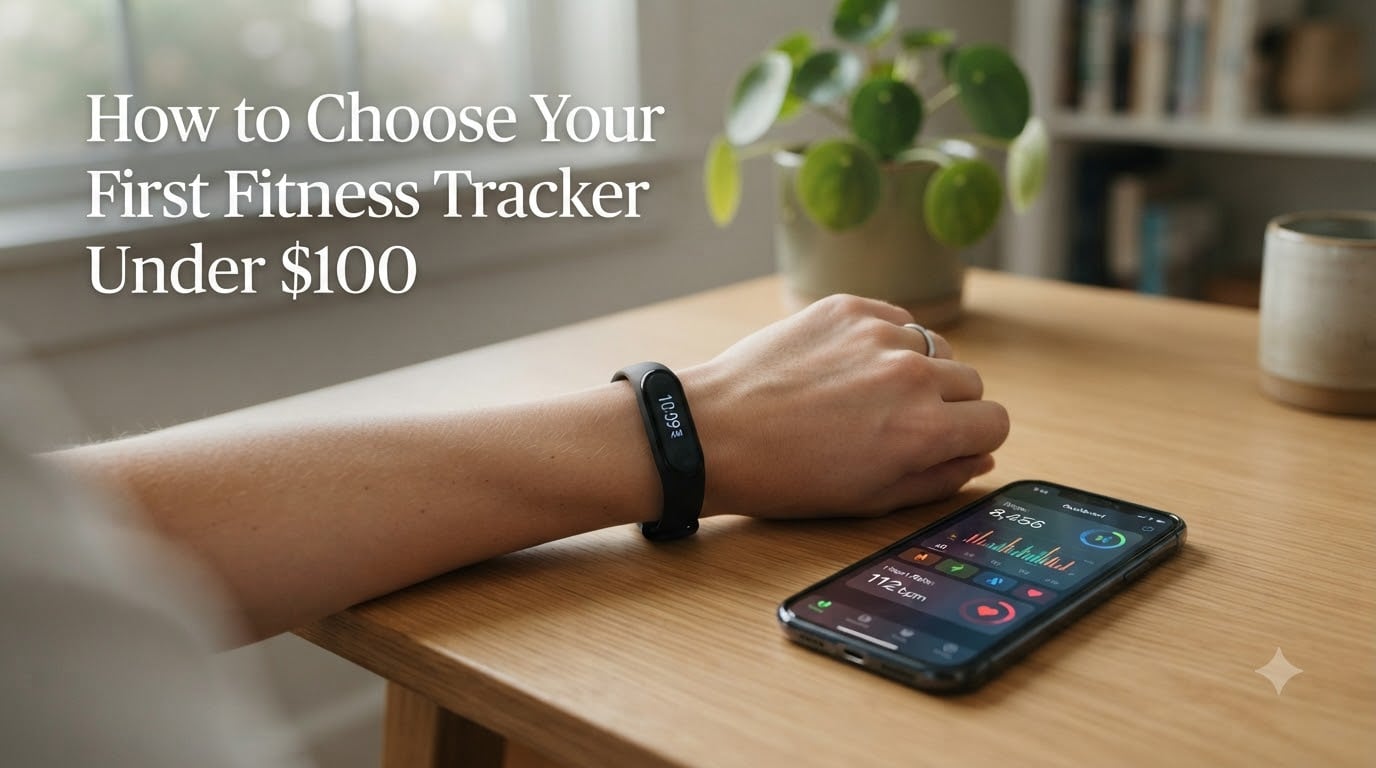
Buying your first fitness tracker can feel overwhelming. I remember spending two hours comparing models before giving up and closing every browser tab. The good news is that getting a solid fitness tracker under $100 is genuinely possible in 2026, and you do not need to research dozens of products to land on a great one. This guide walks you through the exact decision process I use when recommending devices to friends who want to start tracking their activity without overspending.
By the end of this article, you will know what features actually matter at the $100 price point, which ones are marketing fluff, and how to avoid the subscription traps that catch so many first-time buyers. Let’s get you from confused to confident.
Table of Contents
- What Exactly Does $100 Get You in a Fitness Tracker?
- Step 1: Start With Your Phone
- Step 2: Choose Your Tracker Style: Band, Smartwatch, or Hybrid
- Step 3: Know Which Features Actually Matter (and Which Are Hype)
- Step 4: Watch Out for Hidden Subscription Costs
- Step 5: Match Your Tracker to Your Workout Style
- Common Mistakes First-Time Buyers Make
- Your Quick Decision Checklist
- Frequently Asked Questions
- Conclusion
What Exactly Does $100 Get You in a Fitness Tracker?
A $100 budget actually covers a lot more than it did five years ago. In 2026, you can expect a solid budget fitness tracker to include step counting, heart rate monitoring, sleep tracking, and at least 7 days of battery life. Most bands in this range also handle basic workout modes like running, cycling, and swimming.
Here’s the realistic breakdown of what you’ll find under $100:
- Entry tier ($30-$50): Basic bands from brands like Xiaomi and Amazfit. Steps, heart rate, sleep, simple notifications. Good for absolute beginners who just want to start moving more.
- Mid tier ($50-$80): Better build quality, AMOLED displays, more accurate sensors, smartphone notifications, and basic smartwatch features. This is the sweet spot for most beginners.
- Upper tier ($80-$100): Built-in GPS, premium displays, more advanced sleep tracking, and longer battery life. You sacrifice some premium-brand polish but keep core functionality.
What you usually do not get under $100 is full smartwatch functionality, premium ECG sensors, or cellular connectivity. If those features matter to you, you should adjust your budget or rethink whether you actually need a smartwatch versus a dedicated fitness band.
Step 1: Start With Your Phone
The most important thing when choosing a fitness tracker is making sure it actually works with your phone. This sounds obvious, but I see beginners skip this step all the time. They fall in love with a tracker online, buy it, then discover it pairs poorly with their device or locks them out of certain features.
For iPhone users, almost every tracker on the market pairs with iOS, but the best integrations come from brands that prioritize iOS support. Apple Watch is the obvious premium choice, but it sits well above our $100 budget. Budget bands from Fitbit, Amazfit, and Xiaomi all work with iOS, though you may lose some features compared to Android users on the same device.
For Android users, your options are more open. Most budget fitness trackers support Android equally well or even better than iOS. If you have a Samsung Galaxy phone, you get additional perks with Samsung’s own wearables, but the cross-platform brands like Garmin, Fitbit, and Amazfit work seamlessly across both ecosystems.
Before you look at any other feature, confirm the tracker you want supports your phone’s operating system version. Check the manufacturer’s compatibility list before purchasing.
Step 2: Choose Your Tracker Style: Band, Smartwatch, or Hybrid
Do you need a smartwatch or is a fitness band enough? For most beginners, the answer is a fitness band. Here’s how they compare for someone starting out.
Fitness Bands
Fitness bands are slim, lightweight, and focused purely on health tracking. They typically last 7 to 14 days on a single charge, which means you can wear them through the night without thinking about battery. Bands are also the most affordable option, with many great choices under $100. They are ideal if your main goal is step counting, heart rate monitoring, and sleep tracking.
Smartwatches
Smartwatches offer bigger displays, more apps, and smartwatch-style features like music control and mobile payments. The trade-off is daily charging and a higher price point. Most smartwatches under $100 are older models or entry-level versions that compromise on either fitness accuracy or smart features. If you want a smartwatch experience on a budget, expect trade-offs.
Hybrid Trackers
Hybrid trackers look like traditional analog watches but hide fitness sensors inside. They work well for people who want a fitness tracker that does not look like one. Battery life is usually excellent, often measured in months, but the trade-off is limited displays and fewer smart features.
For your first fitness tracker, I recommend a band. Beginners do not need the complexity of a smartwatch. A simple band that accurately tracks your activity will serve you better than a feature-packed smartwatch that confuses you on day one.
Step 3: Know Which Features Actually Matter (and Which Are Hype)
Manufacturers love to pack budget trackers with feature lists that look impressive. The trick is knowing which features actually contribute to your goals and which ones are marketing fluff. Here is the breakdown of what matters for a beginner on a budget.
Heart Rate Monitoring
Optical heart rate sensors work well enough for resting heart rate and general exercise tracking. They struggle with high-intensity interval training and any wrist movement that breaks the sensor contact. For under $100, you will get continuous heart rate monitoring, but the accuracy during intense workouts will be acceptable, not perfect. Do not pay extra for ECG sensors at this price point. The technology is not refined enough in budget trackers to be medically useful.
Sleep Tracking
Sleep tracking is one of the most valuable features in a budget tracker. The data is not perfect, but most users find it accurate enough to identify patterns. Look for trackers that track sleep stages (light, deep, REM) rather than just total sleep time. This deeper insight is what helps you actually improve your rest.
GPS: Built-in vs Connected
Is built-in GPS worth it? It depends on whether you run, cycle, or hike outdoors without your phone. Built-in GPS lets you leave your phone at home and still get accurate distance and pace data. Connected GPS uses your phone’s GPS signal, which works fine but requires you to carry your phone.
Built-in GPS drains battery faster and usually pushes a tracker above $100. If you mostly exercise at home, at the gym, or with your phone in your pocket, connected GPS is fine. If you want freedom from your phone, save up for built-in GPS or accept a budget tracker that lacks it.
Battery Life
Battery life is one of the biggest differentiators between bands and smartwatches. Bands typically last 7 to 14 days, while smartwatches often need daily charging. For first-time buyers, longer battery life means less hassle and more consistent tracking. You are more likely to wear a tracker that just works without daily charging rituals.
Water Resistance Ratings Explained
Water resistance ratings confuse almost everyone. A 5 ATM rating means the tracker can handle swimming in pools and shallow water, but not high-velocity water sports or deep diving. IP68 ratings mean dust-tight and protected against continuous water immersion, but manufacturers interpret this differently. For most beginners, 5 ATM is enough. You can shower, swim, and wash dishes without worry.
Step 4: Watch Out for Hidden Subscription Costs
Do fitness trackers need subscriptions? Many do, and the cost catches first-time buyers off guard. Some trackers advertise free apps but then lock advanced features like detailed sleep analysis, guided workouts, or personalized insights behind a monthly fee that typically runs $5 to $10 per month.
Over three years, a $10 monthly subscription adds up to $360 on top of your one-time tracker purchase. That is not a budget fitness tracker anymore. Before you buy, check what the free app actually offers and what is hidden behind a paywall. The most user-respected budget brands, like basic Fitbit, Xiaomi, and Amazfit, offer most core features without subscriptions.
You do not need a subscription to count steps, monitor heart rate, or track sleep basics. You only need one if you want advanced insights, guided programs, or premium health metrics. For a beginner, the free tier is usually enough.
Step 5: Match Your Tracker to Your Workout Style
Different activities put different demands on your tracker. Here is a quick guide to matching your tracker to your workout style.
- Walking and casual fitness: Any band under $100 will work. Focus on comfort and battery life.
- Running and cycling: Look for built-in GPS if your budget allows. Connected GPS works if you carry your phone.
- Swimming: Make sure the tracker has 5 ATM water resistance and a swim-tracking mode.
- HIIT and weightlifting: Heart rate accuracy matters more here. Test the tracker during intense intervals before committing.
- Sleep-focused tracking: Pick a comfortable band with detailed sleep stages. Battery life matters more than features.
Common Mistakes First-Time Buyers Make
After reading countless forum posts and helping friends pick their first trackers, I have seen the same mistakes come up again and again. Avoid these to save yourself frustration and money.
Buying the most expensive option you can afford. The most expensive tracker under $100 is rarely the best beginner choice. Often, you are paying for features you will not use. A $50 band that you actually wear beats a $100 smartwatch that sits on your charger.
Ignoring the app experience. The hardware is only half the equation. If the app is clunky, confusing, or full of ads, you will stop using the tracker. Read reviews about the companion app before buying.
Choosing based on looks alone. A pretty tracker that does not fit comfortably will end up in a drawer. Comfort matters more than aesthetics for a device you wear 24/7.
Forgetting about ecosystem lock-in. Some brands make it hard to switch once you buy in. Your data lives in their app, and switching to another brand often means losing your history. Choose a brand with solid data export options if this matters to you.
Expecting medical-grade accuracy. Budget trackers are not medical devices. The heart rate and sleep data are estimates, not diagnoses. Use them for trends and motivation, not for medical decisions.
Your Quick Decision Checklist
Use this numbered checklist to make your final decision. It walks through the exact steps I use when helping someone pick their first tracker.
- Confirm your phone’s operating system is fully supported by the tracker.
- Decide between a band, smartwatch, or hybrid based on your lifestyle.
- Prioritize the features that match your main fitness goal (sleep, steps, workouts).
- Check the battery life expectations and confirm you can live with the charging schedule.
- Verify the water resistance rating covers your activities.
- Read the fine print on subscription costs. Identify what is free and what is paid.
- Read app reviews from current users to gauge the software experience.
- Try it on if possible. Comfort matters more than specs.
- Set a realistic accuracy expectation. Budget trackers are tools, not medical instruments.
- Set a goal before you start. A tracker is most useful when you have a target to hit.
Frequently Asked Questions
What is the most important thing when choosing a fitness tracker?
The most important thing is phone compatibility. Your tracker must work seamlessly with your phone’s operating system or you will lose features and get frustrated. Start by confirming the tracker supports your specific phone model and OS version before looking at any other feature.
Do I need a smartwatch or is a fitness band enough?
For most beginners, a fitness band is enough. Bands are lighter, last 7 to 14 days on a charge, and cost less than smartwatches. They cover steps, heart rate, and sleep tracking, which is what most beginners actually need. A smartwatch makes sense if you specifically want apps, music control, or mobile payments on your wrist.
Is built-in GPS worth it?
Built-in GPS is worth it if you run, cycle, or hike outdoors without your phone. It lets you track distance and pace accurately while leaving your phone at home. If you mostly exercise with your phone in your pocket, connected GPS provides the same accuracy at a lower cost and with better battery life.
How much should I spend on a fitness tracker?
For a first fitness tracker, $50 to $80 is the sweet spot. This range gets you accurate sensors, a comfortable design, and several days of battery life without paying for features you will not use. Spending under $100 is realistic for a quality beginner tracker in 2026.
What features do I need in a fitness tracker?
For a beginner, focus on these core features: accurate step counting, 24/7 heart rate monitoring, sleep tracking with stages, at least 5 days of battery life, and 5 ATM water resistance. These cover the basics for most fitness goals. Skip advanced features like ECG, SpO2, and built-in GPS unless you have a specific use case for them.
Do fitness trackers need subscriptions?
Many fitness trackers do not require subscriptions for core features like step counting, heart rate monitoring, and sleep tracking. However, some brands lock advanced insights, guided workouts, and detailed health metrics behind monthly fees of $5 to $10. Check what is free before buying, so you are not surprised by ongoing costs.
Conclusion
Choosing your first fitness tracker under $100 does not have to be complicated. Start with phone compatibility, decide between a band and smartwatch, focus on the features that match your actual goals, and watch out for subscription costs. That is the whole process in four steps.
The best fitness tracker for beginners is the one you will actually wear every day. Pick something comfortable, accurate enough for your goals, and affordable enough that you do not stress about it. Then set a goal, start tracking, and let the data guide your progress. Your first fitness tracker should be the start of a habit, not a tech project. Keep it simple, stay consistent, and the results will follow.