
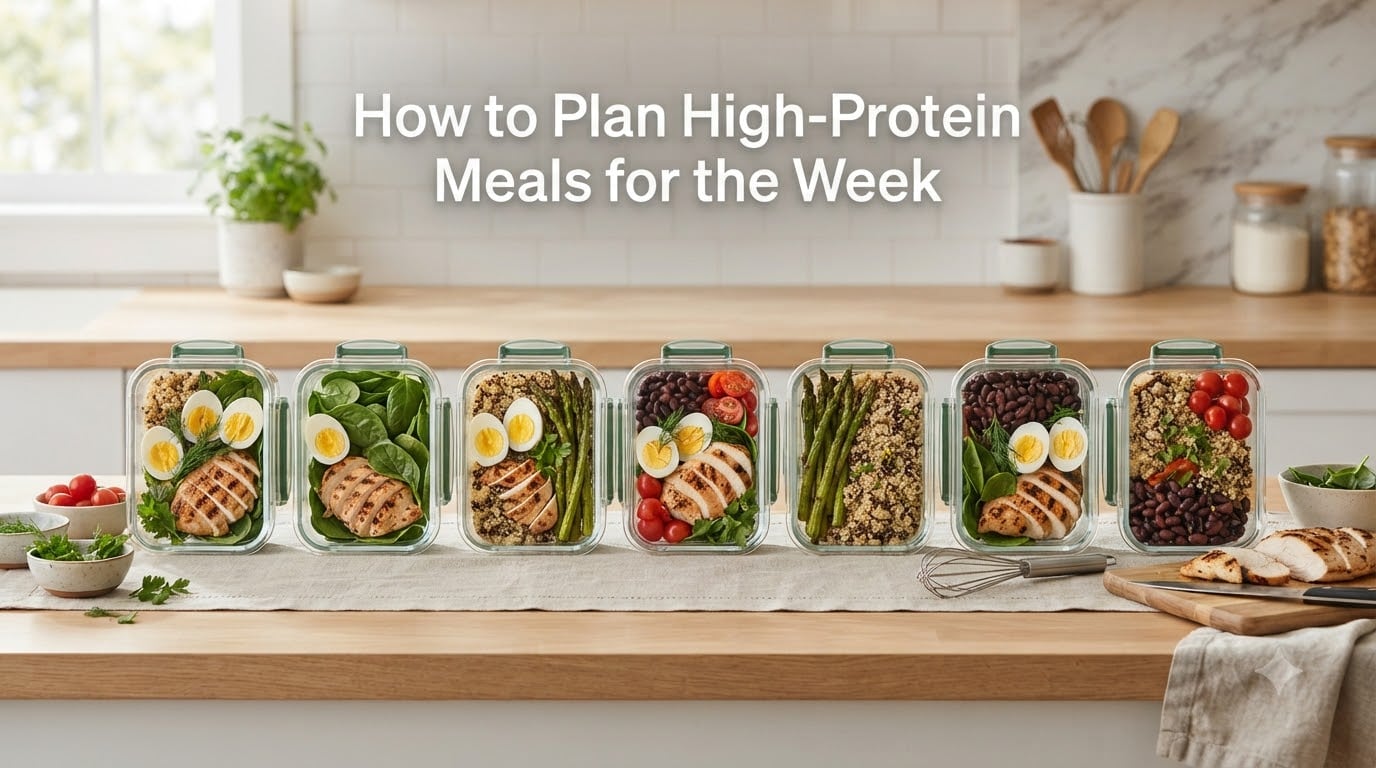
Learning how to plan high-protein meals for the week changed the way I approach eating. Instead of scrambling every morning wondering what to cook, I walk into the kitchen knowing exactly what is on the menu. My energy stays steady, my snacking has dropped, and I finally hit my protein goals without obsessing over every bite.
If you have ever tried to eat more protein and given up by Wednesday because meal planning felt overwhelming, you are in the right place. This guide breaks down the entire process into simple, repeatable steps that work whether your goal is weight loss, muscle building, or just feeling more satisfied after meals.
High-protein meal planning is the practice of scheduling and preparing meals across the week that each contain 25 to 40 grams of protein, helping you consistently hit daily targets of 80 to 150 grams. It supports muscle maintenance, keeps you full longer, and has a higher thermic effect than fats or carbs, meaning your body burns more calories digesting it.
Our team has tested these strategies with busy parents, active women lifting weights, budget-conscious students, and people juggling night-shift schedules. The system below adapts to all of them.
Table of Contents
- How to Plan High-Protein Meals for the Week: The 5-Step Framework
- Quick Summary: 7-Day Protein Overview
- 7-Day High-Protein Meal Plan
- Complete Shopping List
- Meal Prep Instructions: Your Power Hour Guide
- Budget Tips for High-Protein Meal Planning
- Vegetarian and Plant-Based Protein Swaps
- Meal Prep Storage Tips
- How to Hit 150g of Protein a Day Without Feeling Overwhelmed
- FAQs
- Conclusion
How to Plan High-Protein Meals for the Week: The 5-Step Framework
Planning high-protein meals for the week follows a simple five-step process that takes about 30 minutes of planning and 90 minutes of hands-on cooking. Here is the exact framework I use every weekend.
Step 1: Calculate your daily protein target. For most people, aim for 0.7 to 1 gram of protein per pound of body weight. If you weigh 150 pounds, that means 105 to 150 grams per day. People focused on fat loss while preserving muscle should target the higher end of that range.
Step 2: Divide protein across meals. Split your daily target across breakfast, lunch, dinner, and optional snacks. Aim for 25 to 40 grams per main meal. If your goal is 130 grams per day, that looks like roughly 35g at breakfast, 35g at lunch, 40g at dinner, and 20g in snacks.
Step 3: Choose your protein sources. Pick 3 to 4 protein staples for the week from both animal and plant sources. Rotate them to avoid the chicken-and-rice fatigue that derails most meal plans.
Step 4: Build a shopping list. Write down everything you need before heading to the store. This prevents impulse buys and ensures you have enough protein to cover all seven days.
Step 5: Prep in one session. Block out 90 minutes on Sunday to batch-cook proteins, chop vegetables, and portion meals into containers. This single session eliminates the daily decision fatigue that kills most healthy eating plans.
For women who lift weights, the same formula applies. I have worked with active women who need 120 to 150 grams per day, and the process is identical. The key difference is being intentional about spreading protein across all meals rather than backloading everything at dinner, which is a mistake I see constantly.
One popular approach worth knowing is the 3-3-3 rule diet. This framework suggests eating 3 balanced meals, 3 protein-rich snacks, and drinking 3 liters of water per day. While not a strict meal plan, it provides a simple structure for people who feel overwhelmed by calorie and macro tracking. It works well as a starting point before graduating to more precise protein targeting.
Quick Summary: 7-Day Protein Overview
Here is the full week at a glance. Every day hits between 120 and 145 grams of protein, which works for most adults targeting the 100 to 150 gram range. Adjust portion sizes up or down based on your personal target.
| Day | Breakfast | Lunch | Dinner | Total Protein |
|---|---|---|---|---|
| Monday | Greek yogurt parfait (28g) | Chicken and quinoa bowl (38g) | Salmon with sweet potato (42g) | 132g |
| Tuesday | Egg white muffins (26g) | Turkey wrap (35g) | Ground beef stir-fry (45g) | 131g |
| Wednesday | Cottage cheese bowl (30g) | Lentil soup (24g) | Chicken thighs with rice (40g) | 125g |
| Thursday | Protein overnight oats (30g) | Tuna salad (32g) | Pork tenderloin (38g) | 128g |
| Friday | Breakfast burrito (28g) | Chicken grain bowl (36g) | Shrimp and quinoa (40g) | 132g |
| Saturday | Veggie frittata (26g) | Leftover shrimp bowl (35g) | Steak with vegetables (45g) | 131g |
| Sunday | Protein pancakes (28g) | Turkey meatball sub (35g) | Baked cod with quinoa (38g) | 127g |
Add 10 to 20 grams of protein from snacks each day, such as a protein shake, hard-boiled eggs, or a handful of almonds, to push daily totals higher if your target exceeds 140 grams.
7-Day High-Protein Meal Plan
This meal plan mixes quick-prep options with batch-cooked meals so you are never stuck cooking from scratch on a busy weeknight. I have included protein counts for every meal and built in leftover strategies to cut your total cooking time in half.
Monday
Breakfast: Greek Yogurt Parfait (28g protein). Layer 1 cup of plain Greek yogurt with 1 tablespoon of chia seeds, half a cup of berries, and a drizzle of honey. Top with a quarter cup of granola for crunch. This takes about 3 minutes to assemble.
Lunch: Chicken and Quinoa Bowl (38g protein). Combine 4 ounces of prepped grilled chicken breast, half a cup of cooked quinoa, roasted vegetables, and a drizzle of tahini dressing. This is one of my favorite packable lunches because it tastes great cold.
Dinner: Salmon with Sweet Potato (42g protein). Bake a 5-ounce salmon fillet at 400 degrees Fahrenheit for 12 to 15 minutes. Serve with a medium roasted sweet potato and a side of steamed broccoli. Salmon is packed with omega-3s, making this meal a double win for overall health.
Tuesday
Breakfast: Egg White Muffins (26g protein). These are prepped on Sunday and reheated in 30 seconds. Mix egg whites with diced bell peppers, spinach, and a sprinkle of feta. Bake in a muffin tin for 20 minutes. Three muffins give you a solid protein hit.
Lunch: Turkey Wrap (35g protein). Load a whole-wheat tortilla with 4 ounces of sliced turkey breast, hummus, spinach, and avocado. Roll it up and pack with a side of baby carrots. This wrap holds up well in a lunchbox without getting soggy.
Dinner: Ground Beef Stir-Fry (45g protein). Brown 5 ounces of lean ground beef (90 percent lean or higher) with garlic, ginger, mixed vegetables, and a soy sauce glaze. Serve over half a cup of brown rice. This meal comes together in under 20 minutes, making it perfect for busy nights.
Wednesday
Breakfast: Cottage Cheese Bowl (30g protein). Top a cup of low-fat cottage cheese with cherry tomatoes, cucumber, and everything bagel seasoning. For a sweet version, swap the savory toppings for pineapple chunks and cinnamon. Cottage cheese is one of the most underrated protein staples in my kitchen.
Lunch: Lentil Soup (24g protein). A hearty bowl of lentil soup with a slice of whole-grain bread makes a warming, fiber-rich lunch. Lentils provide 18 grams of protein per cup along with 16 grams of fiber, keeping you full for hours.
Dinner: Chicken Thighs with Rice (40g protein). Bake 4 ounces of boneless skinless chicken thighs with your favorite spice blend. Serve with half a cup of jasmine rice and roasted green beans. Chicken thighs are juicier than breast meat and more forgiving for beginner cooks.
Thursday
Breakfast: Protein Overnight Oats (30g protein). Combine half a cup of rolled oats, a scoop of protein powder, a cup of milk, and a tablespoon of peanut butter. Let it sit overnight in the fridge. Grab and go in the morning. This is the breakfast I rely on most during busy weeks.
Lunch: Tuna Salad (32g protein). Mix a can of chunk light tuna with Greek yogurt instead of mayo, diced celery, and a squeeze of lemon. Serve over a bed of greens or with whole-grain crackers. Tuna is one of the cheapest protein sources available.
Dinner: Pork Tenderloin (38g protein). Roast 5 ounces of pork tenderloin with a honey mustard glaze. Serve with roasted Brussels sprouts and a small portion of mashed potatoes. Pork tenderloin is nearly as lean as chicken breast but adds welcome variety to your weekly rotation.
Friday
Breakfast: Breakfast Burrito (28g protein). Scramble 2 whole eggs with a quarter cup of black beans, salsa, and a sprinkle of cheese. Wrap in a whole-wheat tortilla. These freeze beautifully, so make a batch of five on Sunday.
Lunch: Chicken Grain Bowl (36g protein). Use leftover chicken thighs from Wednesday. Layer over farro with roasted zucchini, cherry tomatoes, and a lemon-herb dressing. Repurposing leftovers this way keeps the week interesting without extra cooking.
Dinner: Shrimp and Quinoa (40g protein). Sauté 5 ounces of shrimp with garlic, cherry tomatoes, and spinach. Serve over quinoa with a squeeze of fresh lemon. Shrimp cooks in under 5 minutes, making this one of the fastest high-protein dinners on the plan.
Saturday
Breakfast: Veggie Frittata (26g protein). Whisk 3 eggs with diced onion, bell pepper, spinach, and a handful of feta. Bake in a skillet for 15 minutes. This is a great way to use up vegetables that are starting to wilt in the fridge.
Lunch: Leftover Shrimp Bowl (35g protein). Use the extra shrimp and quinoa from Friday. Toss with a simple vinaigrette and add fresh greens. No cooking required.
Dinner: Steak with Vegetables (45g protein). Grill or pan-sear a 5-ounce sirloin steak to your preferred doneness. Serve with roasted asparagus and a baked potato. Steak night is a nice weekend treat that still keeps you well within your protein targets.
Sunday
Breakfast: Protein Pancakes (28g protein). Blend half a cup of oats, a scoop of protein powder, a banana, an egg, and a splash of milk. Cook like regular pancakes and top with Greek yogurt and berries. These keep me full until lunch without fail.
Lunch: Turkey Meatball Sub (35g protein). Use prepped turkey meatballs from your weekly batch cook. Layer on a whole-wheat roll with marinara sauce and a sprinkle of mozzarella. Warm and satisfying.
Dinner: Baked Cod with Quinoa (38g protein). Season a 5-ounce cod fillet with lemon, herbs, and olive oil. Bake at 400 degrees for 12 minutes. Serve with quinoa and steamed asparagus. Cod is a mild, flaky fish that works for people who are not big fish eaters.
Complete Shopping List
This shopping list covers everything you need for the full 7-day meal plan. I have organized it by grocery store section to make your trip as fast as possible.
Produce: Bell peppers (4), spinach (2 bags), broccoli (2 heads), sweet potatoes (4), Brussels sprouts (1 bag), green beans (1 pound), zucchini (2), cherry tomatoes (2 containers), asparagus (1 bunch), onion (3), garlic, lemons (4), berries (2 containers), bananas (5), cucumber (1), celery (1 bunch), baby carrots (1 bag), avocado (2), pineapple (1 small).
Protein (meat and seafood): Chicken breast (1.5 pounds), chicken thighs (1 pound), ground beef 90 percent lean (1 pound), ground turkey (1 pound), salmon fillets (10 ounces), shrimp (10 ounces), pork tenderloin (10 ounces), sirloin steak (10 ounces), cod fillets (10 ounces), eggs (2 dozen), chunk light tuna (3 cans).
Dairy and refrigerated: Plain Greek yogurt (32 ounces), low-fat cottage cheese (16 ounces), feta cheese (1 container), shredded mozzarella (1 bag), milk (1 gallon), butter.
Pantry: Quinoa (1 bag), brown rice (1 bag), jasmine rice (1 bag), rolled oats (1 canister), farro (1 bag), lentils (1 bag), black beans (2 cans), protein powder (1 tub), peanut butter (1 jar), honey, olive oil, soy sauce, tahini, marinara sauce, chia seeds (1 bag), granola, whole-wheat tortillas (1 pack), whole-grain bread (1 loaf), whole-wheat rolls (1 pack).
Seasonings and staples: Salt, black pepper, garlic powder, everything bagel seasoning, cinnamon, ginger, lemon juice, hummus, salad dressing or vinaigrette ingredients.
Meal Prep Instructions: Your Power Hour Guide
This is the step-by-step meal prep system I use every Sunday. Set aside 90 minutes and follow this timeline. You will end the session with grab-and-go breakfasts, packable lunches, and dinner components that make weeknight cooking take 20 minutes or less.
Minutes 0 to 10: Set up and start the oven. Preheat your oven to 400 degrees Fahrenheit. Line two sheet pans with parchment paper. Season chicken breasts, chicken thighs, and salmon with olive oil, salt, and pepper. Place the chicken on one pan and the salmon on the other.
Minutes 10 to 25: Roast proteins and cook grains. Put both sheet pans in the oven. While they roast, start a large pot of quinoa and a pot of brown rice. Grains take about 20 minutes and require almost no attention once they start simmering.
Minutes 25 to 40: Prep eggs and vegetables. While proteins and grains cook, whisk together the egg white muffin mixture and fill a muffin tin. Place in the oven alongside the sheet pans. Chop bell peppers, onion, and zucchini for stir-fry night. Wash and dry spinach for wraps and bowls.
Minutes 40 to 55: Remove proteins and rest. Pull the chicken and salmon from the oven. Check that the internal temperature of the chicken reaches 165 degrees Fahrenheit. Let everything rest for 5 minutes before slicing. Put the egg muffins on a cooling rack.
Minutes 55 to 70: Cook ground proteins and assemble. Brown the ground beef for Tuesday’s stir-fry in a skillet. Cook the turkey meatballs in another pan. While these cook, portion the cooked grains into containers and start assembling lunch bowls with sliced chicken, quinoa, and vegetables.
Minutes 70 to 85: Portion and store. Slice the rested proteins and portion them into containers. Assemble breakfast items like overnight oats and yogurt parfaits. Label everything with the day and meal. Keep at most 4 days of food in the fridge and freeze the rest.
Minutes 85 to 90: Clean up. Wash dishes, wipe down counters, and take out the trash. A clean kitchen after prep makes Monday morning feel so much better.
One important note on food safety: cooked proteins last 3 to 4 days in the refrigerator. If your plan extends past day 4, freeze those meals and thaw them overnight in the fridge before eating. This is especially important for fish and seafood.
Budget Tips for High-Protein Meal Planning
You do not need to spend a fortune to eat enough protein. Some of the most affordable foods are also the most protein-dense. Here are the strategies our team uses to keep grocery bills under control while still hitting protein targets.
Rank protein sources by cost per gram. The cheapest protein sources per gram are eggs, lentils, canned tuna, Greek yogurt, and chicken thighs. These five staples can form the backbone of a high-protein plan that costs under $80 per week for one person. Premium options like salmon, steak, and shrimp should be treated as occasional splurges rather than daily staples.
Buy in bulk and freeze. Purchase chicken breast and thighs in family-size packs, divide into individual portions, and freeze what you will not use within 4 days. A 5-pound bag of chicken thighs costs significantly less per ounce than buying individual portions. Ground turkey and ground beef freeze well for up to 3 months.
Use eggs and dairy as protein anchors. Eggs cost about 15 cents each and provide 6 grams of protein per egg. Greek yogurt offers 15 to 20 grams per cup at a fraction of the cost of meat. Cottage cheese gives 14 grams per half-cup and works in both sweet and savory dishes.
Embrace plant-based proteins. Lentils, black beans, and chickpeas cost pennies per serving and deliver 15 to 18 grams of protein per cooked cup. Tofu is another budget-friendly option at about 20 grams of protein per block for under $3. You do not need to go fully vegetarian to benefit from plant-based proteins.
Reduce waste with a leftover plan. Plan one leftover lunch or dinner into your weekly schedule. Saturday lunch in the meal plan above uses Friday’s leftover shrimp and quinoa. This saves money and reduces the temptation to order takeout when you do not feel like cooking.
I have talked to people on Reddit’s r/EatCheapAndHealthy community who manage to hit 150 to 180 grams of protein per day on a $100 weekly grocery budget. Their secret is simple: eggs and oatmeal for breakfast, canned fish or lentils for lunch, bulk chicken or ground turkey for dinner, and a protein shake as a supplement.
Vegetarian and Plant-Based Protein Swaps
Every meal in the 7-day plan can be adapted for vegetarians or people reducing their meat intake. Here are the swaps I recommend, along with protein counts so you can hit the same daily totals.
| Original Protein | Vegetarian Swap | Protein per Serving |
|---|---|---|
| Chicken breast (4 oz, 35g) | Extra-firm tofu (4 oz) | 18g |
| Ground beef (5 oz, 45g) | Tempeh (4 oz) | 20g |
| Salmon (5 oz, 42g) | Marinated tofu with quinoa | 25g |
| Shrimp (5 oz, 40g) | Edamame and chickpea bowl | 22g |
| Tuna (1 can, 32g) | Chickpea salad (1.5 cups) | 20g |
| Eggs (2 eggs, 12g) | Scrambled tofu with nutritional yeast | 18g |
Notice that vegetarian sources often have lower protein per serving than animal sources. To compensate, add protein-rich extras to each meal. Stir a scoop of protein powder into overnight oats. Top salads with hemp seeds, which add 10 grams of protein per 3 tablespoons. Use Greek yogurt as a base for dressings and sauces.
Combine complementary proteins for complete amino acid profiles. Rice and beans, hummus and whole-wheat pita, and peanut butter on whole-grain bread are all classic combinations that provide all essential amino acids. You do not need to eat them at the same meal, just within the same day.
For vegans, the biggest challenge is hitting higher protein targets like 130 to 150 grams per day without relying heavily on processed meat substitutes. Build meals around a protein-rich base such as tofu, tempeh, or lentils. Add a scoop of plant-based protein powder to smoothies or oatmeal. Snack on roasted chickpeas, edamame, or pumpkin seeds.
Meal Prep Storage Tips
Proper storage is the difference between meals that taste great on day 4 and meals that end up in the trash. Here is what I have learned from years of meal prepping.
Choose the right containers. Glass containers with snap-locking lids are my top recommendation. They do not absorb odors, are microwave and oven safe, and last for years. BPA-free plastic containers are lighter and cheaper, which makes them good for lunches you need to carry. Avoid containers that are not airtight, as food will spoil faster.
Store components separately when possible. Keep dressings and sauces in small separate containers until you are ready to eat. This prevents salads and grain bowls from getting soggy. Store cooked grains separately from proteins if you will not eat them within 2 days.
Know your fridge and freezer limits. Cooked chicken, beef, and pork last 3 to 4 days in the refrigerator. Fish and seafood are best within 2 days. Cooked grains and beans last 4 to 5 days. In the freezer, most cooked proteins and meals stay good for 2 to 3 months.
Avoid common meal prep mistakes. Do not overcook proteins during batch cooking, because reheating will cook them further and dry them out. Undercook vegetables slightly so they retain some crunch after reheating. Never put hot food directly into sealed containers, as condensation leads to sogginess and faster spoilage.
Label every container with the meal name and date using masking tape and a marker. This simple step eliminates the guesswork of whether something is still safe to eat and helps you rotate older meals to the front of the fridge.
How to Hit 150g of Protein a Day Without Feeling Overwhelmed
This is one of the most common questions I see on forums, and it is entirely doable with the right strategy. The key is spreading protein across every meal rather than trying to cram it all into dinner.
Start with 30 to 35 grams at breakfast. Protein overnight oats, Greek yogurt parfaits, or egg white muffins all hit this range easily. Add a mid-morning snack of 10 to 15 grams, such as a handful of almonds or a cheese stick. Lunch should deliver another 35 to 40 grams from chicken, tuna, or tofu. An afternoon protein shake or cottage cheese snack adds another 15 to 20 grams. Dinner rounds out the day with 40 to 45 grams from fish, steak, or ground beef.
That structure gives you roughly 140 to 155 grams without any single meal feeling uncomfortably heavy. If you struggle to eat enough protein in whole foods, a daily protein shake is a simple way to add 25 grams for about 120 calories.
Track your intake for the first week using a free app like MyFitnessPal or Cronometer. Once you see the pattern, you will not need to track every day. The meal plan above already hits these targets, so you can follow it as written and adjust portions to match your specific goal.
FAQs
Can you provide a 7-day high-protein meal plan?
Yes. The 7-day plan in this guide includes breakfast, lunch, and dinner for every day of the week, with each day providing 120 to 145 grams of protein. Meals rotate through chicken, salmon, ground beef, shrimp, pork, steak, and cod, with vegetarian swaps available. Each meal lists its exact protein count so you can adjust portions to match your personal target.
What is the 3-3-3 rule diet?
The 3-3-3 rule diet is a simple eating framework that involves eating 3 balanced meals, 3 protein-rich snacks, and drinking 3 liters of water each day. It is not a strict meal plan but rather a structure that helps people distribute food and hydration evenly throughout the day. It works well as a starting point for beginners who find detailed macro tracking overwhelming.
How to prep high-protein meals for the week?
To prep high-protein meals for the week, follow a 90-minute Power Hour on your day off. Start by roasting all proteins and cooking grains simultaneously. While those cook, prep eggs and chop vegetables. Portion everything into labeled containers, storing dressings separately. Keep up to 4 days of food in the fridge and freeze the rest. This single session gives you grab-and-go breakfasts and lunches plus dinner components for the entire week.
What to make for dinner this week high-protein?
High-protein dinner options for the week include salmon with sweet potato (42g protein), ground beef stir-fry (45g protein), chicken thighs with rice (40g protein), shrimp and quinoa (40g protein), steak with vegetables (45g protein), pork tenderloin (38g protein), and baked cod with quinoa (38g protein). Each takes 20 to 25 minutes of active cooking time when components are prepped in advance.
How much protein do I need per day?
Most adults should aim for 0.7 to 1 gram of protein per pound of body weight. For a 150-pound person, that means 105 to 150 grams per day. Active individuals and those focused on muscle building should target the higher end. The RDA minimum of 0.36 grams per pound is enough to prevent deficiency but is not enough for optimal body composition, especially during weight loss.
Conclusion
Learning how to plan high-protein meals for the week does not have to be complicated. Calculate your protein target, choose 3 to 4 protein sources, build a shopping list, and dedicate 90 minutes to meal prep on your day off. The 7-day plan in this guide gives you a ready-to-use template that delivers 120 to 145 grams of protein per day with real, affordable food.
Start with just one week. Follow the plan as written, track your protein intake, and notice how you feel by Friday. Most people report steadier energy, fewer cravings, and better workout recovery within the first few days. From there, you can swap in new recipes, adjust portions, and make the system your own.
The hardest part is always the first week. Once you experience the relief of walking into a kitchen stocked with ready-to-eat meals, you will not want to go back.