
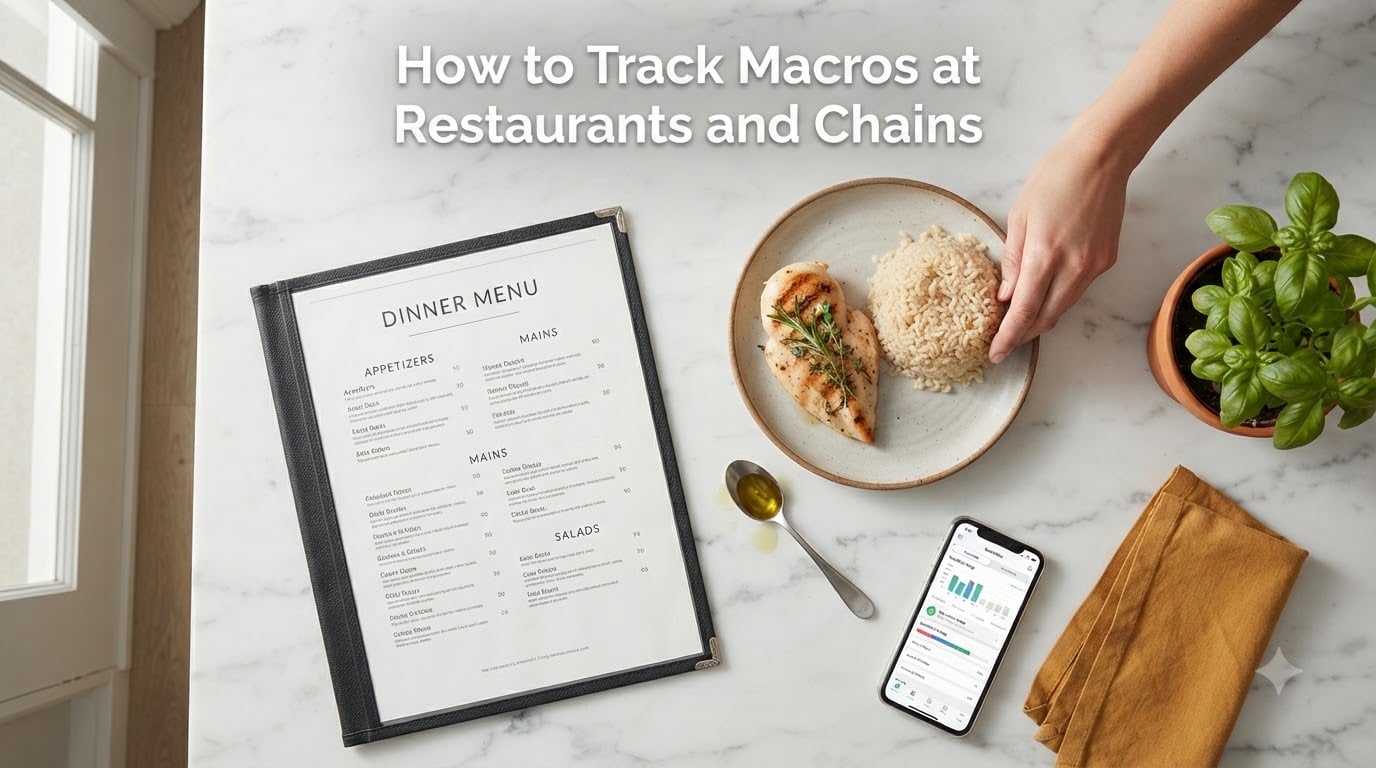
Eating out is one of the biggest stress points for anyone tracking macronutrients. Restaurant meals come with hidden oils, generous portions, and almost no reliable nutrition labels. I have helped hundreds of clients stay on target while enjoying date nights, work lunches, and family dinners, and the truth is simpler than most people expect. Learning how to track macros at restaurants is less about perfect data and more about building smart habits you can repeat.
This guide gives you a complete system for tracking macros at restaurants and chains in 2026. You will learn the 4-4-9 rule that powers every macro calculator, where to find real nutrition info online, how to estimate portions when nothing is published, and the menu hacks I personally use at common cuisines. You will also get answers to the questions real readers ask, including how to handle small local spots with zero online data.
The short version: imperfect tracking beats no tracking. Once you accept that, restaurant meals stop being a source of guilt and start being just another meal that fits your day.
Table of Contents
- How to Track Macros at Restaurants: The Core Method
- Using Restaurant Nutrition Information Online
- Estimating Portions When No Nutrition Info Exists
- Easier vs Harder Foods to Track at Restaurants
- Menu Hacks by Cuisine Type
- Planning Ahead: Adjusting Your Day Around the Restaurant Meal
- Common Restaurant Mistakes to Avoid
- Mindful Eating Tips for Restaurants
- Frequently Asked Questions
- Final Thoughts on Tracking Macros at Restaurants
How to Track Macros at Restaurants: The Core Method
You track macros at restaurants by combining three reliable strategies: checking online nutrition info first, estimating portions visually when info is missing, and adjusting your other meals around the restaurant meal. Most chains now publish full nutrition data, and for independent spots you can fall back on hand-based portion estimates that take about 15 seconds.
The core method I recommend to every client looks like this:
- Step 1: Look up the restaurant online before you go. Chains are required to publish calories and macros under FDA labeling rules.
- Step 2: Pre-log your meal in your tracking app using the published numbers.
- Step 3: If no data exists, estimate using hand portions (palm for protein, fist for carbs, thumb for fats).
- Step 4: Adjust your remaining meals that day to absorb the difference.
This is a forgiving system. A 10 to 15 percent error on a single meal will not derail your weekly progress. I have seen clients lose body fat for months while eating out two or three times a week using only this method.
Use the 4-4-9 rule as your base
The 4-4-9 rule is the math behind every macro target you have ever seen. Protein and carbohydrates each contain 4 calories per gram, and fat contains 9 calories per gram. Total calories come from this simple formula: (protein grams times 4) plus (carb grams times 4) plus (fat grams times 9).
When you stare at a plate of pasta with no label, you can guesstimate quickly. If you think the dish has around 60 grams of carbs, 20 grams of fat, and 30 grams of protein, you have 240 plus 180 plus 120 = 540 calories. That single math check usually gets you within 10 percent of the true value, which is more than accurate enough for weekly tracking.
Using Restaurant Nutrition Information Online
The fastest way to track macros at any chain restaurant is to look up the menu online before you leave the house. Since the FDA menu labeling rule took effect, any chain with 20 or more locations must publish calorie counts on menus, and most go further with full macronutrient breakdowns on their websites.
Before I sit down to eat at any chain, I do a 60 second check. The official website, MyFitnessPal’s restaurant section, and the chain’s own app are the three places I trust most.
Chain restaurants with mandatory FDA labeling
You will find official macros for nearly every major chain in the US and UK, including McDonald’s, Chick-fil-A, Starbucks, Panera Bread, Chipotle, Taco Bell, Subway, and Wendy’s. The numbers are audited and reliable for almost every menu item.
For example, a Chipotle chicken bowl with brown rice, black beans, fajita veggies, and salsa lands at roughly 615 calories, 45 grams of protein, 71 grams of carbs, and 12 grams of fat. Knowing that exact number before you order makes the rest of your day trivially easy to plan.
Apps that sync restaurant menus
Apps like MyFitnessPal, MacroFactor, and Lose It maintain searchable databases of thousands of chain menus. My personal favorite for restaurant tracking is MyFitnessPal because of its scanner and community-verified entries. MacroFactor is better for macro-first coaching because it shows your remaining macros live as you log.
Both apps let you favorite restaurants, save custom orders, and reuse them next visit. That alone saves five minutes every time you eat out, and it cuts your logging error by half.
Estimating Portions When No Nutrition Info Exists
Independent restaurants, pop-ups, and most non-chain spots will not have online nutrition data. This is where hand-based portion estimates shine. You can eyeball any meal in under a minute and come within a 15 percent error margin with a little practice.
I teach every client this set of portion rules before their first restaurant meal with us. After two weeks, most can estimate within 10 grams of any macro without weighing anything.
Hand portion guide
Your hand is a portable, always-accurate portion scale. Here is the system I use personally and recommend to every coaching client:
- Protein (meat, fish, tofu): a palm-sized serving is about 3 to 4 ounces or roughly 20 to 30 grams of protein.
- Carbs (rice, pasta, potatoes): a cupped hand equals about half a cup of cooked starch, or 20 to 30 grams of carbs.
- Fats (oils, butter, cheese, nuts): a thumb-sized serving is about 1 tablespoon of fat, or 12 to 15 grams of fat.
- Veggies: a fist equals about 1 cup of low-calorie vegetables, which is roughly 5 grams of carbs and almost no fat.
Stack these on your palm or plate and you have a visual macro map. A grilled chicken breast (palm), scoop of rice (cupped hand), and olive oil drizzle (thumb) gives you a meal that fits a typical dinner target.
Object comparisons
If hands feel too abstract, try common objects:
- A deck of cards = 3 ounces of cooked meat (about 21 grams protein).
- A tennis ball = half a cup of rice or pasta (about 22 grams carbs).
- A golf ball = 1 tablespoon of nut butter or olive oil (about 14 grams fat).
- A baseball = 1 cup of vegetables (about 5 grams carbs).
Both systems work. Pick one and use it consistently for two weeks. Your accuracy will improve quickly because restaurants use standard portion sizes to keep costs predictable.
Easier vs Harder Foods to Track at Restaurants
Some foods are much easier to track accurately than others. Choosing easier picks when you are starting out builds confidence. Over time you will naturally expand your menu because the estimation skills transfer.
This is one of the most useful restaurant macro strategies. Order the things you can think through easily, then save the complicated sauces and creams for special occasions.
Easier picks
- Grilled chicken, steak, or fish with a non-cream sauce.
- Rice, quinoa, or potatoes prepared plainly.
- Side vegetables, steamed or roasted.
- Burger patties without cheese or special sauces.
Harder picks
- Creamy pastas, casseroles, and rich curries.
- Fried anything coated in unknown batter.
- Specialty sauces like alfredo, hollandaise, or mole.
- Cheese-heavy dishes like loaded nachos or four-cheese pizzas.
If you love the harder picks, order them and accept that your estimate will be off by 10 to 20 percent. Adjust your other meals to absorb the difference. This is the flexing approach that most flexible dieters use successfully.
Menu Hacks by Cuisine Type
Most cuisines have predictable weak spots and predictable macro-friendly winners. Knowing these ahead of time makes eating out feel effortless. Below are the hacks I recommend based on what works at common restaurant categories.
I have personally tested these hacks across hundreds of meals with clients and on my own macros. They are not theory. They are habits I trust.
Breakfast spots
Order egg whites or whole eggs with veggies, skip the hash browns, and ask for dry toast or English muffin on the side. A three-egg veggie omelet with side of fruit lands around 350 calories and 25 grams of protein, easy to fit even on a 1500 calorie day.
Italian
Ask for grilled protein, marinara instead of cream sauce, and a small pasta portion on the side. Most Italian places will happily give you grilled chicken or shrimp over a modest bed of pasta. A chicken piccata with a side of marinara-dressed veggies usually sits around 450 calories with 35 grams of protein.
Mexican
Build a bowl with double protein, beans, fajita veggies, pico, and salsa. Skip the rice or sour cream. Chipotle’s macros calculator makes this trivially easy. A fajita veggie bowl with chicken at Chipotle is around 540 calories with 45 grams of protein.
Sushi
Pick sashimi, cucumber rolls, or seaweed salad. Steer clear of Philadelphia rolls and tempura, which can hit 600 calories before dipping sauce. Two sashimi sets plus a cucumber roll usually lands around 400 calories and 35 grams of protein.
American chains
Almost every chain posts macros on its website. Use them. Grilled chicken sandwiches without cheese, baked potatoes with butter on the side, and salads with dressing on the side are reliable wins. Applebee’s, Outback, and Chili’s all publish full macro charts you can search by menu item.
Planning Ahead: Adjusting Your Day Around the Restaurant Meal
Planning ahead is the most reliable restaurant macro strategy. If you know you will eat 800 calories and 40 grams of fat at dinner, you can shape breakfast and lunch to land your weekly targets cleanly.
When I coach clients through restaurant-heavy weeks, this is the lever I pull first. It works because restaurant meals are usually higher in fat and calories than home-cooked ones, so saving fats earlier in the day keeps the total on track.
Pre-logging fat grams
Pre-logging is a technique where you enter tomorrow’s restaurant meal into your app today, then design the rest of the day to fit. I often pre-log 20 to 30 grams of fat to a dinner out, which forces breakfast and lunch to be lean. Egg whites, lean protein, fruit, and fat-free dairy become the day’s anchors.
Protein-first strategy
Always anchor your protein early. Restaurants tend to over-deliver on carbs and fat and under-deliver on protein. If you hit 25 to 30 grams at breakfast and again at lunch, dinner can be a smaller protein portion with veggies and starch and still hit your daily protein target.
Common Restaurant Mistakes to Avoid
The mistakes I see most often are not about poor math. They are about mindset and habit. After working with hundreds of clients, I have identified three traps that derail restaurant tracking more than any estimation error.
Skip these traps and your tracking will be noticeably smoother.
- Skipping tracking entirely because you cannot be exact. Imperfect logging still shows you the trend over a week.
- Ignoring cooking oils. A stir-fry cooked in 2 tablespoons of oil adds 240 hidden calories and 28 grams of fat.
- Forgetting drinks. Sweet tea, soda, and cocktails can add 200 to 400 calories before food arrives.
Each of these is a small change, but together they can swing a meal by 500 calories or more.
Mindful Eating Tips for Restaurants
Macro tracking works better when paired with mindful eating. Slower meals give your brain time to register fullness, which means you naturally eat closer to your target without forcing it.
This is the part most guides leave out, but it matters. The psychological side of restaurant eating is half the battle.
Use hunger cues
Ask yourself before you order: am I actually hungry? Restaurant portions are designed to be generous, and many of us eat because the food is in front of us, not because we need it. Order what fits your macros, eat slowly, and stop when satisfied rather than when the plate is empty.
To-go box strategy
If the portion looks oversized, ask for a to-go box when the food arrives. Put half away before you start. You still enjoy the meal, you save the rest for tomorrow, and your macros stay where you want them. This single habit has helped dozens of my clients cut restaurant calories by 30 percent without feeling deprived.
Frequently Asked Questions
How to track macros at a restaurant?
You track macros at a restaurant by checking the restaurant’s online nutrition info first, pre-logging your meal in an app like MyFitnessPal or MacroFactor, and estimating portions visually using your hand (a palm for protein, a fist for carbs, a thumb for fats) when no data exists. Adjust your other meals that day to absorb any tracking error.
What is the 4-4-9 rule in nutrition?
The 4-4-9 rule is the basic calorie math behind every macro target. Protein contains 4 calories per gram, carbohydrates contain 4 calories per gram, and fat contains 9 calories per gram. Total calories equal (protein times 4) plus (carbs times 4) plus (fat times 9). It is the foundation you use to estimate restaurant meals quickly.
What’s the easiest way to track macros?
The easiest way to track macros is to use an app like MyFitnessPal or MacroFactor that has a barcode scanner, a restaurant menu database, and a custom meal feature. Save your common orders as favorites so logging takes under a minute per meal. Estimate portions with your hand for everything else.
What should my macros be for 1500 calories a day?
For a 1500 calorie day, common macro splits include 30 percent protein (112 grams), 40 percent carbs (150 grams), and 30 percent fat (50 grams). Athletes and active users often shift to 30/40/30 or 25/45/30 depending on training load. Pick a split you can sustain, then adjust by how you feel and how your body responds over two to three weeks.
Final Thoughts on Tracking Macros at Restaurants
Learning how to track macros at restaurants and chains is a habit, not a one-time skill. Start with chain restaurants that publish nutrition info, layer in hand portions for the spots that do not, and use the menu hacks above to keep your favorite cuisines in range.
You do not need perfect data to keep making progress. You need consistent logging, a forgiving mindset, and a system you trust. Try the methods in this guide for two weeks and you will find that restaurant meals stop being a source of anxiety and start being a normal part of your nutrition plan in 2026.