
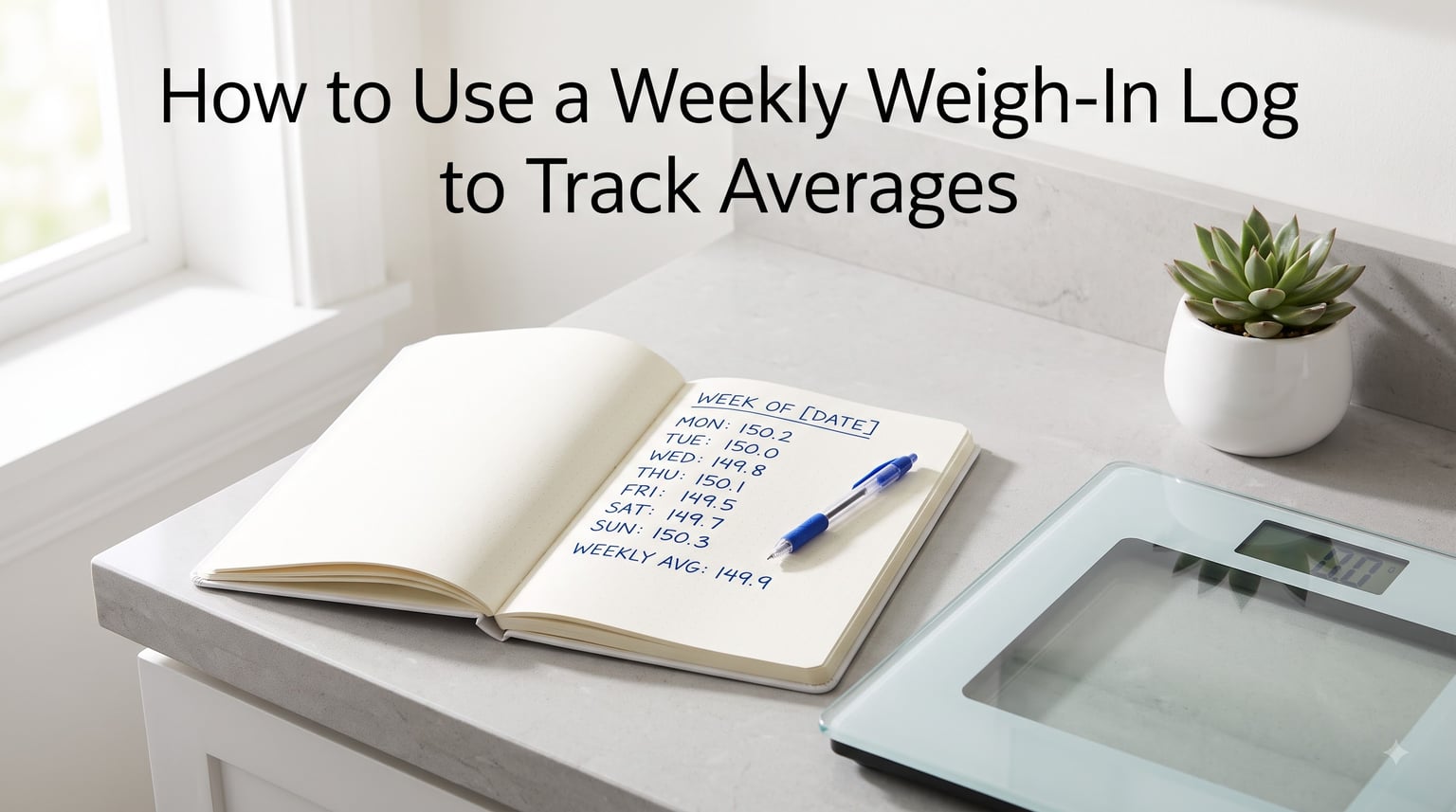
I remember stepping on the scale one morning, seeing the number jump up by two pounds overnight, and immediately thinking I had failed. That was before I learned how to use a weekly weigh-in log to track averages. Once I switched from obsessing over single readings to recording every weigh-in and averaging them at the end of the week, my whole relationship with the scale changed.
If you have ever felt discouraged by daily weight fluctuations, a weekly weigh-in log is one of the simplest tools you can use. It turns the scale from a daily judgment into useful trend data. In this guide, I will walk you through exactly how to set one up, how to calculate your weekly average, and how to read the trend over time so you can make better decisions about your health in 2026.
Table of Contents
- What Is a Weekly Weigh-In Log and Why Daily Numbers Mislead
- How to Calculate Your Weekly Average: Step-by-Step
- Best Conditions for a Consistent Weigh-In
- What Causes Daily Weight Fluctuations
- Reading the Trend Over Multiple Weeks
- Optional: Spreadsheet Formulas to Automate the Average
- Psychological Safety and When to Step Back From the Scale
- Beyond the Scale: Other Progress Markers to Log
- FAQs
- The Bottom Line on Your Weekly Weigh-In Log
What Is a Weekly Weigh-In Log and Why Daily Numbers Mislead
A weekly weigh-in log is a written or digital record where you note your weight on the same days each week, then calculate a single average number at the end of the seven days. Instead of reacting to one reading, you look at a smoothed-out average that reflects your real progress.
Daily numbers mislead most people because your body weight naturally swings two to five pounds from morning to night. Water, food, sodium, hormones, and even the last time you went to the bathroom all shift the number on the scale. When I tracked daily without averaging, I had weeks where the scale said I had gained weight even though my clothes fit better and my measurements were dropping. The data was right, but the interpretation was wrong.
That is why a weekly weigh-in log works so well. It separates the signal (real fat loss or gain) from the noise (random fluid shifts). Once you average a full week of weigh-ins, you get a far more honest picture of whether you are moving in the direction you want.
Members of communities like r/loseit and r/CICO often describe the same aha moment. One user wrote that switching from daily scale panic to weekly averages “saved my sanity” because the trend finally matched what they were seeing in the mirror. That kind of community-validated feedback is one of the strongest signals that the weekly averaging method really works for real people.
How to Calculate Your Weekly Average: Step-by-Step
Here is the simple formula for calculating a weekly weight average that any trainer or coach will recognize:
Weigh in at the same time of day for seven consecutive days, using the same scale and similar clothing.
Record each reading in your weekly weigh-in log, noting the date next to the number.
Add up all seven weights at the end of the week.
Divide that total by the number of days you actually weighed in (usually 7) to get your weekly average.
Let me show you a worked example from one of my own tracking weeks so the math is concrete:
Monday: 184.2 lbs
Tuesday: 185.1 lbs
Wednesday: 184.6 lbs
Thursday: 185.4 lbs
Friday: 184.0 lbs
Saturday: 184.8 lbs
Sunday: 183.9 lbs
Add those together and you get 1292.0 lbs. Divide 1292.0 by 7 and your weekly average is 184.6 lbs. Even though the daily readings bounced between 183.9 and 185.4, the average tells you a much calmer story than any single morning weigh-in could.
That single number, repeated week after week in your log, becomes the line you actually track. Not the daily peaks and valleys. That is the core habit behind any successful weekly weigh-in log, and it is the habit that turns the scale from a source of stress into a source of useful information.
Best Conditions for a Consistent Weigh-In
Consistency is the secret sauce of any weekly weigh-in log. If you weigh yourself at 7 a.m. one day and 9 p.m. the next, you are comparing apples to oranges. Here are the conditions I recommend to anyone starting a log.
First, weigh yourself first thing in the morning, after you use the bathroom and before you eat or drink anything. Your morning weigh-in is the most stable point of the day because you have not added food, fluids, or salt in many hours. This is the standard practice most coaches and researchers use, and it makes your average far more reliable.
Second, use the same scale, on the same hard surface, in the same spot in your home. Even moving a digital scale to a slightly softer floor can shift the reading by half a pound. Third, wear the same thing each time, whether that is pajamas, underwear, or nothing at all. Pick one and stick with it so every entry in your log is comparable.
Fourth, weigh in at least four to seven times per week so your average is meaningful. If you only weigh once a week, you are getting a single data point, not an average. That defeats the purpose of the log and leaves you right back where you started, overreacting to one number.
What Causes Daily Weight Fluctuations
Once you start logging, you will quickly see the daily numbers swing. Knowing why helps you stop taking them personally. Here are the most common culprits behind weight fluctuations.
Water retention is the biggest factor. A salty dinner the night before can add one to three pounds of water weight by morning. Carbohydrates also cause water retention, since your body stores about three grams of water for every gram of carbs you eat. That is why a high-carb day shows up as a heavier number on the scale even when your calorie intake was identical to the day before.
Hormones matter too. Women often see a two to four pound jump in the days before their period, and a drop right after it starts. Comparing the same cycle phase week to week is one of the smartest things you can do with your weekly weigh-in log if you menstruate, because it removes a huge source of false alarms.
Cortisol, the stress hormone, can cause similar swings if you slept poorly, had a hard workout, or had a stressful day at work. Exercise causes short-term water retention as your muscles repair. Constipation, alcohol, and even a single large meal can each shift the scale by a pound or more. None of them mean you gained fat. That is exactly why the weekly weigh-in log averages them all out.
Reading the Trend Over Multiple Weeks
One week of data is interesting, but the real power of a weekly weigh-in log comes from comparing averages across weeks. This is where you actually see your weight trend rather than your weight snapshot.
After each week, write your weekly average in a separate column or row of your log. After four weeks, compare week 1 to week 4. A healthy rate of weight loss for most adults is between 0.5 and 2 pounds per week, so a four-week drop of 2 to 8 pounds is realistic and sustainable. Faster drops usually include water and glycogen, not just fat.
Some weeks the number will go up even when you are doing everything right. Sleep, stress, and hormones can hold water for days at a time. The rule of thumb I follow is to wait at least three weeks of weekly averages before making any change to my diet or routine. If the trend is still flat or rising after three weeks of consistent logging, then it is time to adjust calories or activity.
This longer view also helps you spot a plateau. If your weekly averages stop moving for four or more weeks in a row, that is real information, not noise, and it tells you something in your plan needs to change.
Optional: Spreadsheet Formulas to Automate the Average
If you prefer to skip the manual math, you can automate your weekly weigh-in log with a simple spreadsheet. In Google Sheets or Excel, put your daily weights in column A starting at row 2, then use this formula at the end of each week.
For a full seven days in cells A2 through A8, the formula is =AVERAGE(A2:A8). That single function will return your weekly average instantly. You can then copy the formula down for each subsequent week by changing the range to A9:A15, A16:A22, and so on as your log grows.
To graph your weekly trend line, select your column of weekly averages and insert a line chart. Seeing the line slope downward over weeks is a powerful motivator, far more than any single daily number on the scale ever was. Some people also add a four-week moving average column with =AVERAGE(B2:B5) to smooth out week-to-week noise even further.
Psychological Safety and When to Step Back From the Scale
A weekly weigh-in log is a tool, not a religion. If daily weigh-ins trigger anxiety, obsessive thoughts, or disordered eating behaviors, you have permission to weigh less often or stop altogether. Many people in weight loss communities report that a once-a-week or even once-a-month check-in feels healthier for them.
The point of the log is to give you useful information, not to make you miserable. If you find yourself stepping on the scale multiple times a day or feeling devastated by a small jump, scale back to weekly only, or switch to non-scale progress markers for a while. The data will still be there when you are ready.
Talk to a doctor or registered dietitian if weight tracking is affecting your mood, sleep, or relationship with food. There is no shame in choosing a different approach. The best weigh-in frequency is the one that supports your mental health and your goals at the same time.
Beyond the Scale: Other Progress Markers to Log
Your weekly weigh-in log is one column in a larger story. Adding a few other metrics makes the picture far more complete and protects you from putting too much weight on any single number from the scale.
Measure your waist, hip, or thigh circumference once every two to four weeks with a soft tape measure. Take progress photos in the same lighting, pose, and clothing each time. Notice how your clothes fit, how strong you feel in the gym, and how your energy and sleep change across the week.
These qualitative markers often show progress long before the scale moves, and they do not fluctuate daily the way body weight does. Combined with your weekly weigh-in log, they give you a full, honest, and far less stressful view of how your body is really changing over time.
FAQs
How do I calculate my weekly weight average?
Add up all of your weigh-ins for the week and divide the total by the number of days you weighed in. For a full seven days, divide the sum by 7. Record this weekly average in your log and compare it to previous weeks.
Why is my weight fluctuating daily even when I am in a calorie deficit?
Daily weight shifts are mostly water, food volume, and hormones, not fat. Sodium, carbs, sleep, stress, and menstrual cycle can each move the scale by one to four pounds overnight without any change in body fat.
How often should I weigh myself for accurate tracking?
Weigh yourself four to seven times per week, at the same time of day and under the same conditions. More frequent weigh-ins give you a more accurate weekly average to log.
Should I weigh myself daily or weekly?
Daily weigh-ins combined into a weekly average work best for most people. If daily numbers cause anxiety, weigh only once per week, or use other progress markers like measurements and photos.
What is a healthy rate of weekly weight loss?
A sustainable rate is 0.5 to 2 pounds per week for most adults. Track your weekly averages in your log and compare across four-week blocks to confirm the trend.
The Bottom Line on Your Weekly Weigh-In Log
Learning how to use a weekly weigh-in log to track averages takes about ten minutes a day and a few minutes at the end of each week to add up and divide. In return, you get a calm, accurate picture of your weight trend that is not ruined by salty dinners, poor sleep, or hormones.
Start this week. Weigh in tomorrow morning, log the number, and keep going for seven days. Calculate your first weekly average on Sunday, then do it again next week and the week after. After a month of consistent logging, you will have real trend data to guide your decisions, and you will wonder why you ever trusted a single daily number in the first place.