
I used to start every Monday convinced I would finally drink eight glasses of water. By Wednesday, the bottle on my desk was still full and I had no idea where the habit broke down. The fix was not willpower. It was learning how to set up a habit tracker for water so the routine ran on autopilot.
If you have ever tried to drink more water and forgotten by 10 a.m., this guide is for you. I will walk you through what a water habit tracker is, how to pick a daily goal that fits your body, and the exact steps I use to set one up in under ten minutes. By the end, you will have a system that does not depend on motivation.
Table of Contents
- What Is a Water Habit Tracker
- Why Tracking Your Water Intake Works
- How to Calculate Your Daily Water Goal
- How to Set Up a Habit Tracker for Water: Step by Step
- Digital vs Physical Water Trackers
- Habit Stacking: Make Water Part of Your Routine
- Tips for Building a Lasting Hydration Habit
- Common Mistakes to Avoid
- Water Tracking for Weight Loss Goals
- Frequently Asked Questions
- Start Your Water Habit Tracker Today
What Is a Water Habit Tracker
A water habit tracker is a simple tool that helps you monitor your daily water intake and build a consistent hydration routine through visual cues and progress tracking. At its core, it is just a way to measure whether you drank enough water today, then mark it down so you can see your streak build over time.
The format can be a phone app, a printable chart taped to your fridge, a bullet journal spread, or even a notebook grid. The method is the same. You pick a measurement, set a target, and record each glass, sip, or bottle as you go. Once you have a row of checkmarks, the visual chain becomes its own motivator.
Behavior scientists call this a count-based habit, and it works because each tap or check gives you immediate feedback. Your brain gets a tiny reward every time you log a drink. That reward is the reason a water tracker can turn drinking water from a chore into something you actually look forward to.
Why Tracking Your Water Intake Works
Most people underestimate how little they drink. Studies consistently show that self-reported intake is off by 30 to 40 percent compared to what people actually consume. A tracker removes that guesswork and gives you real numbers to work with.
For our weight loss planner audience, this matters even more. Hydration supports satiety, helps your body tell hunger from thirst, and keeps digestion moving. I have personally watched a single change in water logging reduce mindless snacking within the first two weeks, because clients finally recognized when they were thirsty, not hungry.
There is also the streak effect. Once you hit three days in a row, you do not want to break the chain. That small bit of friction is exactly what most people need to keep showing up. Tracking turns hydration from something you remember occasionally into something you cannot forget.
How to Calculate Your Daily Water Goal
Before you set up a habit tracker for water, you need a number to aim for. The most reliable starting point is your body weight, because a 120-pound person and a 220-pound person have very different needs.
The formula I use with my team is simple. Take your weight in pounds, divide by two, and that is your baseline in ounces. For someone who weighs 160 pounds, that works out to 80 ounces, or about ten cups. Adjust up by 10 to 20 ounces on workout days, hot days, or when you are consuming extra sodium or caffeine.
If you prefer metric, divide your weight in kilograms by 30 to get liters. A 70 kg person lands at roughly 2.3 liters, which lines up with general hydration guidance.
The 10-Gulp Rule Explained
The 10-gulp rule is a quick way to measure a serving when you do not have a marked bottle. Take 10 moderate gulps of water and stop. That is roughly one cup, or 8 ounces. Ten of those across the day gets you to 80 ounces without counting every sip.
I love this trick for people who hate logging tiny sips. Instead of tracking each glass, you track each set of 10 gulps. It feels less obsessive, and the math works out the same. Most of our readers who tried it said it removed the friction that made them quit other trackers.
How to Set Up a Habit Tracker for Water: Step by Step
This is the heart of the guide. Follow these five steps and you will have a working system before your next meal.
- Pick your tracking method. Choose a phone app, bullet journal spread, printable chart, or notebook grid. Pick the one you will actually open every day, not the one with the most features.
- Set your daily water goal. Use the body weight formula above. Round to a friendly number like 64, 80, or 96 ounces so the math is easy.
- Define your measurement unit. Pick one bottle size or cup size and stick with it. A standard 16 ounce bottle or an 8 ounce glass works best because the math stays simple.
- Schedule your logging moments. Tie logging to existing routines such as finishing a meal, finishing a work task, or returning from a bathroom break. Pre-decide when you will mark each glass.
- Set up reminders and streaks. Turn on notifications for your chosen times. Mark a clear streak counter on day one so you can watch it grow.
Once these five steps are in place, your water habit tracker is live. The first day will feel mechanical. By day four, it will feel natural. By day fourteen, you will not need the reminders anymore.
Digital vs Physical Water Trackers
Both formats work. The best one is the one you will actually use, so let me break down the tradeoffs.
Digital trackers like WaterMinder, HydroCoach, and Waterllama give you one-tap logging, automatic reminders, and Apple Health or Google Fit integration. They are perfect if you carry your phone everywhere and want charts and streaks without any setup. The downside is notification fatigue if you set too many alerts.
Physical trackers like a bullet journal water log, a printable chart on the fridge, or a grid in your planner work if you prefer pen and paper. Many of our readers say writing the checkmark gives a stronger sense of accomplishment than tapping a screen. The tradeoff is no automatic reminders and no built-in calculations.
A hybrid approach is popular among weight loss planner users. Track on paper in your morning routine, then mirror it in a simple app for streak visualization. You get the satisfaction of handwriting plus the passive reminder system.
Habit Stacking: Make Water Part of Your Routine
Habit stacking is the practice of attaching a new habit to one you already do without thinking. It is the single most effective trick for sticking with hydration, and it comes directly from behavior research.
The formula is simple. After I [current habit], I will [new habit]. Here are stacks that work for almost everyone.
- After I pour my morning coffee, I will drink one full glass of water before the first sip.
- After I sit down at my desk, I will fill my water bottle and place it in view.
- After I finish lunch, I will drink one glass before returning to work.
- After I finish my afternoon workout, I will drink 16 ounces within 15 minutes.
- After I brush my teeth at night, I will record the day total in my tracker.
Pick two or three of these stacks. Most people only need two anchor points to hit their full goal, and adding more stacks than that usually backfires because the routine starts feeling like a job.
Tips for Building a Lasting Hydration Habit
After testing dozens of setups with our community, these are the tips that consistently produce 30-day streaks.
Fill once, sip all day. Use a large bottle or jug and refill it only once or twice. Forum users call this the large jug method, and it removes the question of how much they have had.
Never miss twice. If you forget a day, get back on track the next morning. One bad day does not break the habit. Two in a row does.
Front-load your water. Drink 40 percent of your goal before lunch. Hydrated mornings lead to better food choices the rest of the day.
Keep the bottle in sight. Out of sight is out of mind. Place it on your desk, your kitchen counter, or wherever you spend the most time.
Reward the streak, not the sip. Treat yourself at day 7, day 14, and day 30. The reward trains your brain to keep going.
Use frictionless logging. If your app takes more than one tap to log a glass, switch apps. The friction kills consistency faster than anything else.
Common Mistakes to Avoid
Most people who fail at water tracking do not fail because of willpower. They fail because of setup mistakes. Here are the issues I see most often.
Backfilling logs at night. Sitting down at 9 p.m. to log nine glasses you may or may not have had is not tracking. It is guessing. Log in real time or skip the day.
Too many reminders. Three notifications per day is plenty. Ten notifications teaches your brain to ignore all of them.
Counting coffee and tea as water. Caffeinated drinks still hydrate you, but at about 60 to 70 percent efficiency. Track them at half value or just count them as bonus.
Setting an unrealistic goal. If your body weight formula says 100 ounces but you currently drink 30, start at 60 and work up. Hitting 60 consistently beats failing at 100.
Switching apps weekly. App hopping is the silent killer of streaks. Pick one and give it 30 days before you judge.
Water Tracking for Weight Loss Goals
Hydration is one of the highest-leverage habits in any weight loss plan. Water before meals reduces calorie intake, dehydration slows metabolism, and clear skin, better workouts, and fewer cravings all show up within the first month of consistent tracking.
For our planner community, I recommend pairing your water tracker with your meal and workout logs on the same daily spread. The visual side-by-side makes it obvious when low hydration lines up with a rough energy day. That connection alone is usually enough to keep people logging.
Set a hydration milestone inside your planner at day 30, day 60, and day 90. Check it off when you hit it. The compounding effect on the rest of your plan is real, and your future self will thank you.
Frequently Asked Questions
How do I track my daily water intake?
Pick a tracker (app, journal, or printable), set a daily ounce goal using your body weight, log each glass in real time, and review your streak each evening. Logging in the moment, not at the end of the day, is the biggest predictor of consistency.
What is the 10-gulp rule?
The 10-gulp rule is a simple way to measure one serving of water without a marked bottle. Ten moderate gulps equals about 8 ounces or one cup. Ten of these across the day gets most adults to a healthy baseline without complex counting.
How do I create my own habit tracker?
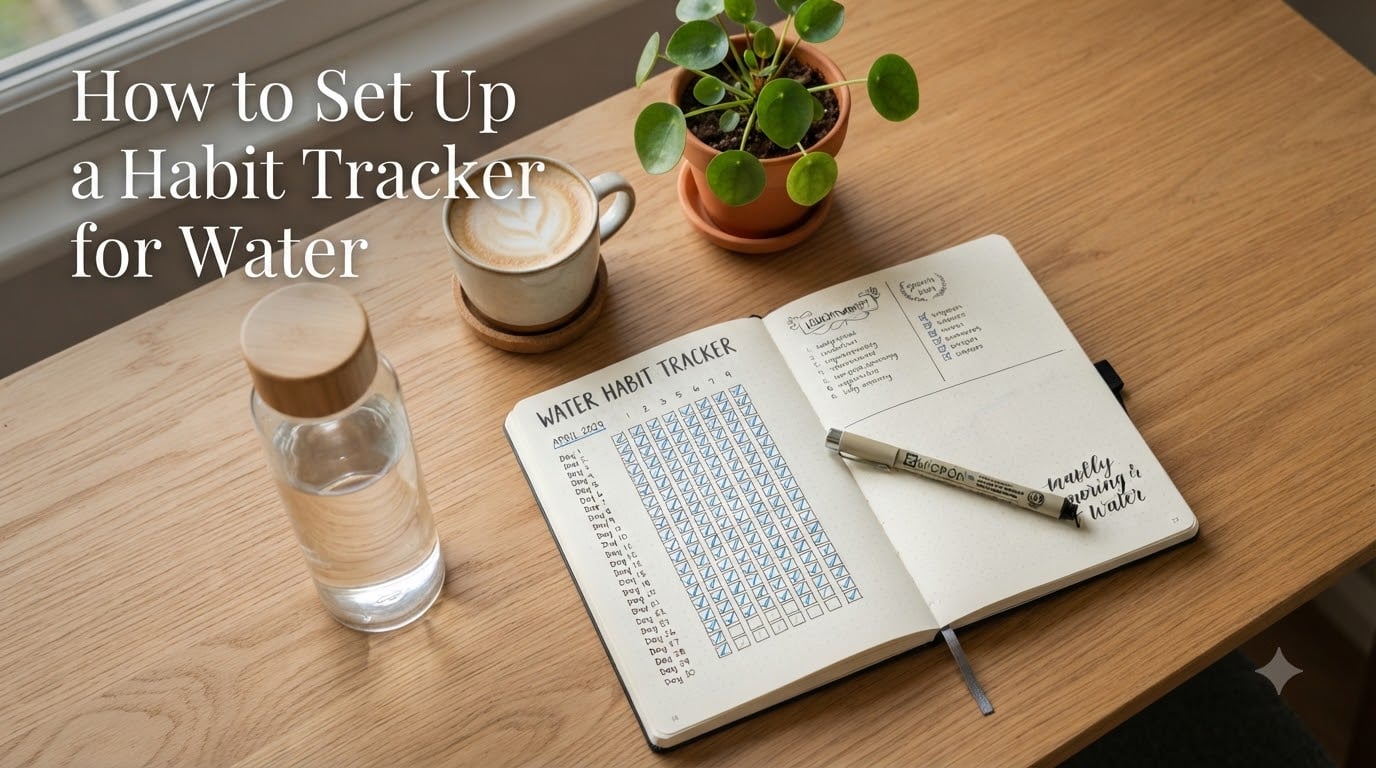
Draw a 30-row grid in a notebook, label each row with a date, set a daily water goal, then mark or color in each glass as you drink it. Add a streak counter at the top and a notes column for energy or workout days. This simple layout works as well as most paid apps.
How to create a habit of drinking water?
Stack water onto existing habits like morning coffee, lunch, and your afternoon break. Start below your calculated goal so you can hit it every day. Never miss two days in a row, and reward yourself at day 7, 14, and 30 to lock in the routine.
How many glasses of water should I drink a day?
Most adults need about half their body weight in ounces. A 160-pound person should aim for 80 ounces, roughly ten 8-ounce glasses. Add 10 to 20 extra ounces on workout days, hot days, or when eating high-sodium meals.
Start Your Water Habit Tracker Today
You now have everything you need to set up a habit tracker for water that actually sticks. Pick your method, calculate your goal, schedule two or three habit stacks, and log in real time. The first week is the hardest, and by week three you will not think about it anymore.
Open your planner, draw a 30-day grid, and write tomorrow’s date in the first row. That single action is the entire difference between reading about hydration and actually changing it.