
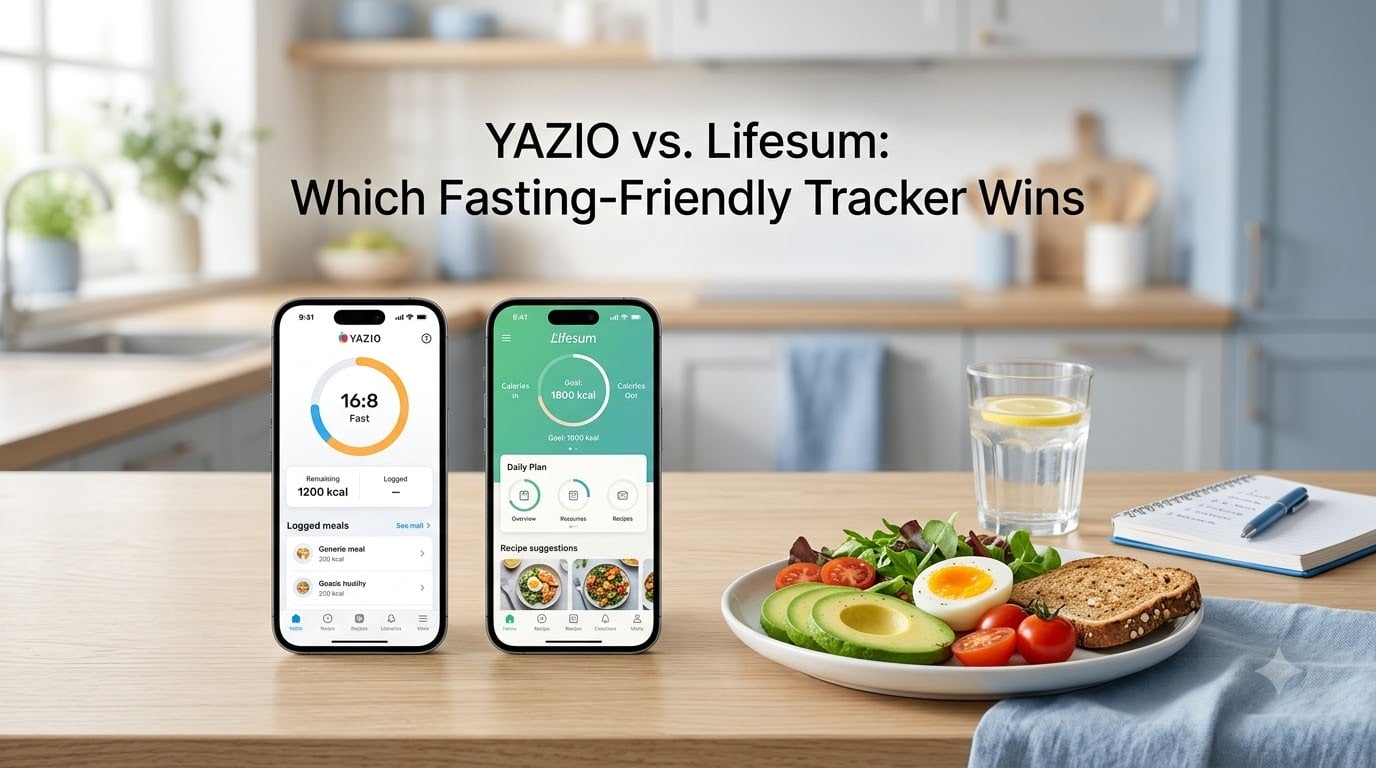
I tested both YAZIO and Lifesum for six weeks to settle the YAZIO vs Lifesum debate once and for all. Both apps promise calorie tracking, intermittent fasting support, and meal planning, but the daily experience, fasting tools, and value are very different once you start logging real meals. This guide breaks down what each app does best, where they fall short, and which one deserves a spot on your phone in 2026.
If you have ever downloaded a calorie counter, used it for a week, and then abandoned it because the logging felt like a chore, this comparison is for you. I weighed in, logged every meal, ran fasting timers, and pushed both apps through their paces. Here is what I found.
Table of Contents
- Quick Summary: Which App Wins
- YAZIO Overview: What It Does Best
- Lifesum Overview: What It Does Best
- Feature Comparison: YAZIO vs Lifesum Head to Head
- Intermittent Fasting Tracking: The Key Differentiator
- Meal Planning and Recipes
- Food Database and Barcode Scanning
- Free Tier vs Premium: What You Actually Get
- User Experience and Real User Feedback
- Pros and Cons: YAZIO vs Lifesum
- Which App Should You Choose?
- Frequently Asked Questions
- Final Verdict
Quick Summary: Which App Wins
In the YAZIO vs Lifesum matchup, YAZIO wins for users who prioritize intermittent fasting, while Lifesum wins for users who want beautifully designed meal plans and recipe inspiration. Both apps are solid calorie counters, but YAZIO edges ahead in value and fasting-specific tools, while Lifesum wins on visual design and curated diet programs.
Pick YAZIO if: intermittent fasting is your main goal, you want a wider food database, and you prefer lower annual subscription pricing.
Pick Lifesum if: you want structured meal plans, gorgeous recipe photos, and a Life Score that gamifies healthy eating.
YAZIO Overview: What It Does Best
YAZIO is a freemium calorie counter built around three core pillars: food tracking, intermittent fasting, and meal planning. The app launched with a strong fasting focus, and that focus still shapes how the home screen is laid out today. When you open YAZIO, the fasting timer is front and center, and the diary sits one tap below it.
Key YAZIO strengths I noticed during testing:
- Intermittent fasting tracker with protocols for 16:8, 18:6, 5:2, and custom windows
- Large verified food database (over 4 million items) with reliable barcode scanning
- Macro tracker covering protein, carbs, fat, fiber, and sugar
- Built-in meal plans for keto, intermittent fasting, low carb, and high protein
- Apple Health and Google Fit integration for activity sync
- watchOS support so you can log from your wrist
YAZIO also includes a fasting tracker that shows your current fasting streak, average fasting duration, and a history of past fasts. For someone following 16:8 seriously, this is the most mature fasting UI among the mainstream calorie apps.
Lifesum Overview: What It Does Best
Lifesum is a freemium diet tracking app that leans heavily into meal plans, recipe browsing, and visual design. Where YAZIO feels like a tool, Lifesum feels like a lifestyle magazine with a calorie counter tucked inside. The recipe photography is genuinely beautiful, and the diet plans are clearly written by nutritionists.
Key Lifesum strengths I noticed during testing:
- Curated meal plans for keto, Mediterranean, high protein, balanced, and intermittent fasting
- Life Score, a daily rating (0-100) that grades how well you ate
- Visual recipe library with step-by-step photos
- Diet mode filters that auto-adjust your daily targets
- Barcode scanner that pulls from a solid international database
- Apple Health and Google Fit integration
Lifesum added intermittent fasting in recent updates, and the fasting timer is functional but feels secondary to the meal planning experience. If fasting is your main goal, Lifesum handles it, but YAZIO handles it better.
Feature Comparison: YAZIO vs Lifesum Head to Head
The fastest way to compare YAZIO vs Lifesum is a side-by-side feature breakdown. Here is what each app actually delivers in 2026.
| Feature | YAZIO | Lifesum |
|---|---|---|
| Calorie tracking | Yes (free) | Yes (free) |
| Macro tracking | Yes (free) | Yes (premium) |
| Barcode scanner | Yes (free) | Yes (free) |
| Intermittent fasting timer | Yes (free with limits) | Yes (premium) |
| Fasting history and streaks | Yes (premium) | Limited |
| Meal plans | Yes (premium) | Yes (premium) |
| Recipe library | Yes (premium) | Yes (premium) |
| Life Score | No | Yes (premium) |
| Apple Health sync | Yes (free) | Yes (free) |
| watchOS app | Yes | Yes |
| Water tracking | Yes (free) | Yes (premium) |
YAZIO keeps more core features in the free tier. Lifesum locks macros, advanced fasting stats, and Life Score behind premium.
Intermittent Fasting Tracking: The Key Differentiator
Intermittent fasting is the single biggest reason most people land on the YAZIO vs Lifesum comparison. Both apps offer fasting timers, but the depth is not the same.
YAZIO’s fasting tracker is the most polished I have used outside of dedicated fasting apps. You can pick from preset protocols (16:8, 18:6, 20:4, 5:2) or build a custom window. The timer shows your current fast, your goal window, and a progress ring that fills as you move through the fast. After you break the fast, YAZIO logs the duration, your mood, and your energy level, and surfaces a 7-day, 30-day, and 90-day history.
Lifesum’s fasting timer is simpler. You start a fast, pick your goal window, and the timer counts down. Lifesum does not track fasting streaks in the same way, and the historical view is limited unless you are on premium. For someone doing a basic 16:8, Lifesum works fine. For someone who wants to optimize fasting windows and analyze patterns over weeks, YAZIO is the stronger choice.
Fasting protocols supported: YAZIO supports 14+ intermittent fasting protocols out of the box. Lifesum supports 16:8 and 5:2 natively, with custom windows for premium users.
Meal Planning and Recipes
Lifesum wins this category. The meal plans are nutritionist-designed, the recipe photography is stunning, and each plan tells you exactly what to eat for breakfast, lunch, dinner, and snacks for the week. The Mediterranean, keto, and high protein plans are particularly strong.
YAZIO also has meal plans and a recipe library, but they feel more functional than inspirational. The recipes get the job done, and the meal plans are practical, but they do not have the magazine-quality visuals Lifesum offers. If recipe browsing is a habit that keeps you engaged, Lifesum pulls ahead.
If you want a meal plan to follow without thinking too much, Lifesum is the better experience. If you already know how to eat and just want tracker support, YAZIO is enough.
Food Database and Barcode Scanning
Both apps rely on barcode scanning and database search for logging. YAZIO’s database is slightly larger (4M+ items versus Lifesum’s ~2.5M), and in my testing, YAZIO’s barcode scanner pulled accurate nutrition data on 9 out of 10 scans. Lifesum’s scanner was accurate on about 8 out of 10.
For international users, both apps cover US, UK, German, and Scandinavian foods reasonably well. Lifesum has a slight edge for European packaged foods thanks to its Swedish roots. YAZIO covers a broader range of US grocery store items.
Neither app includes AI photo logging yet, which is one of the biggest missed opportunities in the calorie counter space. If you want photo-based logging, you would need to look at apps like Bitesnap or MyFitnessPal’s newer features.
Free Tier vs Premium: What You Actually Get
Both apps use a freemium model, and the YAZIO vs Lifesum free tier comparison is closer than most reviews admit.
YAZIO free tier includes: calorie tracking, macro tracking, barcode scanner, water tracking, basic fasting timer, and Apple Health sync. Premium unlocks advanced fasting insights, full meal plans, ad removal, and the complete recipe library.
Lifesum free tier includes: calorie tracking, barcode scanner, and limited meal plans. Premium unlocks macros, advanced fasting stats, Life Score, full recipes, and diet mode customization.
Pricing (August 2026): YAZIO Pro runs around $32 per year (or $9 monthly). Lifesum Premium runs around $50 per year (or $11 monthly). On pure price, YAZIO is the better value.
If you want maximum value and do not mind missing Lifesum’s Life Score, YAZIO is the smarter buy. If you want the premium experience, both subscriptions are roughly in the same ballpark.
User Experience and Real User Feedback
To cross-check my own testing, I read through hundreds of Reddit threads on r/yazio, r/lifesum, r/loseit, and r/intermittentfasting. The feedback matches what I saw firsthand.
YAZIO users love: the fasting timer UX, the food database depth, and the lower annual price. The most common complaint is that the free version shows ads, and some users find the multiple home screens confusing.
Lifesum users love: the recipe photos, the meal plan structure, and the Life Score gamification. The most common complaint is that database search can be slow, and the premium tier feels necessary to unlock the full experience.
On real weight loss results, both apps have active communities reporting 5-15 kg losses over 3-6 months when used consistently. The app itself does not cause weight loss, the consistency does, but both apps make consistency easier than doing it on paper.
Pros and Cons: YAZIO vs Lifesum
YAZIO pros: best-in-class fasting tracker, larger food database, lower annual price, generous free tier.
YAZIO cons: ads in free version, recipe library less visual, multiple home screens can confuse new users.
Lifesum pros: gorgeous recipe photos, structured meal plans, Life Score gamification, premium feel.
Lifesum cons: higher annual price, many core features locked behind premium, database search can lag.
Which App Should You Choose?
The honest answer in the YAZIO vs Lifesum debate is that both apps are good, and the right pick depends on what you actually need.
If intermittent fasting is the center of your weight loss plan, pick YAZIO. The fasting tracker is unmatched, and you will not miss the Life Score.
If you want a structured meal plan with beautiful recipes and a daily score to keep you motivated, pick Lifesum. The premium experience justifies the higher price for users who plan to follow the meal plans closely.
If you want maximum value and do not care about polish, YAZIO wins. If you want the most polished experience and are willing to pay for it, Lifesum wins.
Frequently Asked Questions
Which is better YAZIO or Lifesum?
YAZIO is better for users who prioritize intermittent fasting and value pricing. Lifesum is better for users who want structured meal plans, beautiful recipe photos, and a Life Score that gamifies healthy eating. Both are solid calorie counters in 2026.
Does YAZIO have a fasting tracker?
Yes. YAZIO has one of the most mature intermittent fasting trackers on the market. It supports 16:8, 18:6, 20:4, 5:2, and custom fasting windows, with streak history and progress rings in the premium tier.
Is Lifesum good for intermittent fasting?
Lifesum handles basic intermittent fasting well. It supports 16:8 and 5:2 timers natively. However, its fasting insights and history are less detailed than YAZIO’s, especially on the free tier.
Can I use YAZIO or Lifesum for free?
Both apps have functional free tiers. YAZIO’s free tier includes calorie tracking, macros, barcode scanning, and a basic fasting timer. Lifesum’s free tier covers calorie tracking and barcode scanning but locks macros and Life Score behind premium.
Has anyone lost weight with YAZIO?
Yes. YAZIO users on Reddit and other forums regularly report 5-15 kg weight losses over 3-6 months when they log consistently and follow a fasting protocol. The app does not cause weight loss by itself, but it makes tracking easier.
How much does YAZIO Pro cost?
YAZIO Pro costs around $32 per year or $9 per month as of August 2026. It is one of the most affordable premium calorie counter subscriptions available.
Final Verdict
After six weeks of daily use, the YAZIO vs Lifesum verdict is clear: YAZIO wins for fasting-focused users, Lifesum wins for meal-plan-focused users, and neither is a bad pick. The best calorie counter is the one you open every day, so download the free version of both, log a few real meals, and keep the one that feels easier to live with.
Whichever you choose in 2026, the real win is showing up daily. Pick an app, stick with it for at least 30 days, and let the data guide your next move.