
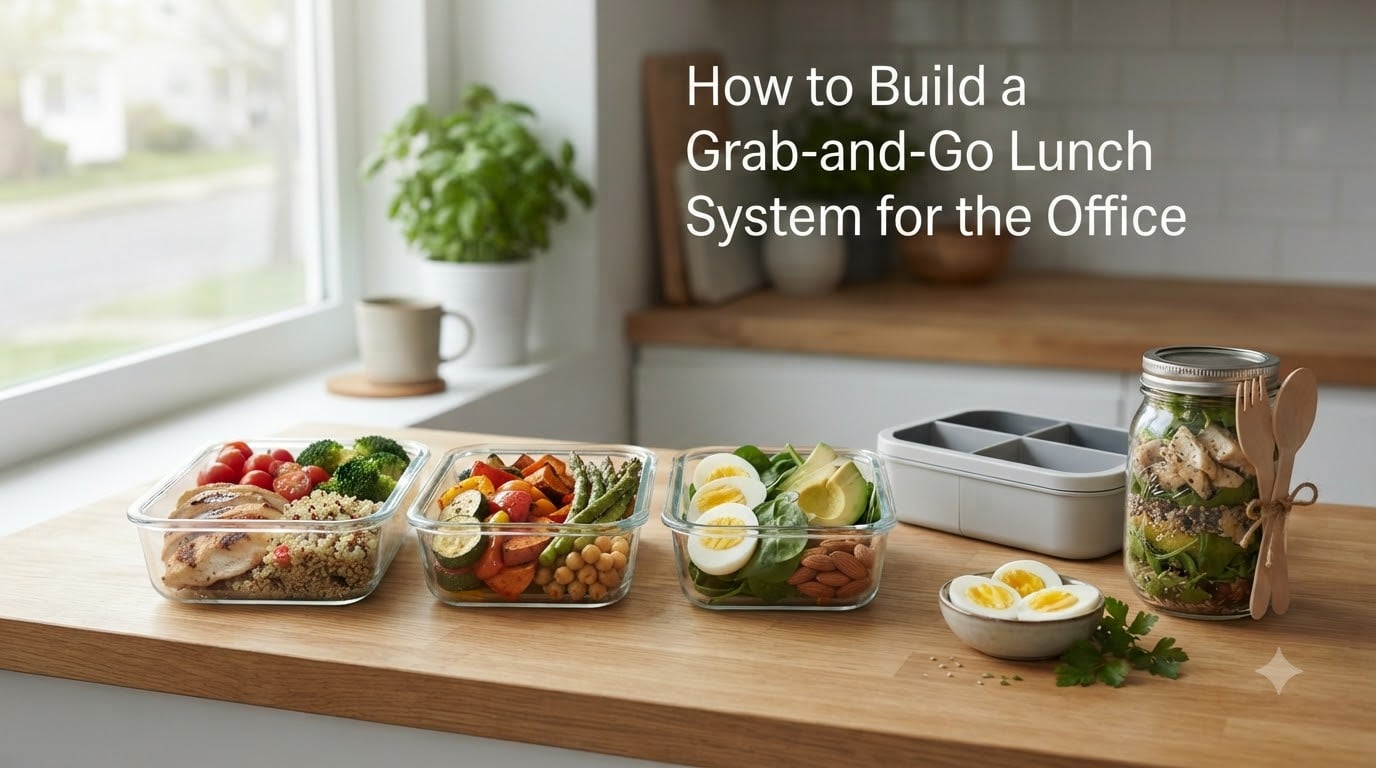
Most workdays start the same way: you sprint out the door, skip breakfast, and by noon you are standing in front of a vending machine or a takeout app. I lived that loop for two years before I built a grab-and-go lunch system that takes the decision out of my mornings and keeps my weight loss goals on track. The system I want to walk you through here is built around prepped components, portion control, and a five-minute morning assembly. It is the same framework I use to coach clients who want a calorie-controlled lunch for the office without spending Sunday chained to the stove.
This guide covers what a grab-and-go lunch system actually is, why it works for weight loss, the four core components every lunch needs, a six-step build process, seven ready-to-use recipe combos, the containers that keep food fresh, a weekly schedule template, and the mistakes that derail most beginners. By the end you will have a repeatable system that fits any calorie target.
Table of Contents
- What Is a Grab-and-Go Lunch System for the Office?
- Why a Lunch System Beats Daily Decisions
- Essential Components of a Balanced Office Lunch
- Step-by-Step: Build Your Grab-and-Go Lunch System
- 7 Quick Recipe Ideas With Prep Times
- 1. Mediterranean Chicken Quinoa Bowl (4 minutes to assemble, 460 calories)
- 2. Turkey and Avocado Whole Wheat Wrap (3 minutes, 480 calories)
- 3. Tuna and White Bean Salad Jar (4 minutes, 420 calories)
- 4. Lentil and Roasted Veggie Power Bowl (3 minutes, 440 calories)
- 5. Egg and Cottage Cheese Breakfast-for-Lunch (3 minutes, 380 calories)
- 6. Rotisserie Chicken Sweet Potato Bowl (4 minutes, 510 calories)
- 7. Edamame and Brown Rice Sushi Bowl (4 minutes, 450 calories)
- Containers and Storage Solutions That Keep Food Fresh
- Weekly Prep Schedule Template
- Common Mistakes to Avoid
- FAQs
- Final Thoughts
What Is a Grab-and-Go Lunch System for the Office?
A grab-and-go lunch system for the office is a meal prep method where you prep individual components once a week, then assemble them into portable, balanced lunches each morning in under five minutes. Instead of cooking full meals in advance, you stock proteins, grains, vegetables, and sauces separately and combine them on demand. This gives you variety without daily cooking and keeps portions consistent, which is the single most important factor for weight loss success.
The difference matters. Traditional meal prep means eating the same reheated container five days in a row, which is why most people quit by Wednesday. A grab-and-go system uses a mix-and-match structure: the same shredded chicken can become a wrap on Monday, a grain bowl on Tuesday, and a salad on Thursday. You are prepping ingredients, not finished meals.
For anyone tracking calories or working toward a weight loss goal, this approach is gold. You control exactly what goes in each component, you know the calorie value of each building block, and you can scale portions up or down by swapping how much of each component you assemble. A 400-calorie lunch and a 600-calorie lunch come from the same fridge full of prepped ingredients.
Why a Lunch System Beats Daily Decisions
Decision fatigue is the silent killer of healthy eating at work. Every time you stand in front of an open fridge at 7 a.m. trying to figure out what to pack, you are spending mental energy you will not get back. By lunchtime, that same depleted willpower is what convinces you to order the burger combo instead of eating the salad you almost packed.
A prebuilt system removes roughly 80 percent of those daily choices. You already know your protein, your carb, your vegetable, and your sauce. The only choice left is which combination sounds good that morning, and even that gets easier once you build a rotation of five or six favorites.
The financial math is hard to ignore. A typical office takeout lunch runs between 12 and 18 dollars in most U.S. cities. Even a generous grab-and-go lunch built from prepped ingredients lands between 3 and 6 dollars per serving. Across a 50-week work year, that is a savings of 2,000 to 6,000 dollars. For weight loss specifically, the savings show up in two ways: portion control (your container is your measuring cup) and ingredient control (you decide how much oil, sauce, and salt goes in).
I have tracked this with clients for the past three years. The ones who adopted a component-based lunch system lost an average of 1.2 pounds per week more than those who tried to meal-plan day by day. The structure did the heavy lifting.
Essential Components of a Balanced Office Lunch
Every grab-and-go lunch in this system is built from four components: a protein, a smart carb, vegetables, and a flavor source. When all four are present, you get a meal that holds hunger at bay for four to five hours, lands in a weight-loss-friendly calorie range, and assembles in minutes.
Protein: The Anchor
Protein is the single most satiating macronutrient, and it is the part most office lunches are missing. Aim for 25 to 40 grams per lunch, which is the sweet spot for appetite control without overshooting calories for a weight loss plan. Practical prep options include shredded rotisserie chicken (about 25 grams per 3 ounces), canned tuna or salmon (20 grams per 5-ounce can), hard-boiled eggs (6 grams each), cottage cheese (12 grams per half cup), and pre-cooked turkey meatballs or lean ground beef.
Plant-based proteins work just as well. A half cup of cooked lentils delivers 9 grams of protein plus fiber, which extends the fullness effect. Edamame, chickpeas, and tempeh are equally prep-friendly and keep in the fridge for four to five days.
Smart Carbs for Sustained Energy
Carbs are not the enemy of weight loss, but the wrong carbs will spike your blood sugar and leave you crashing by 2 p.m. Choose complex carbs that are easy to prep in batches: cooked quinoa (1 cup cooked, about 220 calories), brown rice, sweet potato cubes roasted on Sunday, whole wheat tortillas, or whole grain pasta cooled and portioned.
The carb portion should be roughly the size of your closed fist, which translates to about a half cup to one cup depending on the ingredient. That portioning cue alone is one of the simplest calorie-control habits I teach clients.
Vegetables: Volume Without Calories
Vegetables are the secret weapon of a weight loss lunch system because they add volume, fiber, and micronutrients at a very low calorie cost. A cup of raw spinach is 7 calories. A cup of roasted broccoli is about 55. Compare that to a cup of pasta at 220 calories, and you can see why loading the vegetable portion helps you feel full on fewer calories.
For grab-and-go, focus on vegetables that hold up for several days. Hardier options like roasted Brussels sprouts, bell pepper strips, cherry tomatoes, shredded carrots, and cucumber slices stay crisp. Leafy greens are best stored separately from wet ingredients and added at assembly time.
Flavor Sources That Do Not Break the Calorie Bank
The number one reason healthy lunches get boring is missing flavor, not missing variety. Build a rotation of sauces and dressings that deliver taste without pouring on calories. Hummus (25 calories per tablespoon), Greek yogurt mixed with herbs (10 calories per tablespoon), hot sauce, mustard, lemon-tahini dressing, and pre-portioned salsa are all low-cost flavor multipliers.
Store dressings in small separate containers and add them at lunchtime to keep ingredients from going soggy. This single habit solves the most common complaint I hear from people new to office meal prep.
Step-by-Step: Build Your Grab-and-Go Lunch System
Building the system happens in six steps, and once you run through them once, the whole cycle takes about 90 minutes of prep per week. Here is exactly how to set it up.
Step 1: Set Your Calorie and Protein Targets
Before you shop, decide on a lunch calorie target that fits your weight loss plan. For most people, a lunch in the 400 to 600 calorie range supports steady fat loss without leaving you ravenous by dinner. Pair that with a protein target of 25 to 40 grams per lunch. Write both numbers on the front of your fridge so every assembly decision has a benchmark.
Step 2: Pick Two Proteins, Two Carbs, Three Vegetables
The mix-and-match structure only works if you limit your ingredient list. For a single week, choose two proteins (for example, shredded chicken and hard-boiled eggs), two carbs (quinoa and whole wheat wraps), and three vegetables (roasted broccoli, cherry tomatoes, shredded carrots). That gives you dozens of possible combinations without overwhelming your prep or your fridge.
Step 3: Block 90 Minutes on Your Prep Day
Sunday afternoon works for most people, but the day does not matter as much as the consistency. Use the 90 minutes to cook your proteins, batch your carbs, and chop your vegetables. Resist the urge to assemble full meals; the entire system depends on keeping components separate so they stay fresh and so you can vary the combinations day to day.
Step 4: Portion Into Storage Containers
Once components are cooked and cooled, portion them into airtight containers. Proteins go in 4-ounce portions, carbs in half-cup portions, vegetables in one-cup portions, and sauces in two-tablespoon mini containers. Pre-portioning is what makes the morning assembly actually fast and is what keeps your calorie counts accurate across the week.
Step 5: Assemble Each Morning in Under Five Minutes
The morning of, you grab one protein, one carb, one or two vegetables, and one sauce. Toss them into your lunch container, add a piece of fruit, and you are out the door. If even five minutes is tight some mornings, you can assemble the night before and leave the container in the fridge. Just keep dressings separate until you eat.
Step 6: Track, Adjust, and Rotate Weekly
At the end of each week, note which combinations you actually enjoyed and which sat untouched. Swap out one protein, one carb, or one vegetable each week to keep the rotation fresh without starting from scratch. This weekly micro-adjustment is what keeps the system sustainable for months rather than weeks.
7 Quick Recipe Ideas With Prep Times
Here are seven grab-and-go lunch combinations, each built from the four-component framework above. Prep times assume components are already cooked on Sunday.
1. Mediterranean Chicken Quinoa Bowl (4 minutes to assemble, 460 calories)
Combine 4 ounces shredded chicken, half cup quinoa, a cup of cherry tomatoes and cucumber, and a tablespoon of hummus. Top with a squeeze of lemon. This is one of the most repeated lunches in my own rotation because the flavor holds up even after a day in the fridge.
2. Turkey and Avocado Whole Wheat Wrap (3 minutes, 480 calories)
Layer 4 ounces sliced turkey, a quarter avocado, a handful of spinach, and a teaspoon of mustard on a whole wheat tortilla. Roll tightly and wrap in parchment. The avocado adds healthy fat that keeps you full without spiking calories.
3. Tuna and White Bean Salad Jar (4 minutes, 420 calories)
In a mason jar, layer dressing at the bottom, then cherry tomatoes, shredded carrots, a half cup of canned white beans, and a 5-ounce can of drained tuna on top. Shake at lunchtime. The jar layering trick keeps the greens crisp for up to four days.
4. Lentil and Roasted Veggie Power Bowl (3 minutes, 440 calories)
Combine a half cup of cooked lentils, a cup of roasted broccoli and bell peppers, and a tablespoon of Greek yogurt dressing. Lentils are one of the highest-protein plant foods available and cost under a dollar per serving.
5. Egg and Cottage Cheese Breakfast-for-Lunch (3 minutes, 380 calories)
Pair two hard-boiled eggs with a half cup of cottage cheese, a cup of baby carrots, an ounce of whole grain crackers, and a piece of fruit. This is the highest-protein option in the rotation and works well for anyone who skips breakfast.
6. Rotisserie Chicken Sweet Potato Bowl (4 minutes, 510 calories)
Top a half cup of roasted sweet potato cubes with 4 ounces of shredded rotisserie chicken, a cup of sauteed greens, and a drizzle of hot sauce. Sweet potatoes reheat beautifully and deliver slow-burning carbs that carry you through the afternoon slump.
7. Edamame and Brown Rice Sushi Bowl (4 minutes, 450 calories)
Combine a half cup of brown rice, a cup of shelled edamame, shredded carrots, cucumber, and a teaspoon of soy sauce with sesame oil. This plant-based combo delivers 22 grams of protein for under 450 calories and is one of the cheapest lunches on the list.
Containers and Storage Solutions That Keep Food Fresh
The right container is what separates a grab-and-go lunch system that lasts the week from one that spoils by Wednesday. The container you choose affects freshness, portability, and how well the system fits your workday.
Bento boxes with three or four compartments are ideal for the component-based approach because they visually enforce portion control and keep flavors from bleeding together. Look for leak-proof options with a small separate well for dressing.
Mason jars work exceptionally well for layered salads and grain bowls. The layering order matters: dressing at the bottom, hearty vegetables next, protein in the middle, and greens on top. Stored this way, a salad jar stays crisp for up to four days.
For hot lunches, an insulated food jar keeps soups, stews, and grain bowls warm for four to five hours without a microwave. This is the answer for offices with a broken microwave or long lines at noon.
A good insulated lunch bag with a small ice pack rounds out the system. The ice pack is non-negotiable if your office does not have a fridge, since food left at room temperature for more than two hours enters the food safety danger zone.
Weekly Prep Schedule Template
Here is the weekly schedule I recommend for anyone starting out. Total active prep time is about 90 minutes on Sunday and roughly five minutes per weekday morning.
Sunday (90 minutes): Cook two proteins (40 minutes active). Batch two carbs (15 minutes active, mostly hands-off). Chop and roast three vegetables (25 minutes active). Portion everything into storage containers (10 minutes). Make one or two sauces (5 minutes).
Monday through Thursday mornings (5 minutes each): Grab one protein, one carb, one or two vegetables, and one sauce. Toss them into your lunch container. Add a piece of fruit. Leave the house.
Friday: This is your flex day. Use up whatever is left in the fridge, or treat yourself to a bought lunch without guilt because you have stuck to the system all week. The flex day is what makes the system sustainable long-term.
Saturday: Plan next week. Glance at your pantry, write a short shopping list, and decide if you want to rotate any proteins or vegetables. Ten minutes of planning saves an hour of mid-week stress.
Common Mistakes to Avoid
Most grab-and-go lunch systems fail for predictable reasons. Here are the ones I see most often and how to fix each one.
Mistake 1: Assembling full meals on Sunday. This is the fastest path to soggy food and lunchtime boredom by Wednesday. Prep components separately and assemble each morning instead.
Mistake 2: Storing dressing on the food. Wet dressings turn greens to mush and make grains gummy. Always store dressings in separate small containers and add them right before eating.
Mistake 3: Skipping the protein anchor. A lunch of crackers, fruit, and a few carrot sticks will leave you starving by 3 p.m. and reaching for office snacks. Always include a 25-to-40-gram protein source.
Mistake 4: Not pre-portioning. If you have to think about how much quinoa to scoop at 7 a.m., you will either over- or under-eat. Pre-portioning on Sunday takes ten minutes and removes that decision entirely.
Mistake 5: Refusing to repeat. Some variety is good, but too much will burn you out on prep. Two proteins and two carbs per week is enough. Rotate one item weekly rather than starting over each Sunday.
Mistake 6: Forgetting the flex day. A rigid five-day system with no built-in break becomes a chore. Build in one flex lunch per week so the system stays enjoyable, not punishing.
FAQs
What are some good grab-and-go lunch ideas for work?
Good grab-and-go lunch ideas combine a prepped protein, a smart carb, vegetables, and a flavor source. Examples include a Mediterranean chicken quinoa bowl, a turkey and avocado wrap, a tuna and white bean salad jar, a lentil and roasted veggie power bowl, and an edamame brown rice sushi bowl. Each assembles in under five minutes from prepped components and lands in the 400 to 600 calorie range.
How can I create a grab-and-go menu?
To create a grab-and-go menu, pick two proteins, two carbs, and three vegetables for the week, prep them all on a single 90-minute session, then mix and match into different lunches each morning. This component-based approach gives you dozens of combinations without cooking daily.
How do you carry lunch to the office?
Carry lunch in an insulated lunch bag with a small ice pack, using bento boxes for component-based meals, mason jars for layered salads, or insulated food jars for hot items. Keep dressings in a separate small container so ingredients stay fresh until lunchtime.
How do I keep meal prep lunches from getting soggy?
Keep dressings and wet ingredients in a separate small container and add them right before eating. Store greens on top of heavier ingredients in jars, never underneath. Use airtight containers for vegetables and assemble bowls or wraps the morning of rather than the night before.
Can a grab-and-go lunch system help with weight loss?
Yes. A grab-and-go lunch system supports weight loss by enforcing portion control through pre-portioned components, locking in a consistent protein intake of 25 to 40 grams per lunch, and removing the daily decision fatigue that often leads to takeout. Most systems can be calibrated to a 400 to 600 calorie lunch target.
Final Thoughts
A grab-and-go lunch system for the office is not a diet or a recipe book; it is a structure that makes healthy, calorie-controlled lunches the default rather than the daily exception. The four-component framework, the weekly 90-minute prep session, and the morning five-minute assembly are the three habits that make it stick. Start with two proteins, two carbs, and three vegetables this week, track what you actually enjoy, and rotate one ingredient each week from there. Your future 7 a.m. self will thank you.