
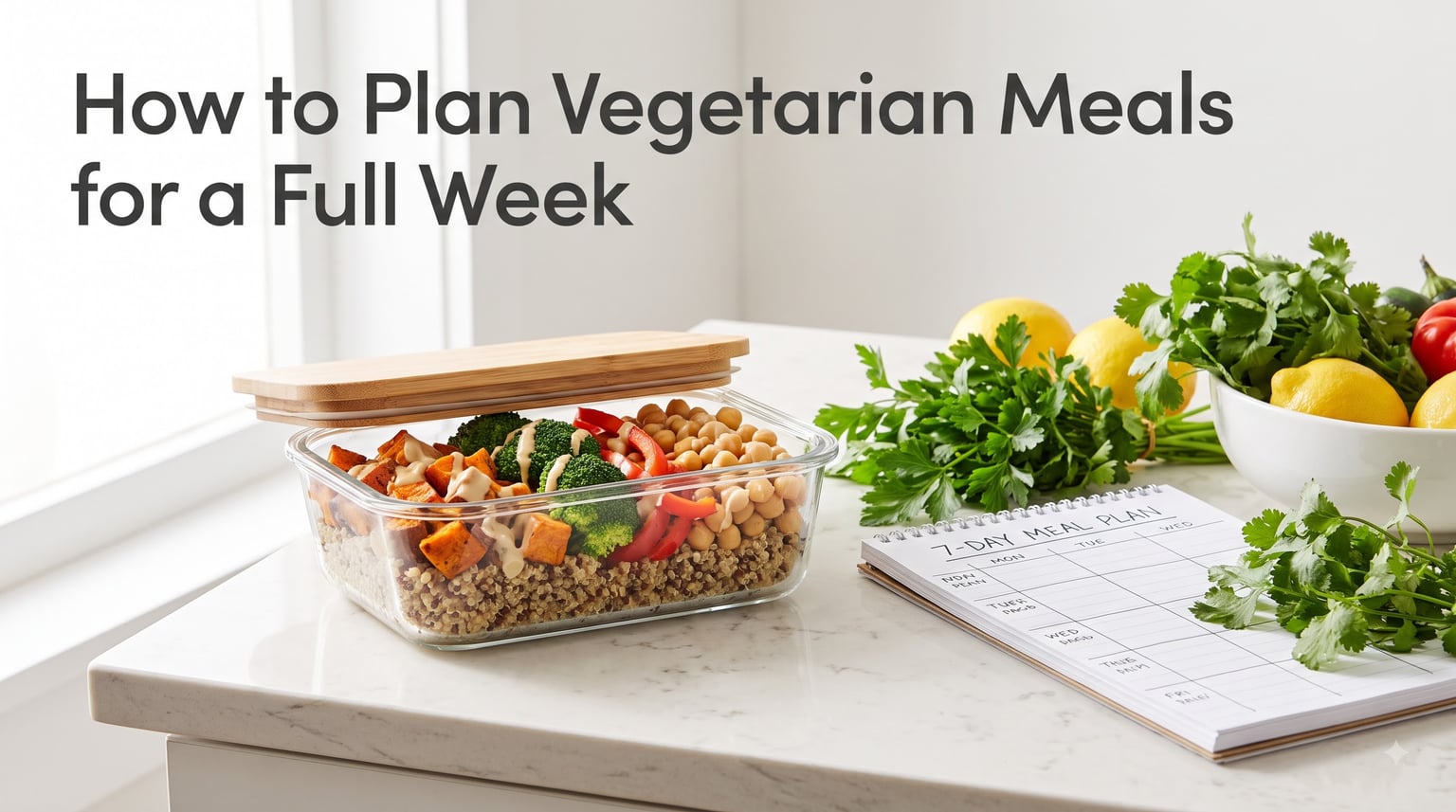
If you have ever ended up eating the same bowl of pasta with jarred sauce three nights in a row, you are not alone. Most people who try plant-based eating run into the same wall: Monday’s enthusiasm crashes into Wednesday’s exhaustion. That is exactly why learning how to plan vegetarian meals for a full week changes everything.
I have been meal planning as a vegetarian for years, and I want to share the system that finally worked. It is not about rigid spreadsheets or spending your entire Sunday in the kitchen. It is about building a flexible framework that keeps you fed, nourished, and actually excited to open the fridge.
This guide walks you through vegetarian nutrition basics, a complete 7-day meal plan, a smarter way to build meals from components, time-saving prep strategies, and practical solutions for the real-world problems that derail most plans. By the end, you will have a repeatable system you can use every week.
What you will learn:
- The nutrients that matter most on a vegetarian diet and how to hit them
- A 7-step weekly planning process you can start tonight
- A full 7-day meal plan with breakfast, lunch, dinner, and snacks
- How to build endless meals from simple components instead of recipes
- Sunday prep strategies that take 90 minutes or less
- How to adapt the plan for weight loss, muscle gain, or mixed households
Table of Contents
- What Is Vegetarian Meal Planning?
- Understanding Vegetarian Nutrition Basics
- How to Plan Vegetarian Meals for a Full Week: 7 Simple Steps
- Step 1: Pick a Cuisine Rotation Theme
- Step 2: Choose 3 to 4 Dinners for the Week
- Step 3: Identify Shared Components Across Meals
- Step 4: Build Your Grocery List by Store Section
- Step 5: Set Your Daily Protein and Calorie Targets
- Step 6: Schedule a 90-Minute Sunday Prep Window
- Step 7: Plan for Leftovers and Buffer Nights
- Your 7-Day Vegetarian Meal Plan
- How to Build Vegetarian Meals from Components
- Meal Prep Strategies: 90 Minutes on Sunday
- Pantry Essentials for Vegetarian Meal Planning
- Building Your Vegetarian Grocery List by Store Section
- How to Never Get Bored with Vegetarian Meals
- Adapting Your Plan for Different Goals
- Handling Social Situations and Dining Out
- Reducing Food Waste on a Vegetarian Plan
- Frequently Asked Questions
- Wrapping It Up
What Is Vegetarian Meal Planning?
Vegetarian meal planning is the process of organizing your plant-based meals for an entire week in advance. You decide what you will eat for breakfast, lunch, dinner, and snacks, build a corresponding grocery list, and prep some of the food ahead of time so weekday cooking takes minutes instead of hours.
The goal is not to lock yourself into rigid meals. A good plan gives you structure while leaving room to swap, substitute, or order takeout when life happens. Think of it as a map with detours built in, not a train track.
Meal planning matters more for vegetarians than for omnivores because it solves three specific problems at once. It helps you hit your daily protein target, it prevents the variety crash that makes people quit plant-based eating, and it dramatically cuts food waste and grocery costs.
Who benefits most from this system? Anyone transitioning to vegetarianism who feels overwhelmed, busy professionals who want real meals without nightly cooking marathons, families cooking for mixed diets, and anyone who has ever thrown away a wilted bag of spinach at the end of the week.
Understanding Vegetarian Nutrition Basics
Before we dive into the meal plan, you need to understand which nutrients to watch. Vegetarian diets can be nutritionally complete, but only if you pay attention to a handful of key areas. Here are the five that matter most.
Protein: Aim for 50 to 70 Grams Per Day
The biggest worry people have about vegetarian eating is protein. The reality is that hitting 50 to 70 grams per day is straightforward when you include legumes, eggs, dairy, and soy in your rotation. One cup of cooked lentils delivers about 18 grams, a single egg adds 6 grams, and a cup of Greek yogurt packs 15 to 20 grams.
Spread your protein across meals rather than loading up at dinner. Research shows your body uses protein more efficiently when intake is distributed throughout the day. Aim for 15 to 20 grams at each meal rather than 50 grams in one sitting.
Iron: Pair Plant Sources with Vitamin C
Plant-based iron, called non-heme iron, is harder for your body to absorb than the iron from meat. The fix is simple: eat iron-rich foods like lentils, spinach, and fortified cereals alongside vitamin C sources like bell peppers, tomatoes, citrus, or strawberries. This pairing can boost iron absorption by up to 300 percent.
One practical example: squeeze lemon juice over your lentil soup, or toss bell peppers into your black bean tacos. Small pairings add up across the week.
Vitamin B12: Supplement Unless You Eat Dairy Regularly
B12 is the one nutrient that is genuinely difficult to get from plants alone. It is found naturally in eggs, dairy, and fortified foods like nutritional yeast and plant milks. If you eat eggs and dairy daily, you may get enough. If you lean more toward a vegan pattern, take a B12 supplement. The recommended dose is 2.4 micrograms per day for most adults.
Omega-3 Fatty Acids: Eat ALA Sources Daily
Your body needs omega-3 fats for brain and heart health. Plant sources provide ALA, which your body partially converts to the active forms EPA and DHA. Include a tablespoon of ground flaxseeds, chia seeds, or walnuts daily. Algae-based DHA supplements are also available if you want a direct source.
Calcium and Zinc: Include Multiple Sources
Calcium comes from dairy, fortified plant milks, tofu set with calcium sulfate, leafy greens like kale and collards, and sesame seeds. Zinc is found in pumpkin seeds, chickpeas, lentils, and cashews. The trick is variety rather than relying on one source.
How to Plan Vegetarian Meals for a Full Week: 7 Simple Steps
Here is the exact process I use every week. Follow these seven steps in order and you will have a complete plan in under 30 minutes.
Step 1: Pick a Cuisine Rotation Theme
Start by choosing one or two cuisines for the week. This might be Mediterranean, Mexican, Indian, Asian stir-fry, or a mix. Choosing a theme does two things: it narrows your ingredient list so you shop more efficiently, and it prevents the random-meal fatigue that kills most plans by Thursday.
Example: A Mediterranean week might feature chickpea stews, Greek grain bowls, falafel wraps, and roasted vegetable pasta. An Indian week might mean dal, chana masala, vegetable biryani, and paneer curry.
Step 2: Choose 3 to 4 Dinners for the Week
You do not need seven unique dinners. Plan for three or four main dinners, then let leftovers fill the gaps. This is the single biggest time and money saver in vegetarian meal planning. Cook once, eat twice.
Choose dinners that share ingredients. If you buy a bunch of cilantro, make sure at least two meals use it. If you open a can of coconut milk, plan another dish that uses the rest.
Step 3: Identify Shared Components Across Meals
Look at your chosen dinners and find overlap. Maybe three of them use rice. Maybe two use roasted sweet potatoes. Cook a large batch of each shared component on Sunday, then use it in different meals throughout the week. This is the component-first mindset that separates people who stick with meal planning from those who burn out.
Step 4: Build Your Grocery List by Store Section
Take your meal list and component batch plan, then write a grocery list organized by where items are in the store. Group produce together, dairy and eggs together, dry goods together, and frozen items together. This keeps you in and out of the store in 30 minutes instead of wandering every aisle.
Step 5: Set Your Daily Protein and Calorie Targets
Know roughly how many calories and how much protein you need per day. For weight maintenance, most adults need around 2,000 calories. For weight loss, aim for a 300 to 500 calorie deficit. For muscle gain, add 200 to 400 calories above maintenance. Keep your protein target at 15 to 20 grams per meal.
Step 6: Schedule a 90-Minute Sunday Prep Window
Block off 90 minutes on Sunday afternoon. Use this window to cook your shared components, chop vegetables, wash greens, and make one full recipe. This single habit is what makes the weekday plan actually work. Without it, Tuesday night becomes a takeout night.
Step 7: Plan for Leftovers and Buffer Nights
Build in one buffer night per week where you eat whatever is in the fridge. Life happens. Plans change. A buffer night absorbs the chaos without derailing the whole week. It also uses up ingredients before they spoil, cutting food waste.
Your 7-Day Vegetarian Meal Plan
Here is a complete week of vegetarian meals designed for variety, balance, and reasonable prep time. Each day includes breakfast, lunch, dinner, and a snack. Total daily calories land roughly between 1,800 and 2,100 depending on portion sizes. Adjust up or down based on your goals.
Day 1: Mediterranean Monday
Breakfast: Greek yogurt with honey, walnuts, and sliced banana (about 350 calories, 18g protein).
Lunch: Chickpea salad wrap with spinach, cucumber, and tahini dressing on a whole wheat tortilla (about 450 calories, 20g protein).
Dinner: Lentil and vegetable stew with a side of crusty bread (about 500 calories, 22g protein).
Snack: Apple slices with 2 tablespoons of almond butter (about 200 calories, 5g protein).
Day 2: Tex-Mex Tuesday
Breakfast: Black bean and egg breakfast burrito with salsa and avocado (about 400 calories, 20g protein).
Lunch: Leftover lentil stew over brown rice (about 450 calories, 20g protein).
Dinner: Black bean and sweet potato tacos with cabbage slaw and lime crema (about 500 calories, 18g protein).
Snack: Handful of roasted pumpkin seeds and an orange (about 180 calories, 6g protein).
Day 3: World-Wednesday (Indian)
Breakfast: Overnight oats with chia seeds, milk, and berries (about 350 calories, 14g protein).
Lunch: Leftover black bean tacos repurposed as a taco bowl over greens (about 420 calories, 16g protein).
Dinner: Chana masala with basmati rice and cucumber raita (about 550 calories, 20g protein).
Snack: Cottage cheese with cherry tomatoes and black pepper (about 180 calories, 14g protein).
Day 4: Comfort Thursday
Breakfast: Scrambled eggs with spinach and feta on whole grain toast (about 380 calories, 22g protein).
Lunch: Leftover chana masala with rice (about 500 calories, 18g protein).
Dinner: Creamy tomato pasta with white beans and roasted broccoli (about 550 calories, 22g protein).
Snack: Hummus with carrot and cucumber sticks (about 180 calories, 6g protein).
Day 5: Asian-Fusion Friday
Breakfast: Smoothie with banana, spinach, peanut butter, and milk (about 380 calories, 16g protein).
Lunch: Leftover pasta with white beans (about 500 calories, 20g protein).
Dinner: Tofu and vegetable stir-fry with soba noodles and peanut sauce (about 550 calories, 24g protein).
Snack: Edamame pods with sea salt (about 180 calories, 14g protein).
Day 6: Simple Saturday
Breakfast: Veggie omelet with mushrooms, peppers, and cheese (about 350 calories, 24g protein).
Lunch: Leftover stir-fry over rice (about 450 calories, 20g protein).
Dinner: Margherita pizza on store-bought dough with a side salad (about 600 calories, 20g protein).
Snack: Trail mix with almonds, cashews, and dried cranberries (about 200 calories, 6g protein).
Day 7: Reset Sunday
Breakfast: Pancakes with maple syrup and Greek yogurt on the side (about 400 calories, 16g protein).
Lunch: Grain bowl with leftover rice, roasted vegetables, and a fried egg (about 450 calories, 18g protein).
Dinner: Big roasted vegetable and white bean soup with crusty bread (about 500 calories, 20g protein).
Snack: Banana with 1 tablespoon of peanut butter (about 180 calories, 5g protein).
How to Build Vegetarian Meals from Components
This is the mindset shift that separates people who stick with meal planning from those who quit by week three. Instead of cooking from recipes every night, learn to assemble meals from a set of pre-cooked components. The formula is simple: one protein plus one grain plus one or two vegetables plus a sauce.
When you prep components on Sunday, weekday dinner becomes a five-minute assembly job rather than a thirty-minute cooking session. You mix and match what you have, and you never eat the exact same meal twice unless you want to.
Here are four example component combinations you can build from a well-stocked fridge:
- Protein: Chickpeas, Grain: Quinoa, Vegetable: Roasted cauliflower and spinach, Sauce: Tahini-lemon
- Protein: Black beans, Grain: Brown rice, Vegetable: Roasted sweet potato and corn, Sauce: Avocado-lime
- Protein: Fried egg, Grain: Soba noodles, Vegetable: Stir-fried bok choy and carrots, Sauce: Soy-ginger-sesame
- Protein: Cottage cheese, Grain: Whole grain toast, Vegetable: Tomato and cucumber, Sauce: Pesto
Notice how the same base components create completely different meals just by swapping the sauce. This is why sauces and dressings are the secret weapon of vegetarian meal planning. Make two or three sauces on Sunday and your week is set.
The component approach also solves the problem of feeding a mixed household. Cook a vegetarian base for everyone, then pan-fry a chicken breast or fish fillet on the side for family members who want meat. One kitchen, one plan, everyone eats.
Meal Prep Strategies: 90 Minutes on Sunday
The secret to a smooth week is one focused prep session. I do mine on Sunday afternoon, and it takes about 90 minutes. Here is exactly what goes into that window.
Component Prep vs. Full Meal Prep
There are two prep philosophies. Full meal prep means cooking entire meals and portioning them into containers. This works well if you want grab-and-go lunches but can feel repetitive. Component prep means cooking individual ingredients like rice, roasted vegetables, and a pot of beans, then assembling different meals each day.
I recommend component prep for most people. It gives you flexibility and prevents the monotony of eating the same assembled meal five days in a row. Use full meal prep only for lunches you take to work.
What to Cook During Your 90-Minute Window
Here is a realistic Sunday prep checklist you can follow:
- Cook a large pot of grains (rice, quinoa, or pasta) for the week
- Roast two sheet pans of vegetables (one starchy like sweet potatoes, one green like broccoli)
- Simmer one pot of beans or lentils if cooking from dry, or drain and season canned beans
- Hard-boil 6 to 8 eggs for quick breakfasts and snacks
- Wash and dry leafy greens, then store with a paper towel to absorb moisture
- Make one sauce or dressing (tahini, peanut, or vinaigrette)
- Chop any vegetables that will go into specific weeknight recipes
This sounds like a lot, but with two sheet pans going in the oven simultaneously and a pot on the stove, most of this happens in parallel. The actual hands-on time is closer to 30 minutes. The rest is waiting.
Storage Tips That Keep Food Fresh
Use airtight glass containers for grains and cooked components. They keep food fresh longer than plastic and reheat evenly in the microwave. Store leafy greens in containers lined with paper towels to absorb condensation. Keep sauces in small jars so you can grab one without opening a large container.
Cooked grains last 4 to 5 days in the fridge. Roasted vegetables stay good for 4 days. Cooked beans and lentils keep for 5 days. Hard-boiled eggs last a full week. Plan to eat more perishable items earlier in the week and save sturdier foods like soups and stews for later.
Pantry Essentials for Vegetarian Meal Planning
A well-stocked pantry is the backbone of stress-free vegetarian cooking. When you have these staples on hand, you can always pull together a meal even if your fresh produce runs low. Here is what to keep stocked.
Dry Goods
Keep a rotation of dried or canned beans and lentils: chickpeas, black beans, kidney beans, red lentils, and brown or green lentils. Stock at least two types of whole grains: brown rice, quinoa, oats, and whole wheat pasta cover most bases. Add barley or farro for variety when you want it.
Nuts, Seeds, and Nut Butters
Walnuts and ground flaxseeds for omega-3s. Almonds and pumpkin seeds for snacks and toppings. Peanut butter and almond butter for toast, smoothies, and sauces. Sesame seeds and tahini for dressings and Mediterranean dishes.
Oils, Vinegars, and Flavor Builders
Extra virgin olive oil for dressings and low-heat cooking. A neutral oil like avocado or canola for high-heat cooking. Soy sauce or tamari, rice vinegar, and balsamic vinegar for quick sauces. Keep maple syrup or honey for dressings that need sweetness.
Spices and Seasonings
Build a small collection that covers your cuisine rotations. Cumin, smoked paprika, and chili powder for Mexican nights. Curry powder, garam masala, and turmeric for Indian dishes. Garlic powder, onion powder, and oregano for Mediterranean cooking. Red pepper flakes for heat. Salt and black pepper go without saying.
Canned and Jarred Staples
Diced tomatoes, tomato paste, coconut milk, and vegetable broth form the base of countless vegetarian meals. Keep artichoke hearts, olives, and roasted red peppers for instant flavor boosters. Stock nutritional yeast for a cheesy, savory kick and a B12 boost.
Building Your Vegetarian Grocery List by Store Section
An organized grocery list saves time and money. Here is how to structure yours so you move through the store efficiently without backtracking.
Produce Section
Focus on a mix of sturdy vegetables and quick-perishing ones. Sturdy picks that last the full week: sweet potatoes, onions, garlic, carrots, cabbage, and winter squash. Medium-life items: bell peppers, broccoli, cauliflower, and cucumbers. Quick-use items for early in the week: leafy greens, tomatoes, berries, and bananas.
Buy one or two fresh herbs per week rather than a large bunch you will never finish. Cilantro pairs with Mexican and Asian weeks. Parsley works for Mediterranean. Basil is perfect for Italian nights.
Dairy and Eggs
Eggs are one of the most versatile and affordable vegetarian proteins. Stock a dozen per week for two people. Greek yogurt for breakfasts and snacks. A block of cheese for melting and snacking. Milk or plant milk for cooking and cereal.
Dry Goods Aisle
Restock pantry staples as needed: rice, pasta, oats, canned beans, canned tomatoes, and broth. Check your spice rack before shopping so you do not buy duplicates. This is also where you find nut butters and vinegars.
Frozen Aisle
Frozen vegetables are your backup plan. Keep frozen peas, corn, edamame, and spinach on hand for nights when fresh produce runs out. Frozen fruit is perfect for smoothies and costs less than fresh out of season. Frozen veggie burgers or dumplings make a great emergency dinner.
How to Never Get Bored with Vegetarian Meals
Boredom is the number one reason people abandon vegetarian meal planning. I have seen this mentioned in dozens of forum threads. The solution is not more recipes. It is a rotation system.
Rotate Cuisines Weekly
Assign each week a cuisine theme. Week one is Mediterranean, week two is Mexican, week three is Indian, week four is Asian. This gives you natural variety without needing to brainstorm new ideas constantly. After four weeks, start the cycle over. By then, you will have forgotten what week one tasted like.
Swap Sauces and Toppings
Often the same base meal feels completely different with a new sauce. A grain and bean bowl with tahini dressing tastes Mediterranean. The same bowl with salsa and avocado tastes Mexican. Swap in soy-ginger sauce and it becomes Asian. Master five sauces and you effectively have fifteen meals.
Try One New Ingredient Each Week
Add one unfamiliar ingredient to your cart each week. Try farro instead of rice, tempeh instead of tofu, or a new vegetable you have never cooked. This keeps your cooking skills growing and prevents the rut that comes from buying the same ten items every time.
Adapting Your Plan for Different Goals
The base meal plan works for maintenance, but you will want to adjust it depending on your goals. Here is how to adapt without starting from scratch.
For Weight Loss
Reduce calorie-dense foods slightly while keeping protein high to preserve satiety and muscle. Use less oil when cooking, cut back on nut butters and cheese, and increase vegetable portions to fill your plate. Swap refined grains for whole grains, which are more filling per calorie. Aim for a 300 to 500 calorie daily deficit, not more, to keep the plan sustainable.
Do not skip meals to cut calories. Skipping breakfast usually leads to overeating later. Instead, make each meal slightly smaller and rely on the fiber in beans, vegetables, and whole grains to keep you full.
For Muscle Gain and Higher Protein
Add 200 to 400 calories above your maintenance level and increase protein to 80 to 100 grams per day. Add an extra scoop of Greek yogurt at breakfast, a second egg to your omelet, or a handful of hemp seeds on your salad. Include a post-workout snack with 15 to 20 grams of protein within an hour of training.
Soy-based proteins like tofu, tempeh, and edamame are complete proteins, meaning they contain all nine essential amino acids. They are particularly useful on higher-protein vegetarian plans.
For Families with Mixed Diets
If some family members eat meat, do not cook two separate meals. Cook a vegetarian base for everyone, then add a simple animal protein on the side for those who want it. For example, make a full vegetarian pasta dinner, then pan-fry a chicken breast to slice over the meat-eater’s portion.
This approach, shared by many parents in vegetarian cooking communities, saves time and keeps the family eating together. It also naturally introduces plant-based meals to omnivores without pressure.
Handling Social Situations and Dining Out
Meal plans fall apart on social nights. Here is how to handle the situations that come up most often.
Restaurant Strategies
Most restaurants have at least one vegetarian option, but it may not be balanced. Scan the menu for a grain, a protein source like beans or tofu, and a vegetable. If nothing works as-is, ask for substitutions. Many kitchens will swap vegetables for meat in pasta dishes or add beans to a salad.
Indian, Mexican, Middle Eastern, and Thai restaurants tend to have the best naturally vegetarian options. Italian and Japanese restaurants are also reliable, though you may need to specify no fish sauce at Japanese spots.
Gatherings and Potlucks
Bring a substantial vegetarian dish that you enjoy and that others can try. A hearty grain salad, black bean dip with chips, or roasted vegetable flatbread works well. This guarantees you will have something satisfying to eat and often introduces non-vegetarians to food they actually like.
Travel Days
Pack travel-friendly vegetarian foods: hummus and pita, trail mix, protein bars, fruit, and nut butter packets. Research restaurants near your destination in advance. Knowing where you can eat removes the stress of arriving hungry in an unfamiliar place.
Reducing Food Waste on a Vegetarian Plan
Vegetarian meal planning naturally reduces waste because you buy with a plan. But you can take it further with a few habits that squeeze every bit of value from your groceries.
Use Vegetable Scraps for Stock
Save onion ends, carrot peels, celery tops, and herb stems in a bag in the freezer. When the bag is full, simmer the scraps in water for 30 minutes to make a free vegetable broth. Strain and use it as a base for soups, stews, and grains.
Use the Whole Vegetable
Broccoli stems are delicious peeled and stir-fried. Beet greens can be sauteed like spinach. Carrot tops make a bright pesto. Cauliflower leaves roast up crispy with oil and salt. Using these parts not only reduces waste but also adds variety and nutrients to your meals.
Freeze What You Cannot Finish
If herbs are about to wilt, chop them and freeze in olive oil in an ice cube tray. If bananas are overripe, freeze them for smoothies. If you cooked too many beans, freeze portions in their cooking liquid. A well-organized freezer is the backup plan that prevents throwing food away.
Frequently Asked Questions
Can you provide a vegetarian meal plan for a week?
A basic vegetarian meal plan for a week includes balanced breakfasts, lunches, dinners, and snacks built around legumes, grains, vegetables, eggs, and dairy. This guide includes a complete 7-day plan with approximate calories and protein counts for each meal, plus tips for adapting it to your goals.
What are some ideas for a vegetarian menu for a week?
Rotate cuisines for built-in variety. Try Mediterranean meals like chickpea stew and Greek grain bowls, Mexican dishes like black bean tacos, Indian meals like chana masala and dal, and Asian options like tofu stir-fry with soba noodles. Planning three or four dinners and using leftovers fills the rest of the week.
How do you meal prep vegetarian meals for the week?
Spend 90 minutes on Sunday prepping components rather than full meals. Cook a pot of grains, roast two sheet pans of vegetables, simmer beans or lentils, hard-boil eggs, wash greens, and make one sauce. Store everything in airtight containers and assemble different meals each day using the protein, grain, vegetable, sauce formula.
What to eat to lose belly fat in 1 week vegetarian?
Focus on high-fiber, high-protein vegetarian meals in a modest calorie deficit of 300 to 500 calories per day. Eat more beans, lentils, vegetables, and whole grains, and reduce refined carbs, added oils, and high-calorie snacks. No single food targets belly fat, but consistent whole-food meals support overall fat loss.
How do I get enough protein on a vegetarian diet?
Aim for 15 to 20 grams of protein at each meal by including eggs, Greek yogurt, cottage cheese, beans, lentils, tofu, tempeh, edamame, or nuts and seeds. Spread protein across the day rather than loading one meal. Most vegetarians easily hit 50 to 70 grams daily with this approach.
How do I not get bored with vegetarian meals?
Rotate cuisine themes weekly, master five versatile sauces that transform the same base ingredients, and try one new ingredient each week. The component-based approach, where you mix and match proteins, grains, vegetables, and sauces, creates endless variety without needing new recipes constantly.
Wrapping It Up
Learning how to plan vegetarian meals for a full week is not about following recipes to the letter. It is about building a system: choose a cuisine theme, plan a few dinners, prep shared components on Sunday, and assemble meals using the protein-grain-vegetable-sauce formula throughout the week.
Start small if this feels like a lot. Plan just three dinners for your first week. Cook one pot of rice and one pot of beans on Sunday. Make one sauce. You will be amazed at how many meals those few components create, and you will build momentum to expand from there.
The best meal plan is the one you actually follow. Use this framework, adapt it to your life, and adjust as you learn what works for your schedule, your kitchen, and your taste buds. Before long, weekly vegetarian meal planning will feel as automatic as brushing your teeth.