
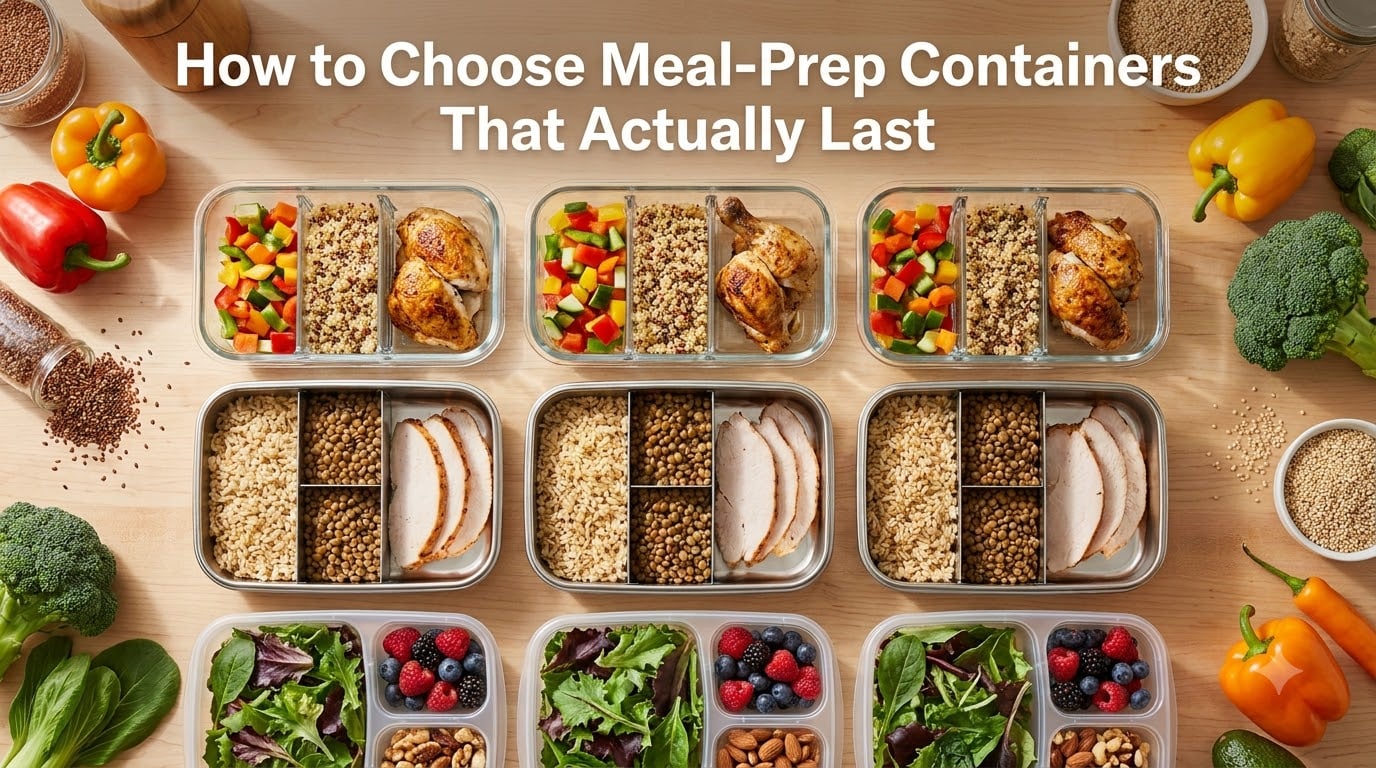
I learned this the hard way. After buying four sets of cheap plastic containers over two years, I finally invested in glass and stainless steel. That was three years ago, and I haven’t replaced a single one. The difference comes down to knowing what actually makes meal prep containers last versus what just looks good on the shelf.
This guide covers everything I wish someone had told me before I started: which materials hold up, which lids actually stay sealed, what sizes work for portioning versus batch cooking, and how to avoid the microplastics worry altogether. If you’re tired of warped plastic and mystery stains, this is for you.
Table of Contents
- How to Choose Meal Prep Containers That Actually Last: A Complete Guide
- Container Materials Compared: Glass vs Stainless Steel vs Plastic
- Key Features to Look for in Durable Meal Prep Containers
- Right Size Containers by Meal Prep Style
- Lid Quality and Why Most Containers Actually Fail
- Microplastics, BPA, and Food Safety Considerations
- Cost Per Use: Why Cheap Containers Cost More Long Term
- Care and Maintenance to Make Containers Last Years
- FAQs
- The Bottom Line on Choosing Meal Prep Containers That Last
How to Choose Meal Prep Containers That Actually Last: A Complete Guide
The short answer: pick containers based on material quality, lid reliability, and your specific meal prep style. Glass and stainless steel last years, while most plastic containers warp within months. Lids fail before containers do, so prioritize a tested airtight seal.
Here’s the framework I use now:
Material: Glass or 304 stainless steel for anything going in the microwave, freezer, or lasting more than a year
Lid: Snap-lock with silicone gasket, not just friction-fit plastic
Shape: Rectangular or square for fridge efficiency
Size: Match the container to your prep method (single portions vs family batches)
Everything else (color, brand, price) is secondary. Get those four things right and you’ll stop replacing containers every six months.
Container Materials Compared: Glass vs Stainless Steel vs Plastic
The material you pick determines how long your meal prep containers will actually last. Here’s how the three main options stack up in real-world use.
Glass Meal Prep Containers
Glass is the gold standard for longevity. Tempered glass containers resist thermal shock, won’t absorb odors, and survive years of dishwasher cycles. Pyrex and similar brands use borosilicate or soda-lime glass that handles freezer-to-fridge transfers without cracking.
The downside is weight. A full set of glass containers adds noticeable weight to your bag, and dropping one on a tile floor usually ends it. Glass also costs more upfront, though I covered that investment within 8 months of not replacing warped plastic.
Best for: Microwave reheating, freezer storage, anything with strong odors (curry, tomato sauce, turmeric), and anyone serious about long-term durability.
Stainless Steel Meal Prep Containers
Food-grade 304 stainless steel containers are nearly indestructible. They don’t break, don’t stain, and don’t leach chemicals. Many come with LFGB-certified silicone lids that seal tight enough for soups and sauces.
The big catch: you cannot microwave stainless steel. That means transferring food to a plate for reheating, which adds a step. Some newer sets have microwave-safe plastic lids, but check the specs carefully.
Best for: On-the-go lunches, kids’ meals, batch cooking, and anyone worried about dropping glass.
Plastic Meal Prep Containers
Plastic works fine for short-term storage, but it’s the option most likely to fail. Even BPA-free plastic warps in the dishwasher, stains from tomato sauce or turmeric, and holds onto smells after a few months. The lids crack first, usually within 3-6 months of regular use.
If you go plastic anyway, look for containers marked BPA-free and phthalate-free. Avoid anything going in the microwave if it’s scratched or cloudy. That’s when microplastic shedding becomes a real concern.
Best for: Disposable or short-term use, bulk prep for potlucks, and budget-conscious shoppers who don’t mind replacing them yearly.
Key Features to Look for in Durable Meal Prep Containers
Beyond material, these features separate containers that last from containers that frustrate you.
Airtight and Leak-Proof Seals
An airtight seal keeps food fresh longer and prevents the soup-in-your-bag disaster. Snap-lock lids with silicone gaskets seal better than friction-fit lids. Test before you buy: press the lid down, then try to lift the container by the lid. If it holds, the seal is solid.
Microwave and Dishwasher Safety
Microwave-safe glass saves a step at lunch. Dishwasher-safe construction means you can actually sanitize them without hand-washing every night. Check both ratings before buying, especially if you prep multiple times a week.
Stackable Design
Stackable containers save up to 40% of fridge space compared to round containers. Look for lids with nesting grooves or straight sides that fit cleanly on top of each other. This matters more than you’d think when you prep 10+ meals at once.
Compartments for Portion Control
Two or three-compartment containers keep proteins, veggies, and starches separated. This matters for meal preppers tracking macros or anyone who hates soggy salad. Single-compartment containers work better for batch cooking and one-pot meals.
See-Through Lids
Clear lids let you see what’s inside without opening every container. This sounds minor until you’re staring at 12 identical white boxes at 6 AM trying to remember which one has Tuesday’s lunch.
Right Size Containers by Meal Prep Style
Size matters more than brand. Match your containers to how you actually prep, not what looks good in a set.
For Portion Control and Weight Loss
One-cup (8 oz) to two-cup (16 oz) containers work best for single-serving meals. If you’re tracking portions for weight loss, this size makes calorie counting easier. Three-compartment versions in the 1.5 to 2 cup range separate proteins from sides cleanly.
For Batch Cooking
Five to eight-cup containers handle family-sized portions and bulk prep. These work well for soups, grain bowls, and casserole-style meals. If you cook once and eat all week, bigger containers save time on portioning.
For Freezer Meals
Two to four-cup rectangular containers stack efficiently in a freezer. Wider shapes thaw faster than tall ones. Leave an inch of headspace if you’re freezing liquids, since they expand.
For On-the-Go Lunches
Two-cup containers with secure lids fit most lunch bags without bulk. Stainless steel shines here because it handles being tossed in a backpack. Avoid anything over three cups unless you want to carry a cooler.
Lid Quality and Why Most Containers Actually Fail
Lids fail before containers do. That’s not a guess. In my kitchen, every plastic container I’ve replaced had a perfect base and a cracked lid. Here’s how to spot the difference between lids that last and lids that quit.
Snap-Lock vs Friction-Fit
Snap-lock lids have tabs on all four sides that click into place. Friction-fit lids just press on. Snap-lock wins every time for leak prevention. The tabs distribute pressure evenly, while friction lids warp after a few dishwasher cycles.
Removable Silicone Seals
Containers with removable silicone gaskets let you clean the seal thoroughly. Food particles trapped in a fixed gasket cause leaks and odors over time. Yes, removing the gasket to wash it is an extra step. Yes, it’s worth it.
Common Lid Failure Points
Watch for these warning signs: the lid no longer clicks when closed, cracks around the tab corners, warping that lets the lid slide off, or a seal that stays sticky even after washing. Once you see any of these, the container is on borrowed time.
How to Test a Lid Before Buying
Fill the container with water, seal it, and shake it over the sink. Then turn it upside down for 30 seconds. If water leaks, the lid won’t survive your lunch bag. This simple test has saved me from dozens of bad purchases.
Microplastics, BPA, and Food Safety Considerations
This is the question I get most often: are plastic containers safe? The honest answer is it depends on the condition of the plastic.
Can You Get Microplastics From Meal Prep Containers?
Yes, especially from older or damaged plastic. Studies show plastic containers shed more microplastics when they’re scratched, cloudy, or heated. Newer BPA-free plastics shed less than older BPA-containing versions, but they’re not microplastic-free.
Glass and stainless steel containers do not shed microplastics at all. That’s the cleanest answer if this concern matters to you. Switch to glass or steel for anything you reheat, and you’ll eliminate the risk entirely.
What BPA-Free Actually Means
BPA-free means the plastic doesn’t contain bisphenol A, a chemical linked to hormone disruption. It’s a real improvement, but BPA-free plastics often use BPS or BPF instead, which carry similar concerns. The label tells you what’s not in the plastic, not what’s safe long-term.
Is Pyrex Free of Microplastics?
Yes. Pyrex and other glass containers don’t contain plastic and don’t shed microplastics. This is one reason glass remains the top recommendation for food safety, especially for anything acidic, hot, or stored long-term.
The Safest Container Materials
From a food safety standpoint, here’s the ranking:
Most safe: Glass (Pyrex, borosilicate) and 304 stainless steel
Safe for most uses: BPA-free plastic in good condition, not microwaved when scratched
Use with caution: Older plastic, any plastic that’s cloudy, warped, or cracked
Cost Per Use: Why Cheap Containers Cost More Long Term
Cheap containers don’t save money. They cost more. Here’s the math I ran after my fourth set of plastic containers failed in 18 months.
A $15 set of 10 plastic containers that lasts 12 months works out to $1.25 per container per year. A $60 set of 10 glass containers that lasts 5 years works out to $1.20 per container per year. The glass is actually cheaper in year two, and cheaper every year after that.
Stainless steel costs more upfront ($80-$120 for a 10-piece set), but it lasts 10+ years. The per-year cost drops to under $1 per container. The only ongoing cost is occasional gasket replacement, usually $5-$10 per set.
The real cost isn’t money. It’s the time you spend replacing warped lids, rewashing leaky containers, and tossing stained plastic that smells like last week’s curry.
Care and Maintenance to Make Containers Last Years
Even the best containers fail early without proper care. These habits extend the life of glass, stainless steel, and plastic alike.
Glass Container Care
Avoid sudden temperature changes. Don’t take a glass container from the freezer straight into a hot oven. Let it temper on the counter for 5-10 minutes first. Skip the abrasive scrubbers, which scratch the glass over time.
Stainless Steel Container Care
Don’t put stainless steel in the microwave. Hand-wash the lids to preserve the silicone gasket. If the container develops white spots or rust, that’s a sign it’s not true 304 stainless steel and should be replaced.
Plastic Container Care
Hand-wash when possible. Top rack only in the dishwasher, away from the heating element. Replace any container that’s stained, cloudy, or cracked. These are signs the plastic is breaking down and shedding more particles.
Stain and Odor Removal
Baking soda paste removes most stains from glass and plastic. For stubborn turmeric or tomato smells, soak the container overnight in diluted white vinegar (1:1 with water). Stainless steel rarely stains, but a paste of baking soda and dish soap handles any marks.
FAQs
Who has the best meal prep containers?
Brands like Pyrex (glass), Snapware (glass with locking lids), and high-quality 304 stainless steel makers consistently rank highest for durability and leak resistance. The best container for you depends on your prep style. Glass wins for microwave convenience. Stainless steel wins for durability and portability. The brand matters less than the material, lid quality, and your specific use case.
Can you get microplastics from meal prep containers?
Yes, particularly from older, scratched, or damaged plastic containers. Studies show plastic sheds more microplastics when heated or worn. To avoid microplastics entirely, switch to glass or 304 stainless steel for anything you reheat or store long-term. These materials do not shed microplastics at all and are the safest options for regular meal prep.
Is Pyrex free of microplastics?
Yes. Pyrex and other glass meal prep containers contain no plastic and do not shed microplastics. This is why glass remains the top recommendation for food safety, especially for acidic foods like tomato sauce, hot liquids, or anything stored for more than a day or two. Borosilicate and tempered glass are both safe, microplastic-free choices.
What are the safest meal prep containers?
The safest meal prep containers are made from tempered glass (like Pyrex) or food-grade 304 stainless steel. Both materials are non-reactive, don’t leach chemicals, and don’t shed microplastics. Avoid plastic containers that are scratched, cloudy, or warped. For microwave use, glass is safest. For on-the-go durability, stainless steel is safest. Both materials outlast plastic by years when cared for properly.
How many meal prep containers do I need for a week?
For one person doing daily portion prep, 7 containers covers a full week. For batch cooking (cook once, eat all week), 3-5 larger containers (5-8 cup size) usually suffices. For couples or families, multiply by the number of people eating. Add 2-3 extras for buffer days, leftovers, or days you forget to wash one. A 10-piece set is the most common starting point.
The Bottom Line on Choosing Meal Prep Containers That Last
How to choose meal prep containers that actually last comes down to three decisions: pick glass or 304 stainless steel over plastic, choose snap-lock lids with silicone seals, and match the size to your prep style. Skip those three and you’ll keep replacing containers every year.
Start with one set of 7-10 glass containers with locking lids. Use them for two weeks. If you find yourself wishing for something more durable for travel, add a set of stainless steel for on-the-go meals. Within three months, you’ll have a system that lasts years instead of months.