
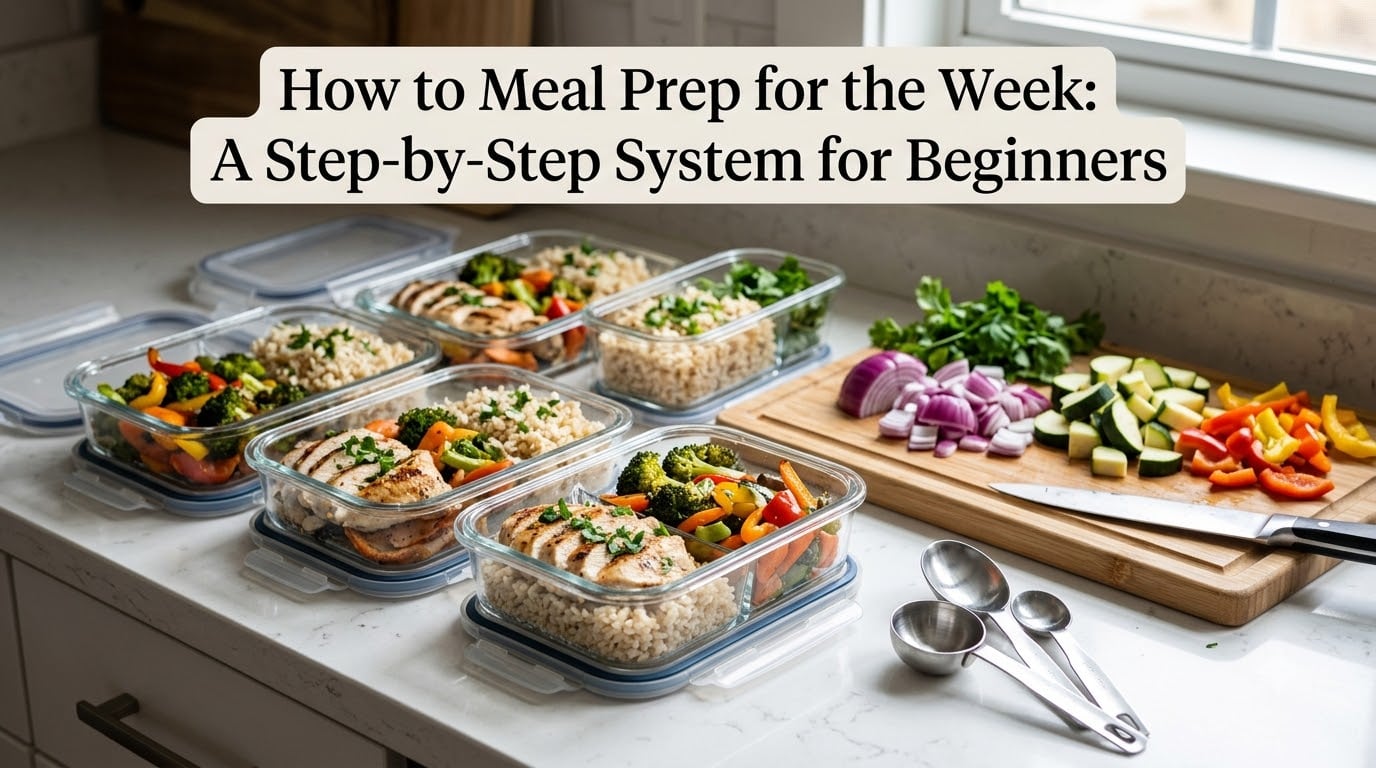
When I first tried to figure out how to meal prep for the week, I spent an entire Sunday afternoon making 21 identical chicken-and-rice bowls. By Wednesday, I couldn’t look at another grain of rice without feeling sick.
If that sounds familiar, this guide is for you. Meal prepping doesn’t have to mean eating the same boring meal five days in a row, and it certainly doesn’t require you to slave away in the kitchen for hours.
I’ve spent the last three years refining a simple, sustainable system that actually works for busy people. In this guide, I’ll walk you through the exact process I use, plus share tips from other real meal preppers who finally made it stick.
By the end, you’ll know how to plan, shop, cook, and store a week’s worth of healthy meals without burning out or wasting food.
Table of Contents
- What Is Meal Prep?
- Why Meal Prep? The Real Benefits
- How to Meal Prep for the Week: A Step-by-Step System for Beginners
- Best Foods for Meal Prep
- Storage Guidelines: How Long Does Meal Prep Last?
- Common Meal Prep Mistakes to Avoid
- Beginner Meal Prep Tips for Success
- Frequently Asked Questions
- Getting Started with Meal Prep
What Is Meal Prep?
Meal prep is the practice of planning and preparing meals in advance, usually for several days or an entire week, so you have ready-to-eat food when you need it.
Most people think of meal prep as just cooking on Sunday and packing five lunches, but there’s more nuance. Some folks batch cook ingredients separately, then assemble fresh meals each morning. Others freeze full portions for later in the week.
The two main approaches are batch cooking (making complete meals ahead of time) and batch prepping (cooking ingredients like rice, chicken, and roasted veggies separately so you can mix and match). Both work. Batch cooking is faster on prep day, while batch prepping gives you more variety during the week.
Why Meal Prep? The Real Benefits
Before diving into the how-to, let’s talk about why this matters. After tracking my own habits for six months, I noticed three clear benefits that kept me sticking with it.
Time savings: A typical Sunday prep session takes about 90 minutes. That 90 minutes saves roughly 30 to 45 minutes every weekday. Over a week, that’s 3 to 4 hours back in your life.
Money savings: Eating out costs an average of $13 per lunch. Pre-cooked meals from the grocery store run $5 to $8 each. Making your own costs around $2.50 per portion. If you pack lunch four days a week, that’s over $1,000 in annual savings.
Better eating habits: When healthy food is ready to grab, you eat healthy food. When it’s not, you grab whatever is convenient, often chips, takeout, or a vending machine snack.
There’s also a hidden fourth benefit: less daily decision fatigue. Choosing what to eat every day drains mental energy. Pre-planned meals free up that brain space for things that matter more.
How to Meal Prep for the Week: A Step-by-Step System for Beginners
Here’s the exact six-step system I use every week. It takes about 90 minutes total, and most of that is hands-off cooking time.
Step 1: Pick 3 to 4 Recipes (Maximum)
The biggest beginner mistake is choosing too many recipes. Pick three or four meals and repeat them across your week. Variety comes from changing the sides, sauces, and vegetables, not the main dish.
Choose recipes that share ingredients. If three meals all use chicken, rice, and bell peppers, your grocery list and prep work stay simple.
Good starter meals include sheet pan chicken with veggies, grain bowls, pasta with a simple protein, and stir-fry. Skip anything with a long ingredient list or techniques you’ve never tried.
Step 2: Make a Grocery List
Write down exactly what you need. Organize your list by store section: produce, proteins, grains, dairy, pantry. This prevents wandering the aisles and impulse buys.
A typical beginner list might include 2 pounds of chicken breast, 1 cup of dry rice, 2 sweet potatoes, 1 bag of broccoli, 1 dozen eggs, olive oil, and basic seasonings.
Check your fridge and pantry first. Most beginners buy duplicates of things they already have.
Step 3: Shop Once, Shop Smart
Go to one store if possible. Multiple stops eat into your time savings. Stick to the perimeter of the store for fresh ingredients and only venture into aisles for specific pantry items.
Buy in bulk when it makes sense. Large bags of rice, frozen vegetables, and family packs of chicken cost less per serving. Just make sure you can use or freeze everything before it spoils.
Step 4: Wash, Chop, and Prep Ingredients
Before any cooking, wash and chop all your vegetables. Portion out proteins. Measure grains. This prep work takes 15 to 20 minutes but saves double that during the actual cook.
Use this time to start your oven preheating and water boiling. Multitasking cuts your active cook time in half.
Step 5: Cook in Batches
Get everything cooking at once. While the rice simmers, roast vegetables in the oven. While chicken bakes, chop snacks. Work in layers, not sequentially.
A typical cook might look like: rice in the rice cooker, chicken in the oven at 400°F, veggies on a sheet pan, hard-boiled eggs on the stove. Everything finishes within 30 minutes.
Let food cool slightly before moving to storage. Hot food sealed in containers creates condensation, which speeds up spoilage.
Step 6: Portion and Store
Divide meals into containers while everything is still warm but not hot. Use the right size container so you’re not fighting oversized lids later.
Label each container with the meal name and date. Even if you think you’ll remember what’s inside, four identical containers at 7 a.m. on a Tuesday look exactly the same.
Place meals in the fridge for the next 3 days and freeze anything you’ll eat later. We’ll cover exact storage times in the next section.
Best Foods for Meal Prep
Not all food holds up well after a few days. Here’s what to prioritize and what to skip.
Proteins That Reheat Well
Chicken breast, ground turkey, beef, tofu, and eggs are your best bets. They reheat without becoming rubbery and pair with almost anything. Salmon and other fish tend to dry out, so cook those fresh or save them for days 1 and 2.
Grains and Starches
Rice, quinoa, pasta, sweet potatoes, and roasted potatoes all hold up well. Cook them slightly underdone if you plan to reheat, since they’ll soften more in the microwave.
Vegetables That Survive the Fridge
Roasted broccoli, Brussels sprouts, bell peppers, carrots, and zucchini keep their texture for 4 to 5 days. Avoid cucumbers, tomatoes, and leafy greens as main prep ingredients; they get soggy fast.
Foods to Avoid
Skip anything with a creamy sauce (it separates), fried foods (they lose crispness), and raw vegetables in dressing (they wilt). Save these for fresh assembly.
Storage Guidelines: How Long Does Meal Prep Last?
Food safety matters. Here’s how long different foods last, based on USDA guidelines and my own testing.
In the fridge (below 40°F): Cooked grains last 4 to 6 days. Cooked proteins last 3 to 4 days. Cooked vegetables last 4 to 5 days. Soups and stews last up to 7 days in airtight containers.
In the freezer (0°F or below): Most prepped meals last 2 to 3 months safely. For best quality, eat within 1 month.
Always cool food before refrigerating. Putting hot food directly in the fridge raises the temperature inside, which can affect other stored items. Aim to refrigerate within 2 hours of cooking.
When in doubt, throw it out. If a meal smells off, looks discolored, or has been in the fridge more than 5 days, don’t eat it.
Common Meal Prep Mistakes to Avoid
I made every mistake on this list when I started. Learn from my trial-and-error so you don’t waste food or time.
Mistake 1: Prepping too much too soon. Beginners often try to prep an entire week plus three backup meals. Start with 3 days. Once that feels easy, add another day.
Mistake 2: Choosing complex recipes. That 12-ingredient Thai curry looks great on Instagram, but it’s not beginner-friendly. Stick to 5 to 7 ingredients per recipe while you’re learning.
Mistake 3: Ignoring food safety. Cool food properly, store it at the right temperature, and eat it within safe timeframes. Food poisoning is not part of the meal prep lifestyle.
Mistake 4: Skipping labels. Unlabeled containers lead to mystery meals and wasted food. A piece of masking tape and a Sharpie solve everything.
Mistake 5: Eating the same exact meal five days straight. Variety comes from changing sauces, sides, and vegetables. One chicken recipe can become five different meals with different toppings and accompaniments.
Mistake 6: Prepping on a tired day. Don’t schedule your prep session for after a long workday when you’re exhausted. Sunday morning when you’re fresh works best.
Beginner Meal Prep Tips for Success
These tips come from three years of trial and error plus conversations with other meal preppers in our community.
Start With the 3-3-3 Rule
The 3-3-3 rule is a beginner-friendly framework: prep 3 meals, eat them across 3 days, using only 3 main ingredients per meal (a protein, a grain, and a vegetable).
This keeps prep simple, gives you three days to enjoy your food before it loses freshness, and prevents overwhelm. Once 3-3-3 feels easy, scale up gradually.
Prep Only What You’ll Actually Eat
Ask yourself honestly: am I really going to eat five lunches this week? If your work schedule includes three office days, only prep three lunches. Wasted food defeats the purpose.
Invest in 6 to 8 Good Containers
You don’t need a 24-container set to start. Six to eight quality glass containers with snap-lock lids are enough for one person’s weekly rotation. Look for BPA-free, microwave-safe, and dishwasher-safe options.
Keep a Running “Hits” List
Note the meals you actually looked forward to eating. After a month, you’ll have a personal hit list of 8 to 10 recipes you can rotate without ever getting bored.
Use Freezer Backup
When you make a meal you love, double the recipe and freeze half. You’ll build a rotation of frozen meals that prevents future burnout on busy weeks.
Don’t Compare to Instagram
Those perfect nine-compartment bento boxes with hand-cut veggies? They’re aspirational, not realistic. Your meals can be ugly and still be delicious and nutritious.
Frequently Asked Questions
How do beginners meal prep for a week?
Beginners should start by picking 3 simple recipes that share ingredients, making a focused grocery list, and prepping just 3 days of meals at a time. Cook one protein, one grain, and one or two vegetables, then portion into containers. As you get comfortable, gradually increase to 4 or 5 days of prep.
What is the 3-3-3 rule for meal prep?
The 3-3-3 rule is a beginner-friendly meal prep framework: prep 3 meals, eat them across 3 days, using only 3 main ingredients per meal. The three ingredients typically follow the formula of a protein (like chicken), a grain (like rice), and a vegetable (like broccoli). This approach keeps prep simple and reduces overwhelm.
What should I prepare for my 7-day meal prep plan?
For a 7-day meal prep plan, prepare 7 portions of protein, 7 portions of grains, and 7 portions of vegetables, plus 2 to 3 backup freezer meals. Rotate 2 to 3 main recipes across the week rather than eating seven identical meals. Stock pantry staples like canned beans, eggs, and frozen vegetables for variety without extra prep work.
What is the 5-4-3-2-1 meal prep method?
The 5-4-3-2-1 method breaks weekly meal prep into five categories: 5 vegetables, 4 proteins, 3 grains, 2 sauces or flavor bases, and 1 bonus item like a snack or treat. You prepare all of these on prep day, then mix and match throughout the week to create different meals from the same ingredients. It’s a great system for preventing mealtime boredom.
How long does meal prep food last in the fridge?
Most cooked meal prep food lasts 3 to 4 days in the fridge when stored in airtight containers at below 40°F. Cooked grains can last up to 6 days, while soups and stews last up to 7 days. For longer storage, freeze meals and they’ll stay good for 2 to 3 months.
Getting Started with Meal Prep
That’s the full beginner system for how to meal prep for the week without losing your mind or your appetite.
Here’s the quick recap: start with 3 meals and 3 days. Pick simple recipes that share ingredients. Make a focused grocery list. Cook in batches with everything going at once. Store properly with labels and dates. Freeze what you won’t eat in the first few days.
The most important step is the first one: actually starting. You don’t need a perfect plan. You don’t need fancy equipment. You need one Sunday afternoon, three recipes, and a willingness to learn as you go.
Try the 3-3-3 rule this week. Cook one protein, one grain, one vegetable. Pack three lunches. See how it feels. If it works, add another day next week. If it doesn’t, adjust the recipes and try again.
Meal prep is a skill that gets easier with practice. Give yourself permission to be imperfect in week one. By week four, you’ll have a system that saves you time, money, and daily stress about what to eat.