
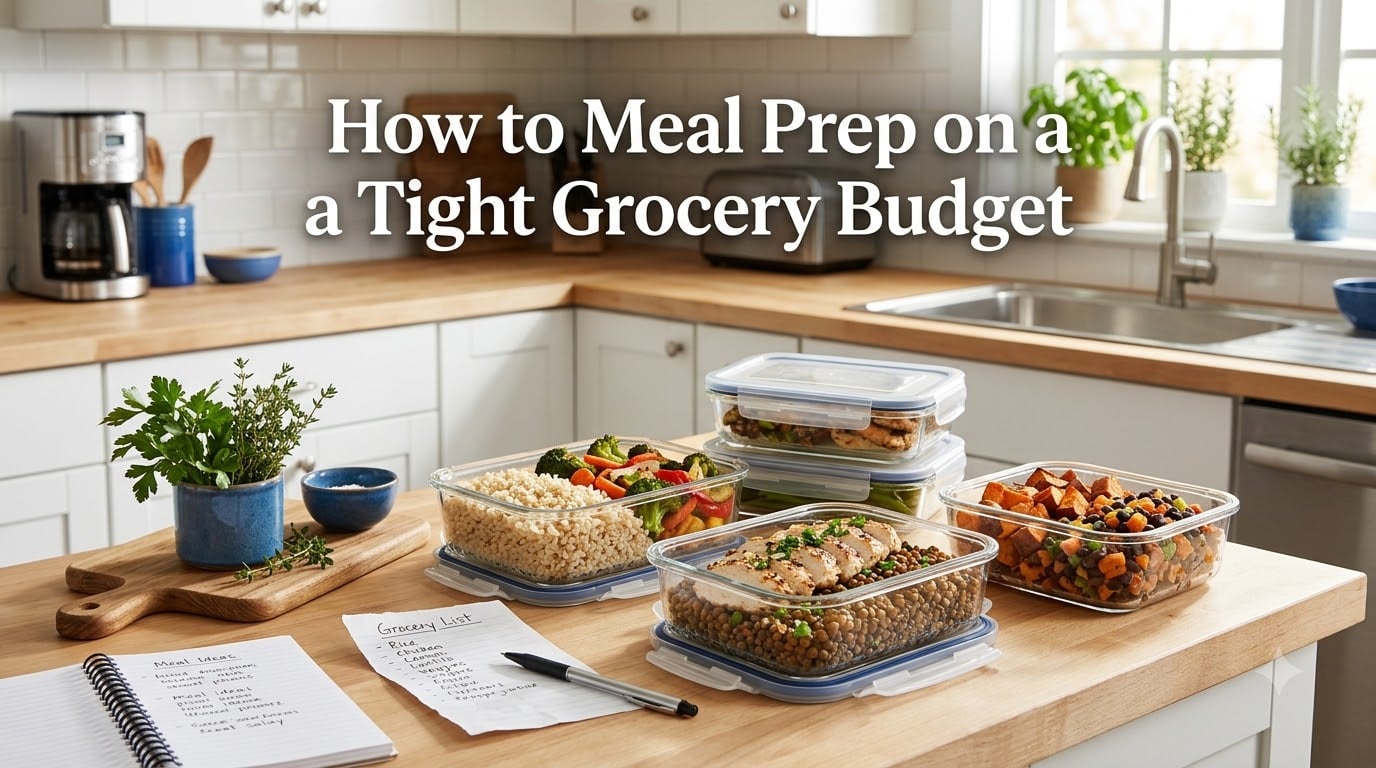
If you’ve ever watched your grocery bill climb while half your lettuce rots in the back of the fridge, you’re not alone. The average family throws away about $1,500 worth of food every year, and most of that waste comes from unplanned cooking and takeout impulse buys. Learning how to meal prep on a tight grocery budget fixes both problems at once.
I’ll walk you through the exact system I use to feed myself for under $50 a week, plus the budget scenarios and ingredient lists that make cheap meal prep actually work. By the end of this guide, you’ll have a repeatable weekend routine, a printable grocery list template, and three sample weekly meal plans at $25, $50, and $100 price points.
Table of Contents
- 7 Core Principles of Budget Meal Prep
- Budget-Friendly Ingredients by Category
- The 5-4-3-2-1 Grocery Rule Explained
- Step-by-Step Weekend Meal Prep System
- Sample $50 Weekly Meal Plan for One
- How to Make Cheap Ingredients Taste Great
- Budget Scenarios: $25, $50, and $100 a Week
- Common Meal Prep Mistakes That Waste Money
- Frequently Asked Questions
- Final Thoughts on Meal Prepping on a Tight Budget
7 Core Principles of Budget Meal Prep
Before you touch a single pot, you need a framework. These seven principles are the reason budget meal prep actually saves money instead of just moving the spending around. Skim them once, then come back when you build your first plan.
- Plan before you shop. A plan stops impulse buys and waste. Pick your meals first, then write the list.
- Build meals around cheap staples. Rice, beans, eggs, oats, and potatoes should anchor most weeks.
- Buy in bulk only when you’ll use it. A 25-pound bag of rice isn’t a deal if 20 pounds go stale.
- Shop seasonally and use frozen. Frozen vegetables are picked at peak and cost less than fresh out of season.
- Cook once, eat multiple times. Batch cooking proteins and grains is the engine of cheap meal prep.
- Track cost per serving. Divide the total recipe cost by portions to see your real price per meal.
- Use everything. Carrot tops go in soup. Roasted chicken bones become stock.
If you’re starting from zero, save this list as a checklist. Every successful week of budget meal prep checks these seven boxes.
Budget-Friendly Ingredients by Category
The cheapest meal prep is built on a short list of versatile ingredients. Memorize these categories and you’ll never stare blankly at a grocery shelf again.
Proteins (sorted by cost per gram)
- Dried beans and lentils: $0.10 to $0.15 per cooked serving. The single cheapest protein you can buy.
- Eggs: Around $0.30 per egg at standard prices, even less at warehouse clubs.
- Canned tuna or salmon: About $1 per can, perfect for lunches.
- Chicken thighs: Cheaper than breasts and more forgiving in batch cooking.
- Ground turkey or chicken: Bulk packages freeze well and stretch across many meals.
- Tofu and tempeh: Cheap, versatile, and absorbs any flavor.
- Bone-in chicken pieces: Cheapest cuts, plus you get bones for stock.
Carbs that Stretch a Dollar
- Rice: A 10-pound bag costs the same as two takeout sides.
- Rolled oats: Breakfast and baking for under $0.20 per serving.
- Potatoes: Roast them, mash them, hash them.
- Pasta: Pair with beans for a complete protein at low cost.
- Day-old bread: Many bakeries sell it at half price. Toast or breadcrumb it.
Produce That Goes the Distance
- Frozen mixed vegetables: No chopping, no waste, cheap year-round.
- Cabbage: One head under $3 yields multiple meals.
- Carrots and onions: The backbone of soup, stir-fry, and roasted trays.
- Bananas: Cheap snack, plus overripe ones work in pancakes and smoothies.
- Apples and citrus: Long shelf life, in-season prices beat berries every time.
Pantry basics to keep stocked: salt, pepper, garlic powder, onion powder, smoked paprika, cumin, oregano, soy sauce, olive oil, and bouillon cubes. With these, almost anything in the list above becomes dinner.
The 5-4-3-2-1 Grocery Rule Explained
The 5-4-3-2-1 method is a simple visual that keeps your cart balanced and your spending in check. Use it while you shop to avoid buying ten kinds of cheese and forgetting vegetables.
- 5 vegetables: Mix fresh and frozen. Pick at least one green.
- 4 fruits: Mostly fresh, in-season, with one frozen option.
- 3 proteins: One plant-based, one animal-based, one backup like eggs.
- 2 grains or starches: Rice, oats, pasta, bread, or potatoes.
- 1 fun or treat item: Coffee, dark chocolate, your favorite sauce. Keeps the plan humane.
This is the same framework you’ll see in any printable grocery list PDF for budget meal prep. It works because it forces variety without overbuying.
Step-by-Step Weekend Meal Prep System
Pick one block of two to three hours on a weekend. Sunday is classic, but Saturday works just as well. The point is consistency. Here’s the exact routine I run every week.
Step 1: Inventory What You Already Have
Before you write anything, open your fridge, freezer, and pantry. List what is about to expire and what you have plenty of. Most people skip this step and then wonder why their budget is off. A 10-minute inventory alone can save you $10 to $20 a week.
Step 2: Plan Meals Using the 3-3-3 Rule
The 3-3-3 rule for meal prep is a beginner-friendly framework: choose 3 breakfasts, 3 lunches, and 3 dinners, then repeat them across the week. It limits cooking time, prevents food boredom, and makes grocery lists shorter. For example:
- Breakfasts: overnight oats, scrambled eggs, peanut butter toast
- Lunches: rice and bean bowl, tuna pasta salad, chicken wrap
- Dinners: sheet pan chicken and vegetables, lentil soup, stir-fry with tofu
Step 3: Build the Grocery List from the Plan
Only now do you write the grocery list. Group it by store section: produce, proteins, dairy, pantry, frozen. This grouping cuts shopping time in half and keeps you from wandering into impulse aisles.
Step 4: Shop Strategically
Hit ethnic markets and discount grocers for staples like rice, beans, and spices. Buy produce in season, frozen as a backup. Skip pre-cut anything. Pre-cut produce costs 30% to 50% more per pound than whole.
Step 5: Batch Cook Proteins and Grains
Roast a tray of chicken thighs, simmer a pot of lentils, and start a rice cooker. While those run, hard-boil a dozen eggs. The total active cooking is about 45 minutes; the oven and stove do the rest.
Step 6: Portion and Store
Divide cooked food into containers by meal. Most cooked proteins and grains keep 4 days in the fridge and up to 3 months in the freezer. Label with the date so nothing gets lost in the back.
Sample $50 Weekly Meal Plan for One
This is the exact week I ate on a $50 grocery budget last month. Cost per serving came out to about $1.60 across 21 meals. Here’s the breakdown.
- Sunday prep (active cooking: 1 hour): roast 2 lbs chicken thighs, simmer 1 cup dried lentils, cook 3 cups rice, hard-boil 6 eggs.
- Breakfasts: overnight oats with peanut butter and banana (3 days), scrambled eggs with toast (2 days), banana and peanut butter toast (2 days).
- Lunches: chicken and rice bowl with frozen broccoli (2 days), lentil soup with carrots and onion (2 days), tuna pasta salad (2 days), hard-boiled egg and apple (1 day).
- Dinners: sheet pan chicken thighs with roasted potatoes and cabbage (2 nights), lentil and rice stir-fry with frozen vegetables (2 nights), chickpea curry over rice (2 nights), pantry pasta with garlic and olive oil (1 night).
- Snacks: popcorn, carrots, bananas, one bag of frozen berries.
Total cost: roughly $48 to $52 depending on your store. Per meal, that’s less than a fast-food combo. And nothing went to waste because every ingredient appeared in at least two meals.
How to Make Cheap Ingredients Taste Great
The fastest way to abandon a budget meal prep plan is to eat bland food for a week. The good news: a $15 investment in seasonings transforms rice and beans into something you actually crave.
Build a Starter Seasoning Kit
Stock salt, pepper, garlic powder, onion powder, smoked paprika, cumin, Italian seasoning, chili powder, and a bottle of soy sauce. Add bouillon cubes, a small jar of curry powder, and a bag of dried onion. With these, you can flavor any cuisine on earth.
Lean on Three Cheap Sauces
These three turn boring into dinner:
- Marinara: A $2 jar over pasta with a sprinkle of parmesan.
- Yogurt sauce: Plain yogurt, lemon, garlic, and dill. Pairs with everything.
- Peanut sauce: Peanut butter, soy sauce, lime, and a little honey. Magic on rice and tofu.
Use Cooking Technique to Add Flavor
Roasting caramelizes vegetables. Browning meat builds fond in the pan. A squeeze of acid at the end brightens everything. These are free, and they make cheap ingredients taste like restaurant food.
Beat Food Boredom by Mixing Components
Cook grains and proteins in big batches, but vary the sauce and vegetables each day. Same chicken, three different sauces, three different meals. Most meal prep boredom comes from eating identical plates, not identical ingredients.
Budget Scenarios: $25, $50, and $100 a Week
Different weeks call for different budgets. Here are realistic scenarios from Reddit’s r/budgetfood and r/MealPrepSunday communities, adjusted for current prices.
$25 a Week for One Person
Focus on rice, beans, eggs, oats, cabbage, carrots, onions, and frozen vegetables. Add chicken thighs or ground meat when on sale. Breakfast is oats or eggs every day. Lunches are bean-based. This is a tight week, but it’s achievable and surprisingly filling when combined with batch cooking.
$50 a Week for One or Two People
This is the sweet spot. You can include fresh produce, two proteins, and one “fun” item like cheese or yogurt. The sample meal plan above falls into this category.
$100 a Week for a Family of Four
Divide the $50 plan by four, then multiply for portions and add more fresh produce. Expect to spend $80 to $110 on staples, leaving $10 to $20 for a small treat. Buying in bulk from a warehouse club for rice, oats, and chicken thighs cuts this further.
Note: $100 a week is a reasonable grocery budget for a small family in most U.S. regions. If you’re spending more than that without restaurant meals included, meal prep will likely cut your bill by 20% to 30%.
Common Meal Prep Mistakes That Waste Money
Even with the best plan, a few common mistakes can blow your budget. Avoid these, and you’ll save more than you expect.
- Buying ingredients for recipes you’ll never make. Pinterest recipes often call for one-off specialty items. Stick to recipes that share ingredients.
- Skimping on containers. Cheap containers leak. One spill can wreck a tote of prepped food and force an emergency takeout run.
- Not labeling or dating food. Mystery containers get tossed. A strip of tape and a Sharpie save real money.
- Cooking foods you don’t like. Meal prep only works if you actually eat it. Build meals around favorites first.
- Shopping without a list. Unplanned shoppers spend 23% more on average. Always carry a written list.
- Throwing out leftovers. Plan a “leftover buffet” night each week to clean out the fridge.
Frequently Asked Questions
What is the 5 4 3 2 1 rule for groceries?
The 5-4-3-2-1 rule is a simple shopping framework: 5 vegetables, 4 fruits, 3 proteins, 2 grains or starches, and 1 fun or treat item per cart. It keeps your grocery list balanced and prevents overbuying while ensuring variety across the week.
What is the 3-3-3 rule for meal prep?
The 3-3-3 rule means you plan 3 breakfasts, 3 lunches, and 3 dinners for the week, then repeat them. This limits cooking time, shortens the grocery list, prevents food boredom, and makes weekly prep feel manageable for beginners.
Is $100 a week too much for groceries?
For a family of four, $100 a week is a reasonable grocery budget and lines up with USDA moderate-cost plan estimates. For a single person, $100 a week is high; budget meal prep can usually bring that down to $40 to $60 without sacrificing nutrition.
What can I include on my grocery list for meal prep on a budget?
A solid budget meal prep grocery list includes: proteins (eggs, dried beans, lentils, chicken thighs, canned tuna), carbs (rice, oats, potatoes, pasta), produce (cabbage, carrots, onions, bananas, frozen vegetables), and pantry staples (oil, salt, pepper, garlic powder, bouillon). Using the 5-4-3-2-1 rule keeps the list balanced.
Is meal prep actually cheaper than eating out?
Yes. Restaurant meals cost $10 to $15 per person on average, while a budget meal prep dinner lands around $1.50 to $2.50 per serving. Over a month, even a casual eating-out habit of three meals a week can cost $120 to $180 more than meal prepping the same meals at home.
Final Thoughts on Meal Prepping on a Tight Budget
Learning how to meal prep on a tight grocery budget isn’t about eating boring food or surviving on rice. It’s about having a system: a short list of cheap staples, a simple weekly template like the 3-3-3 rule, and a 2-hour weekend routine that does the work for you. Start with one week at $50, track your cost per serving, and adjust from there.
Once the system clicks, you’ll spend less at the store, waste less food, and skip the daily “what’s for dinner” stress. That’s the real win.